Moscow Patriarch Kirill’s remarks about a “holy war” in Ukraine do not constitute heresy but reflect his “political preferences”.
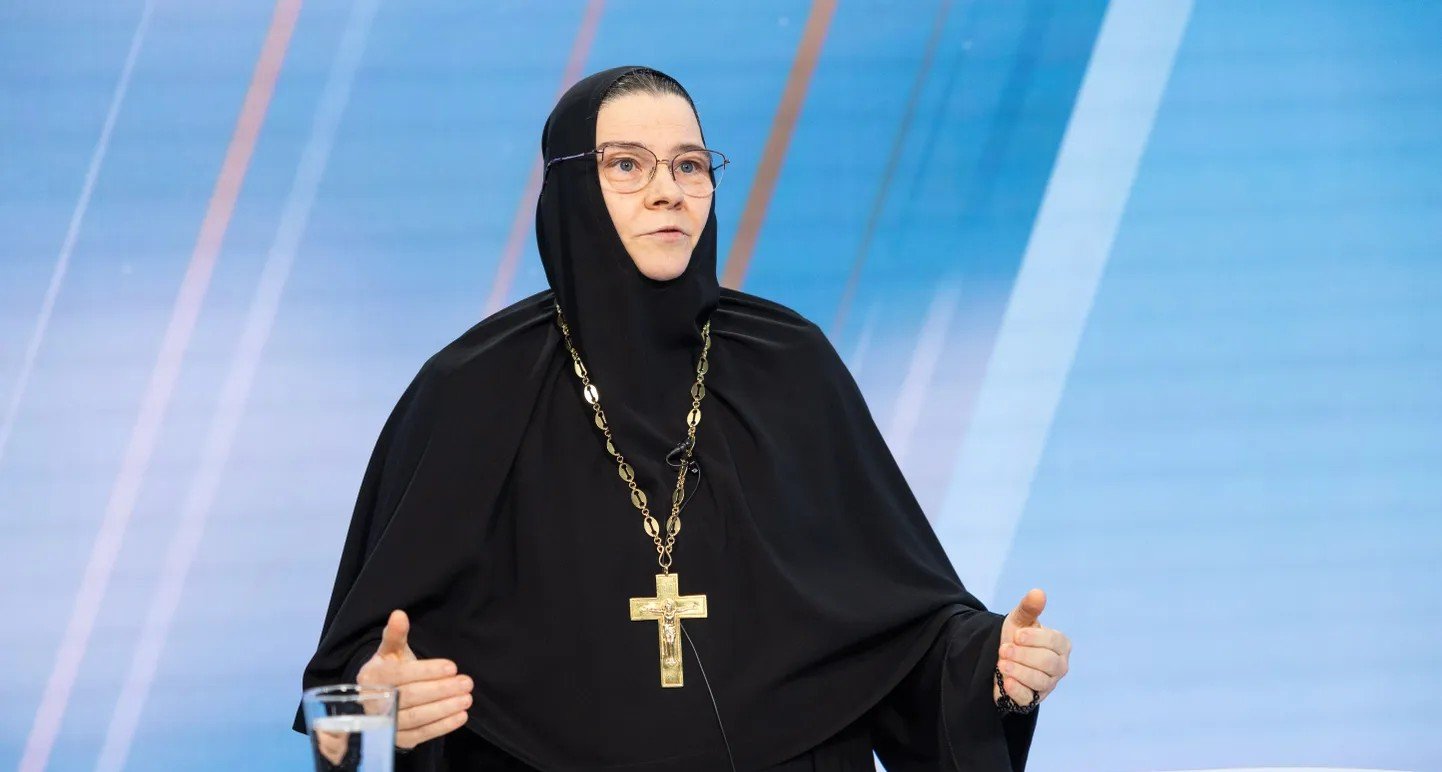
This was stated by Abbess Filareta (Kalacheva), head of the Pühtitsa Monastery of the Moscow Patriarchate in Estonia, during an appearance on ETV+, according to Postimees.
According to the abbess, “no statement by a leader, whether political or otherwise, automatically turns a church institution into a political organisation”.
“We must, after all, clearly understand what heresy actually is. No one has accused the Patriarch of heresy. Heresy concerns only teachings about the Holy Trinity and Church dogma. There is no violation of any of these here. He is simply expressing certain political preferences. That cannot be called heresy,” Filareta said.
According to LF, in November 2025, Patriarch Kirill Gundyayev declared that military heroism was “inseparable” from spiritual heroism and that participation in war could be regarded as a form of Christian service. This attempt to justify war through religious rhetoric prompted an immediate and sharp reaction within church circles.
We previously reported that Pope Leo XIV and Ecumenical Patriarch Bartholomew I condemned attempts to use religion to justify violence.
As LF reported, the Estonian Orthodox Christian Church (Moscow Patriarchate — LF) and Pühtitsa Monastery filed complaints with the European Court of Human Rights (ECHR) over amendments to the Churches and Congregations Act.
LF Commentary:
The abbess of the Pühtitsa Monastery of the Moscow Patriarchate in Estonia denies that Patriarch Kirill’s statements justifying the war against Ukraine constitute heresy, describing them instead as “political preferences”. However, as early as 2022, Orthodox theologians condemned the ideology of the “Russian World” (Russkiy Mir), which underpins the religious justification of Russian aggression, as heretical in an international declaration.
The use of religion to justify war and violence has also been condemned by Pope Leo XIV, Ecumenical Patriarch Bartholomew I and the World Council of Churches.
The abbess’s position clearly illustrates what it means to remain part of the Moscow ecclesiastical tradition: even the religious justification of bloodshed is presented as merely a matter of political opinion.