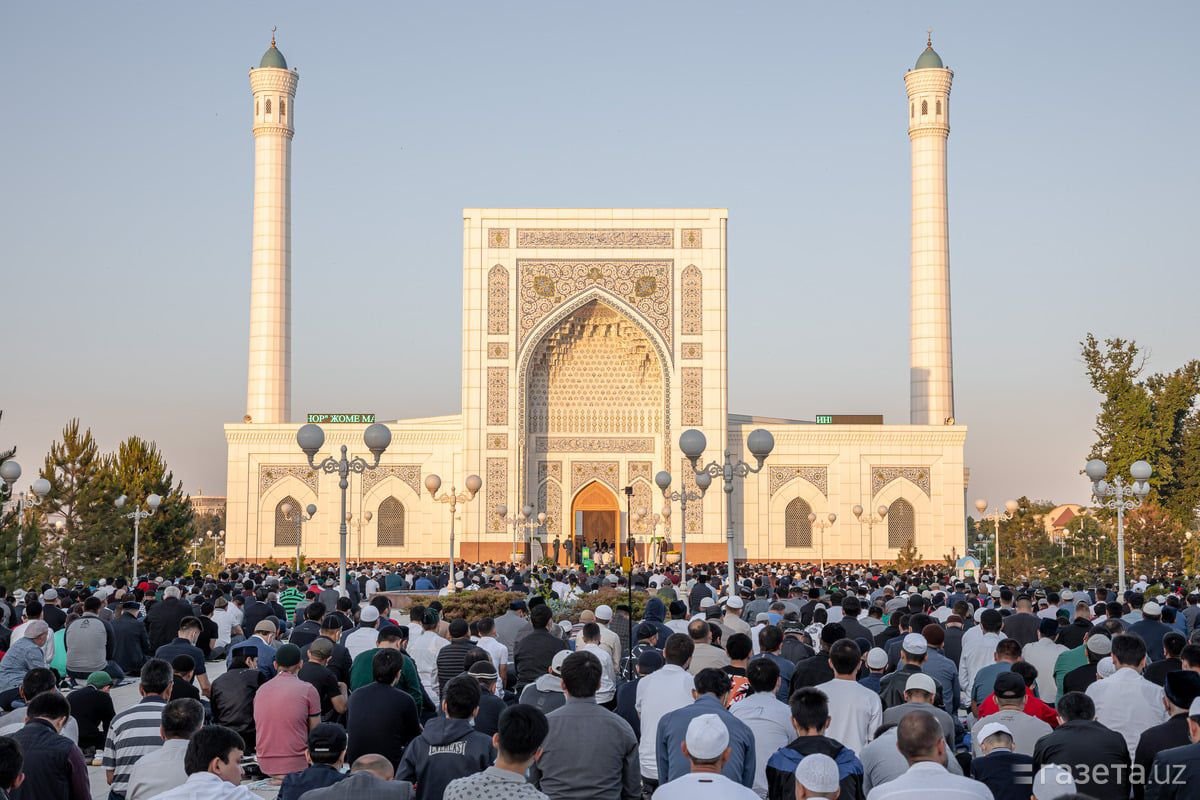
Muslims across Central Asia are celebrating Eid al-Adha against a backdrop of increasing state control. DW has published a report examining how the approaches of the authorities in the Central Asian republics to religious policy have changed.
In the countries of Central Asia, Islam remains the principal religion for the majority of the population. In four of the region’s five republics, Muslims account for 90 percent or more of the population, namely in Kyrgyzstan, Tajikistan, Turkmenistan, and Uzbekistan.
Despite demonstrations of support for religious holidays by the leaders of Central Asian states, international reports point to problems with religious freedom in the region. The United States Commission on International Religious Freedom (USCIRF), in a report published in the spring of 2026, documented serious violations in all Central Asian republics. Kazakhstan, Kyrgyzstan, and Uzbekistan were placed on a Special Watch List, while Tajikistan and Turkmenistan were designated Countries of Particular Concern.
In particular, the report states that in Tajikistan the authorities actively used the Law on Traditions to control religious life through fines and information campaigns. During the first six months of 2025, about 600 people were fined for violating it. Following the 2024 amendments banning the “import, sale, promotion, and wearing of clothing alien to national culture,” the authorities conducted campaigns against “foreign clothing” in shopping centers in Dushanbe. As a result, vendors in one shopping center stopped selling hijabs and Arab-style clothing.
In Turkmenistan, the authorities used religious leaders in 2025 to promote the state agenda. Officers of the Ministry of National Security recruited local imams, who receive state salaries, to report individuals practicing religion outside the state-approved version of Islam.
In addition, both republics recorded cases of believers being persecuted on unfounded charges of “extremism.” In Turkmenistan, there are at least ten such prisoners, although the actual number is likely higher, as the fate of around twenty detainees remains unknown. In Tajikistan, the situation is more severe, with several detainees having died in custody.
Kyrgyzstan has developed more favorable conditions for religious diversity, including the growth of various Islamic movements. Kyrgyzstan is the only state in the region where the Islamic movements Tablighi Jamaat and Nurjular are permitted to operate. In the other Central Asian states, they are banned as extremist or terrorist organizations.
Turkmenistan remains the most repressive state in the region, where freedom of speech, assembly, and religious activity outside state control is virtually nonexistent. In contrast, under President Shavkat Mirziyoyev, Uzbekistan has seen a partial easing of policies toward Islam and the religious sphere.
However, experts predict that regulation of religious affairs in the region will continue to intensify, as local authorities view religion as a potentially dangerous instrument.