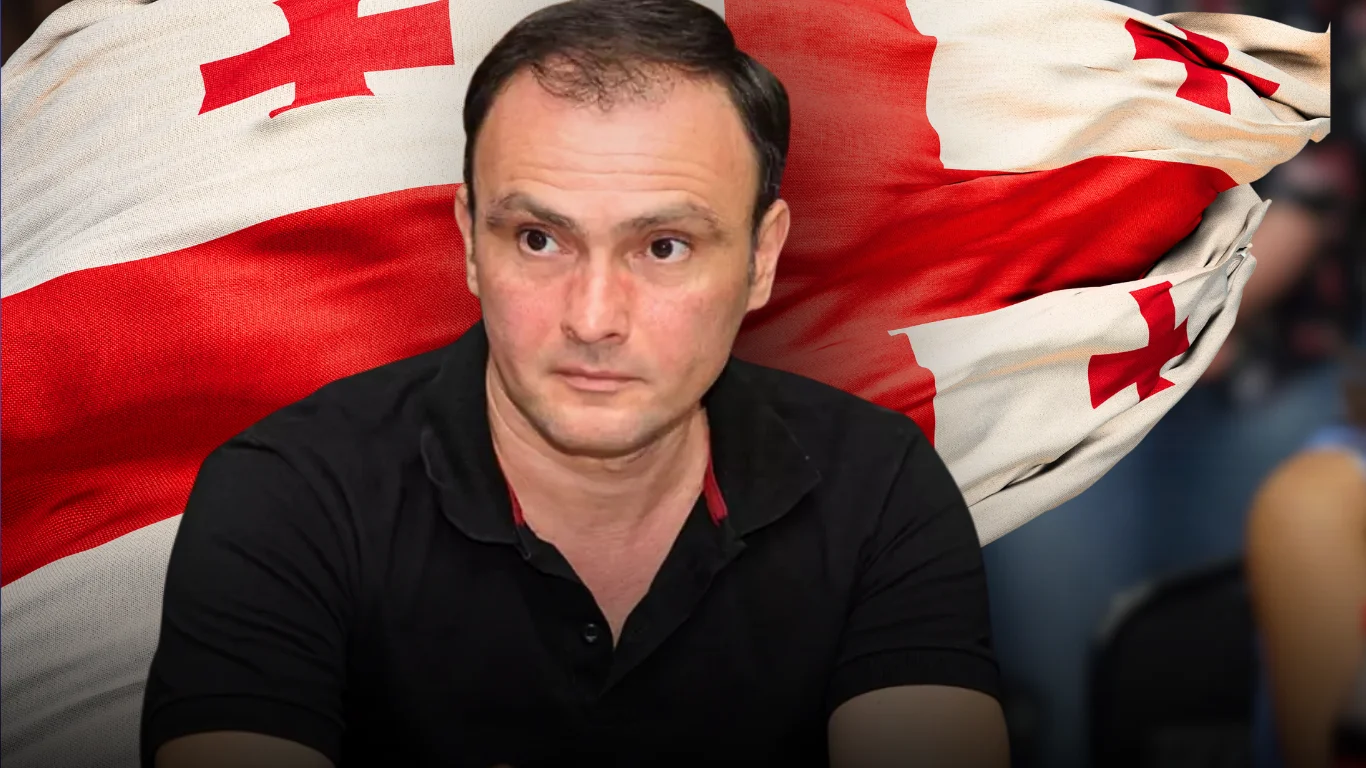
Nukzar Suaridze, Georgian journalist, author of the film “Spiritual Struggle”
The Georgian Orthodox Church has called the use of the name of Gabriel Urgebadze by a Russian military unit fighting against Ukraine unacceptable. The Church said it does not support invoking his name to justify the war.
This effectively became the first expression of discontent that the Patriarchate of the Georgian Church has directed at an increasingly brazen Moscow.
It has made a hobby of the “mobilization of relics,” first Dmitry Donskoy, then Aleksandr Nevsky, and it has now made an awkward attempt to add Gabriel Urgebadze, a monk revered in Georgia who became renowned for his open resistance to the Soviet authorities, to the list.
Such manifestations are a sign of panic. Panic is bad for people, but panic in dictatorial regimes is good because it signals an awareness of their own ineffectiveness and approaching end.
Gabriel Urgebadze is also known as Gabriel Salosi, meaning roughly a fool for Christ. As far as I know, there is no military unit or battalion in Georgia bearing that name. How, then, is it possible for his name to be used in Russia? It is also clear that Patriarch Kirill (Gundyayev) had a hand in this. Of course, the Patriarchate of the Georgian Church could not remain silent because no member of its flock would have understood such an appropriation, and it outraged journalists. But I think this reaction was very restrained. It could and should have responded more forcefully. A formal note should be sent to the head of the Russian Orthodox Church. This is Kirill’s (Gundyayev’s) territory.
That is not even to mention the vague answers officials give to journalists’ questions, along the lines of people dying on both sides.
I would also like to recall another situation. Former Georgian prosecutor and former chief prosecutor of the republic Otar Partskhaladze, who changed his surname to Romanov-Partskhaladze, officially announced in September 2026 the creation in Russia of an international volunteer unit called “Georgiyevsky” to take part in the war against Ukraine. He personally plans to lead the formation as its commander. Otar Partskhaladze maintained close ties with the Georgian Orthodox Church (GOC) and actively employed religious themes. Before his permanent move to Russia, he portrayed himself as a deeply religious man, a philanthropist and a defender of traditional Orthodox values, which helped him retain informal influence in Georgia. I believe the Georgian Church should have condemned such an act of treachery. But it remained silent. Its leaders are behaving deviously and evasively, failing to reflect the feelings of the Georgian people.