The Moscow Patriarchate operates as an instrument of Russian intelligence services rather than as a church in the conventional sense. Patriarch Kirill is also likely to have personally authorized such activities.
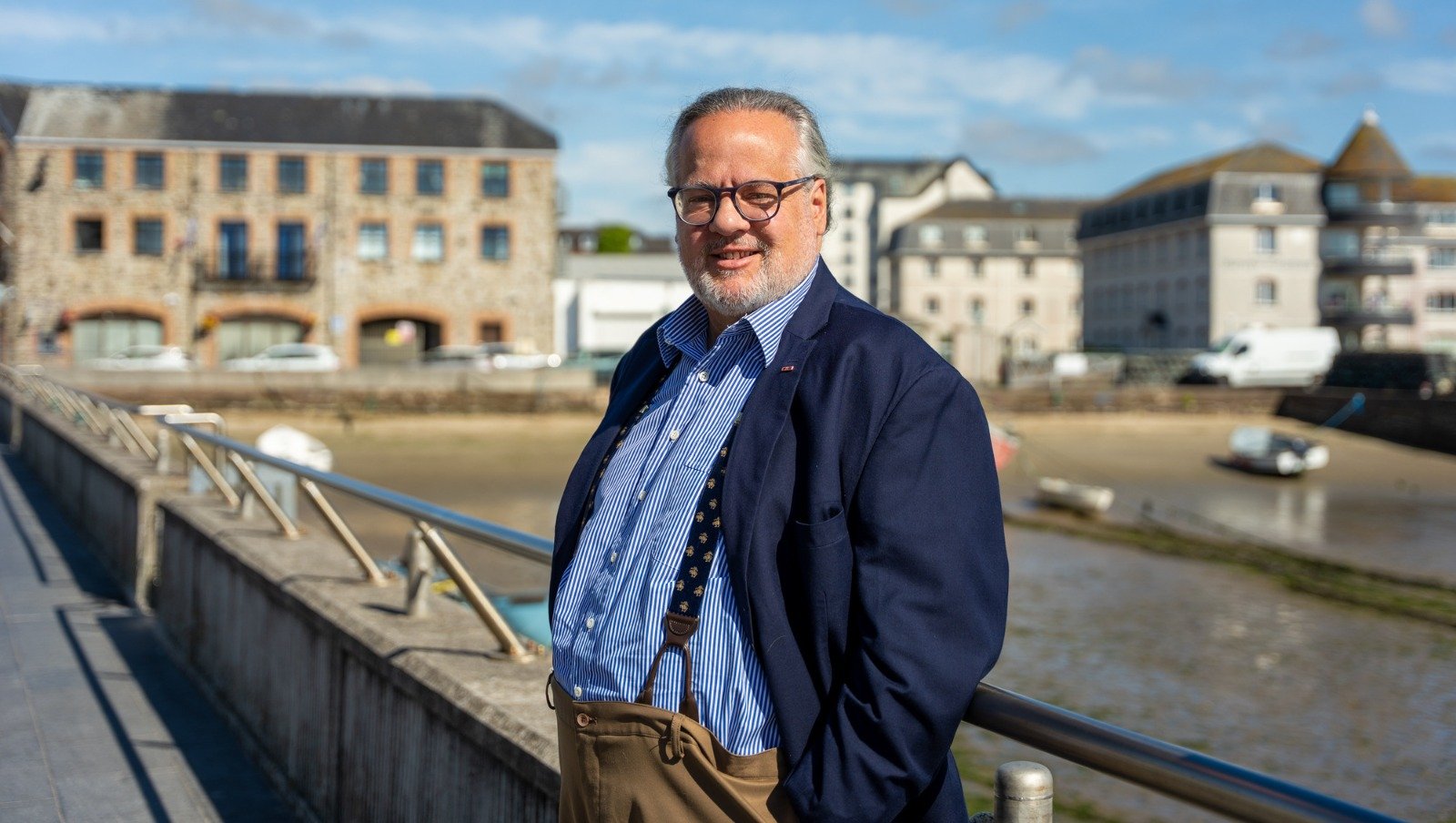
This is according to Michael O’Hurley, co-author with Oksana Shadrina of the book Wolves in Sheep’s Clothing: The Threat of the Russian Orthodox Church to European Security and Democracy, in an interview with skai.gr, as reported by Fos Fanariou.
His book portrays the Russian Orthodox Church as a threat to European security. According to O’Hurley, there is concrete evidence to support this assessment.
“This is not simply a matter of unsubstantiated rumors. What is alarming is that clergy members of the Russian Orthodox Church have been implicated in espionage activities in several European countries. In particular, some have been expelled from Bulgaria, Estonia, and North Macedonia.
“The Russian Church’s acquisition of land near military bases, critical infrastructure facilities, and the offices of political organizations across Europe raises serious concerns. For example, it is difficult to justify the construction of a church less than 300 meters from a runway used by NATO in Sweden. Another church was built near NATO’s strategically important Joint Warfare Centre in Stavanger, Norway,” the author said.
He emphasizes that the choice of such locations has nothing to do with genuine religious needs.
“Their value lies not in serving the faithful, but in monitoring defense activities and reporting relevant information to Moscow. Only a naive person could believe that building a church next to a busy flight corridor used by both civilian and NATO aircraft is conducive to prayer and contemplation. The stringent security measures around the perimeters of these churches are more reminiscent of military installations than places of worship,” O’Hurley noted.
He recalled an incident in the Norwegian border town of Kirkenes, where visiting Russian Orthodox priests requested a tour of local reservoirs that supply the town with drinking water. Norway’s Police Security Service (PST) subsequently officially attributed hybrid and cyber operations targeting water infrastructure to individuals or groups backed by the Russian state.
“It would be implausible to claim that visits to water supply facilities by Russian Orthodox priests and the subsequent Russian cyberattacks on critical civilian infrastructure were entirely unrelated,” the author believes.
According to O’Hurley, the case of Russian national Dmitry Petrovsky, who was detained by authorities at a US airport, cannot be ignored. Petrovsky operated under non-official cover, using his position as an employee of the Russian Church’s Department for External Church Relations. Data recovered from his laptop points to extortion operations organized by Russia’s Federal Security Service (FSB) in cooperation with the Russian Church. These schemes involved senior church figures from various countries across the Orthodox world. The available evidence suggests that Patriarch Kirill was aware of these activities and may even have personally authorized them.
“The Russian Church collects compromising material, known as kompromat, and uses it, among other things, for blackmail. Such methods were employed, for example, in attempts to disrupt the Holy and Great Council held in Kolymbari, Crete, in 2016. This is just one piece of evidence demonstrating that the Moscow Patriarchate operates as an instrument of Russian intelligence services rather than as a Church in the sense we normally understand it,” O’Hurley noted.
Background
Michael O’Hurley is an Irish-American expert, political scientist, journalist, defense and security analyst, and specialist in international conflict resolution. He serves as editor-in-chief and diplomatic correspondent for Diplomacy in Ireland – European Diplomat and has extensive experience as a war correspondent in international conflict zones, including Ukraine.
Ecumenical Patriarch Bartholomew I bestowed upon him the honorary title of Archon of the Ecumenical Patriarchate.