
There are approximately 670–700 parishes of the Moscow Patriarchate in the European Union. Including affiliated foundations, schools, cultural centres and other organisations, the total exceeds 1,000. Russia may use religious structures to spread political influence, propaganda and disinformation, making their activities a matter of national security as well as religious affairs.
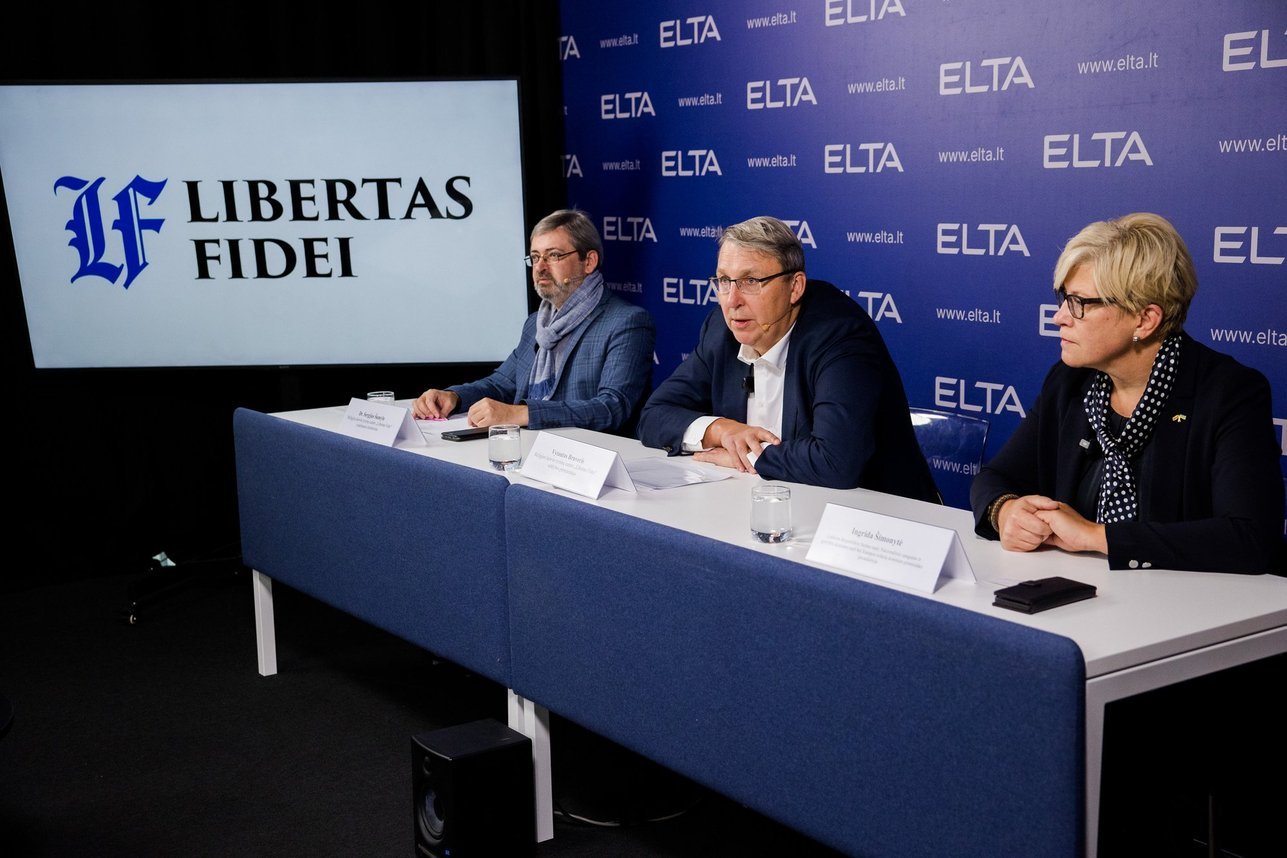
These issues were discussed at a press conference in Vilnius presenting an international analytical study entitled “The Use of Religion as an Instrument of Influence and a Threat to the Security of Lithuania and Europe in the Context of Russian Military Aggression.”
The event also marked the official launch of the Libertas Fidei International Centre for the Study of Religious Freedom.
Participants in the press conference included Lithuanian Seimas member and former Prime Minister Ingrida Šimonytė, political commentator and Chairman of the Board of Libertas Fidei Vytautas Bruveris, and Church historian, religious studies scholar, senior researcher at Vilnius University and Executive Director of Libertas Fidei Dr Serhii Shumylo.
More than 1,000 organisations affiliated with the Moscow Patriarchate operate in the EU
Presenting the study’s findings, Serhii Shumylo noted that the Moscow Patriarchate’s network of organisations in Europe is considerably more extensive than the number of Orthodox parishes alone might suggest.
According to the figures he presented, approximately 215 Moscow Patriarchate parishes operate in the Baltic states, including 52 in Lithuania, 125 in Latvia and 37 in Estonia.
Across the European Union, there are approximately 670–700 such parishes. However, when affiliated schools, cultural centres, foundations and other organisations are included, the total number of entities exceeds 1,000.
The study examines the Russian Orthodox Church’s role in justifying Russia’s war against Ukraine, the activities of Moscow Patriarchate-affiliated organisations in EU member states, their funding mechanisms and the use of religious institutions to advance the Kremlin’s interests.
Particular attention is paid to links between Russian Orthodox Church structures and Russian intelligence agencies. Citing examples from European countries, Shumylo noted that religious organisations are often used not only for spiritual purposes but also to pursue political objectives, extend influence and carry out activities serving the interests of the Russian state.
Ingrida Šimonytė: Moscow Patriarchate decisions in Lithuania depend on Moscow
Former Lithuanian Prime Minister Ingrida Šimonytė, who attended the press conference, stressed that Moscow Patriarchate structures in Lithuania remain dependent on decisions made in Moscow.
“Decisions about what happens in Lithuania, who is appointed to positions, who will be in charge and so on are not made independently. These decisions depend to a considerable extent on Moscow,” Šimonytė said.
Šimonytė also commented on Estonia’s legislative efforts to sever ties between the Orthodox Church and the Moscow Patriarchate. She noted that legal measures alone do not necessarily change existing practical and canonical relationships.
According to the former prime minister, although the Moscow Patriarchate’s ability to influence developments in Lithuania is limited, religious structures in other European countries may be used much more actively to interfere in domestic politics.
Šimonytė also highlighted the importance of developing the Exarchate of the Ecumenical Patriarchate of Constantinople in Lithuania as an alternative for Orthodox believers.
At the same time, she argued that assessments of potential threats associated with the Moscow Patriarchate should focus on the activities of specific individuals and possible violations of the law, rather than being based solely on religious affiliation.
Religious influence as a national security issue
Chairman of the Board of Libertas Fidei Vytautas Bruveris stressed that the activities of organisations affiliated with the Moscow Patriarchate should be considered not only from the perspective of freedom of religion but also in the context of national security.
In his view, assessments of these structures should take into account their potential use to spread Russian political influence and advance the Kremlin’s interests.
Bruveris also criticised public contacts between representatives of the Lithuanian authorities and individuals associated with the Moscow Patriarchate. He noted that such meetings could send ambiguous signals to the public about the state’s attitude towards potential threats.
Libertas Fidei launches international research activities
The presentation of the study coincided with the official launch of the Libertas Fidei International Centre for the Study of Religious Freedom.
The study raises the need for more systematic research into how authoritarian states use religious institutions as instruments of political influence, propaganda and interference in other countries’ domestic affairs.
Particular attention is also given to identifying approaches that would enable democratic states to counter such threats while safeguarding freedom of conscience and religion.
The central issue highlighted by the study’s participants is the need to distinguish legitimate religious activities from cases in which religious organisations are used to serve the political interests of foreign states. This distinction is essential both to the national security of European countries and to the protection of believers’ rights.