The United States Commission on International Religious Freedom (USCIRF) has published its annual report, a significant portion of which is devoted to repression in Russia. The authors of the report acknowledge that even against the backdrop of religious persecution in previous years, “particularly severe violations of religious freedom” are taking place in the Russian Federation.
This is reported in a piece by Novayagazeta.
The ideological basis of these violations is the abuse of labels such as “foreign agents,” “extremist,” “undesirable,” and similar designations, which are assigned to individuals and organizations without any clear criteria or evidence and without any possibility to challenge or remove these labels.
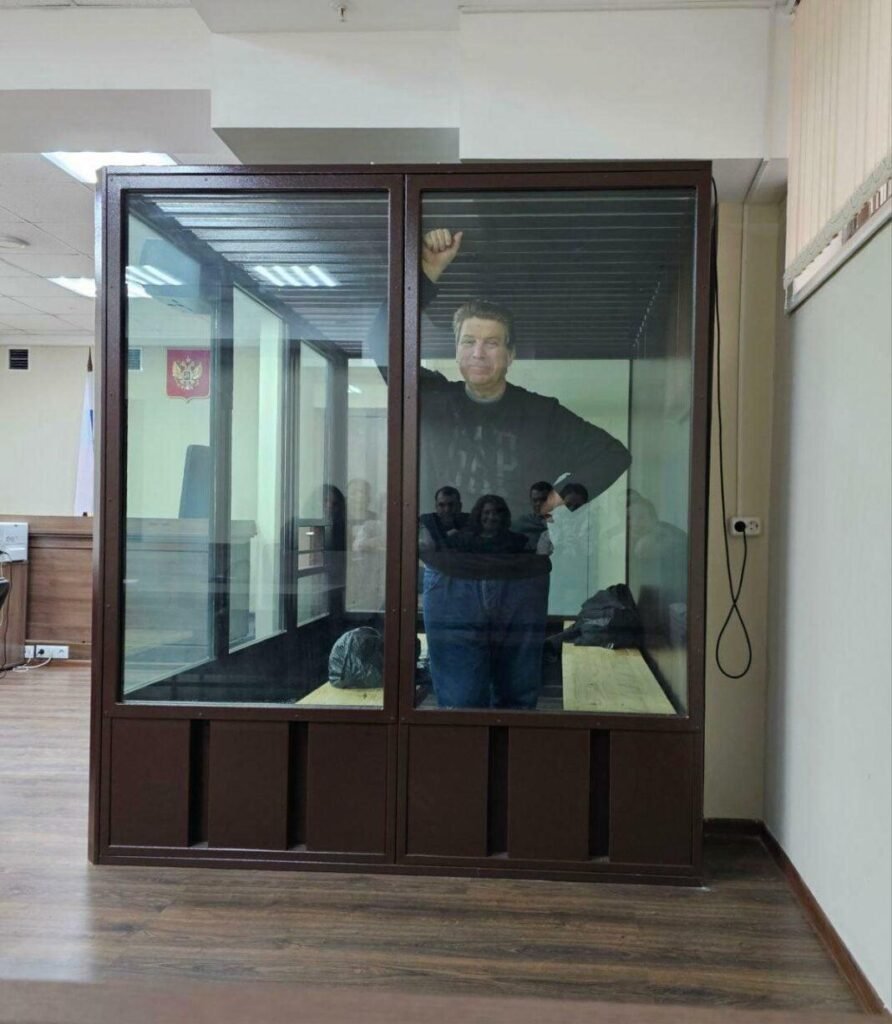
In particular, it is impossible to find any evidence that religious groups designated in the Russian Federation as “extremist” such as Jehovah’s Witnesses have committed violence or planned or promoted it. USCIRF has the names of 190 Russian Jehovah’s Witnesses who are in detention or subjected to forced labor for their faith. The actual number of repressed followers of this denomination is much higher.
The USCIRF report also includes Protestant denominations, namely Pentecostals and Baptists. In September of last year, 62-year-old pastor of the Evangelical Christian Pentecostal Church in Balashikha near Moscow, Nikolai Romaniuk, was sentenced to four years in prison for an anti-war sermon.
Persecution of the International Union of Churches of Evangelical Christian Baptists (MSts EKhB), also known as the “unregistered brotherhood” or “initiative group,” took on a systematic character last year. Since the 1960s, their doctrine has prohibited state registration of congregations, and even the Soviet regime more or less took this fact into account. The current Russian repressive apparatus has set a course toward the complete eradication of the “initiative group,” which exists as if outside its legal framework. The American Commission is aware of ten cases of dispersal of MSts EKhB congregations in 2025.
Repression also affects Orthodox believers who oppose the war or refuse to recite during services a prayer for the victory of the Russian Armed Forces over Ukraine.
USCIRF notes that Russian authorities are not persecuting only Christians. Muslims are particularly affected, especially those suspected of affiliation with Hizb ut-Tahrir, which is designated in the Russian Federation as a “terrorist organization,” although not a single terrorist attack organized by this movement has been identified. In many Western countries and in Ukraine, Hizb ut-Tahrir is not banned, therefore most cases related to alleged affiliation occur in Crimea, and the victims of repression are Crimean Tatars, who receive sentences of up to 24 years in prison under terrorism charges.
A separate section of the 100-page report describes specific practices used to suppress free thought, including freedom of religion, in parts of the Lugansk, Donetsk, Zaporozhye, and Kherson regions controlled by the Russian Federation, which in Russian political jargon are referred to as the “new territories.”
Since February 2022, the report states, at least 47 Christian leaders have been killed in these territories, and more than 700 churches and other religious sites, predominantly Christian, have been damaged or completely destroyed. According to the authors, the practices of the “de facto administrations” are aimed at ensuring the dominance of the Russian Orthodox Church of the Moscow Patriarchate in these territories by completely eliminating the remnants of Ukrainian Orthodox or Greek Catholic churches, as well as significantly restricting the activities of Protestants.
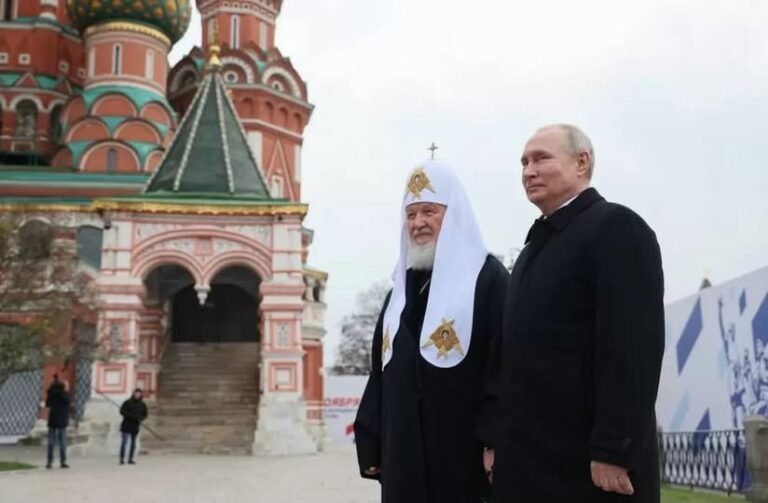
The leadership of the Russian Orthodox Church acts in full synchronization with the Russian Armed Forces, violating the autonomy of the Ukrainian Orthodox Church of the Moscow Patriarchate, whose boundaries cannot be altered without its consent, as stipulated in the charter of the Russian Orthodox Church. The Moscow Patriarch and the Synod appoint their own “parallel” bishops to Donetsk, Mariupol, Berdyansk, Melitopol, and other cities controlled by Russia.
As is well known, the United States Commission on International Religious Freedom, established by Congress in 1998 and composed of nine commissioners appointed by the President and both chambers of the US Congress, has for many years placed Russia on the list of “countries of particular concern” that systematically practice “serious violations of freedom of religion.” In accordance with its mandate, the Commission recommends that the US government impose sanctions on authorities and officials responsible for religious persecution.