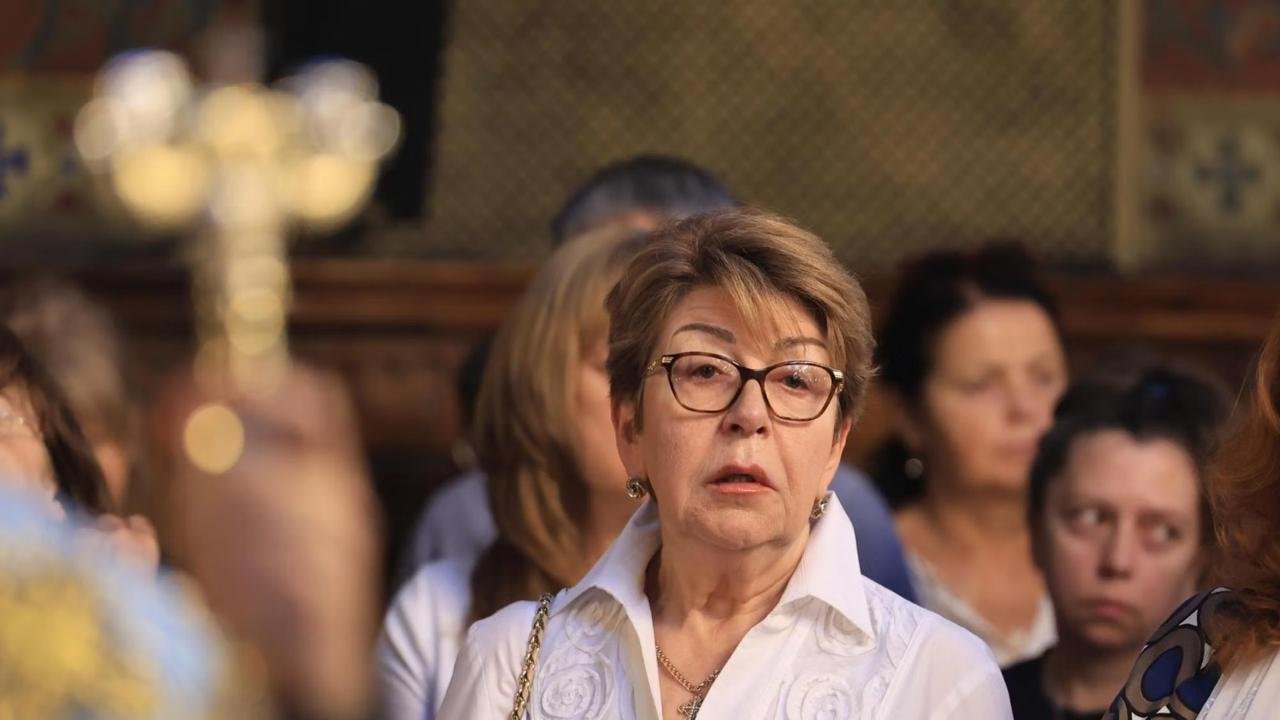
A tense atmosphere disrupted a hierarchical Divine Liturgy at Sofia’s Sveta Nedelya Church, led by Bulgarian Patriarch Daniil. Some of the lay worshippers present were angered by the appearance of Russian Ambassador to Bulgaria Eleonora Mitrofanova among the guests attending the service.
The publication Hristianstvo reported this.
During the service, a murmur of disapproval and shouts of “This is not Moscow!” rang out in the church, prompting Patriarch Daniil to interrupt the service and appeal to those present for calm and order.
The incident prompted a strong reaction from some worshippers, who questioned why a Russian diplomat was attending a church event amid heightened public tensions over Moscow’s role and actions in Ukraine.
On the other hand, the presence of a Russian diplomatic representative at religious events is not uncommon, especially during visits by miracle-working icons, such as the Hawaiian Iveron Myrrh-Streaming Icon, and pilgrimages linked to the Orthodox tradition. However, the tension that arose indicates that tolerance for the Russian ambassador’s presence in churches has declined significantly.
The Hawaiian Iveron Icon arrived in Bulgaria accompanied by clergy of the Russian Orthodox Church Outside of Russia (ROCOR). It is a copy of the Montreal Iveron Myrrh-Streaming Icon, which is venerated across the Orthodox world, and the Bulgarian Patriarchate announced its visit to the country in advance. The incident has once again brought renewed attention to discussions about relations between the Bulgarian and Russian churches, as well as public expectations regarding their positions on politically sensitive issues.
We previously reported that Moscow has long used the Bulgarian Orthodox Church (BOC), which maintains close ties with the Russian Orthodox Church (ROC), as a “soft power” instrument to promote the ideas of Slavic and Orthodox brotherhood.