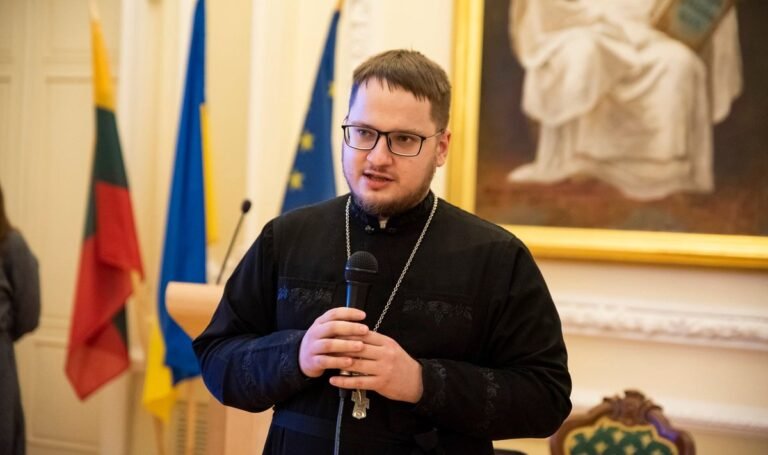
On April 26, an international conference dedicated to the 680th anniversary of the Cathedral of the Most Pure Mother of God took place in Vilnius. It was organised by the Lithuanian Orthodox Archdiocese, which is under the jurisdiction of the Moscow Patriarchate.
The event became a kind of response to the report of the State Security Department (VSD) and the discussions that followed in Lithuanian society about the risks connected with the presence of structures of the Russian Orthodox Church in Lithuania.
It should be recalled that in March 2026, the VSD published its annual threat assessment report, which stated that the Russian Orthodox Church plays a significant role in forming and supporting the ideological narratives of the Russian regime and has direct influence over the Lithuanian diocese that remains under its direct subordination.
During the first part of the conference, clergy and publicists associated with the Moscow Patriarchate attempted to reinterpret church history from the 14th to the 20th century, presenting Moscow as the “legitimate heir” to the Kyivan Metropolia. They even emphasised the supposedly “positive” aspects of Moscow’s presence in the Baltic states, including periods when that presence was the result of de facto occupation.
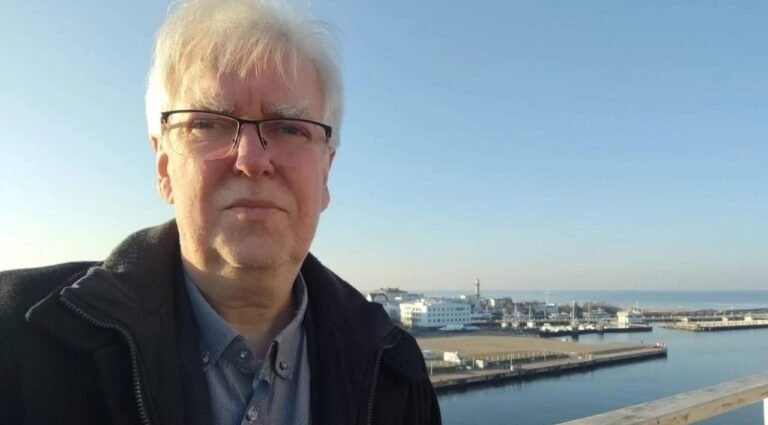
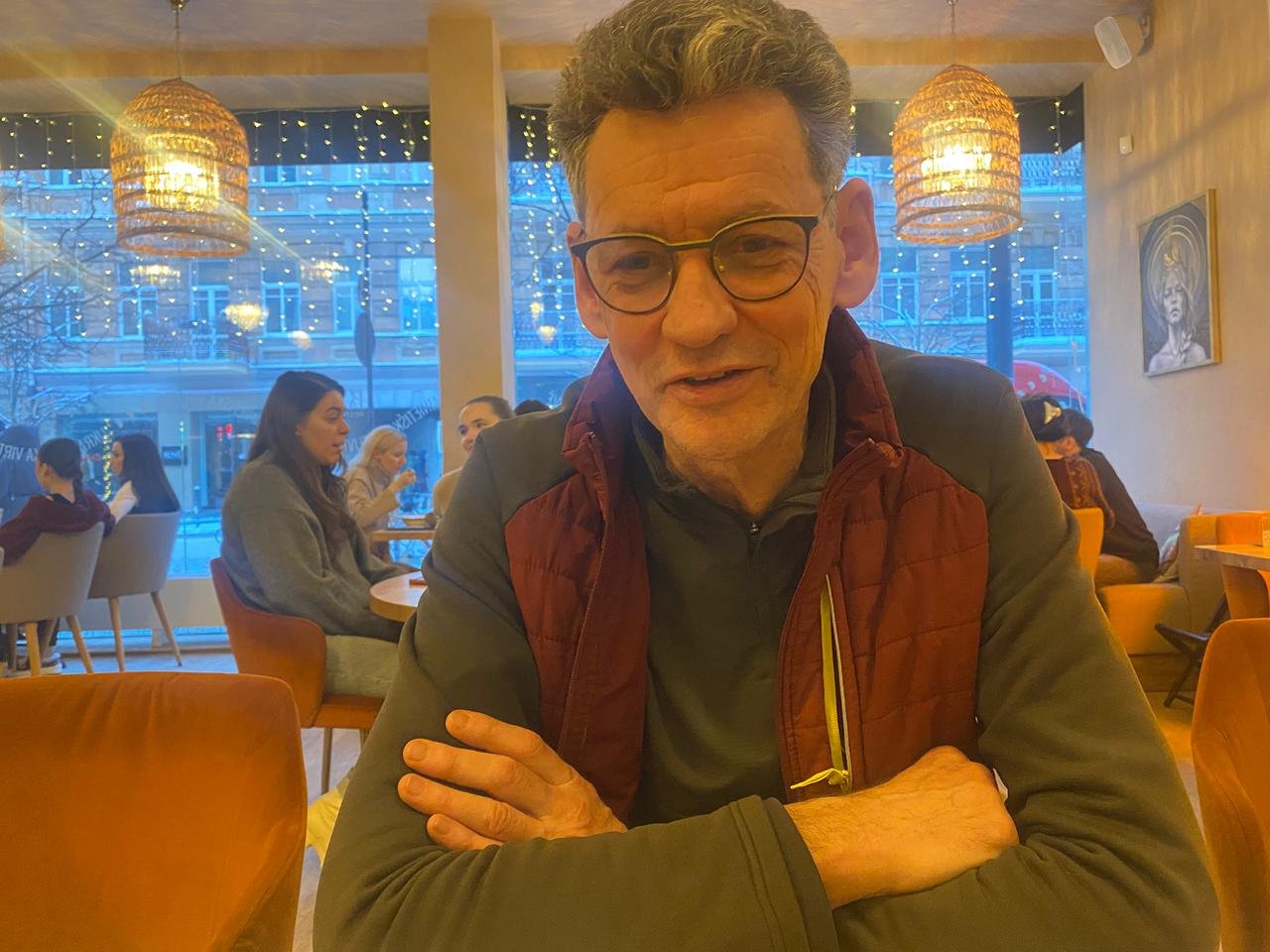
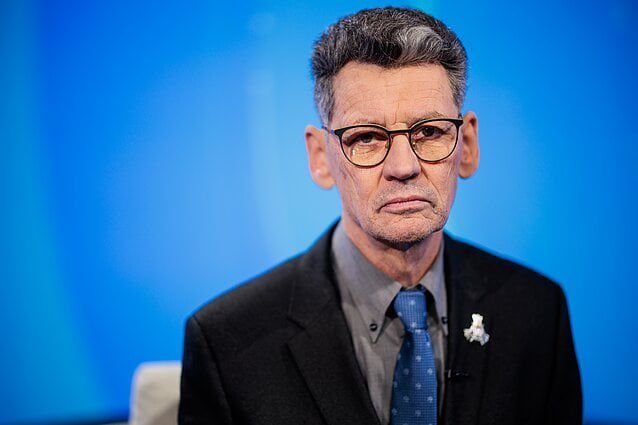
We decided to focus on the discussion of contemporary issues, namely the canonical connection and actual status of the religious structures of the Moscow Patriarchate in Lithuania, and spoke about this with Arunas Degutis, one of the signatories of Lithuania’s 1990 Act of Independence and an expert on Orthodoxy. Before Russia’s full scale invasion of Ukraine, he sang in an Orthodox church choir. Today, as a member of the Riflemen’s Union, he participates in the work of units countering information threats.
– Lithuanian media have raised a very important issue regarding the presence in the country of a structure belonging to the Russian Orthodox Church, and the challenges and dangers it poses to the Baltic states. The same issue was addressed in the annual report of Lithuania’s State Security Department. In response to these publications, the Lithuanian diocese of the Moscow Patriarchate stated that it is supposedly independent from Moscow. Moreover, at the recent conference, one of the speakers claimed that “a canonical connection in itself does not mean either civil legal subordination or political loyalty to any state.”
How would you comment on this?
– I have been following the discussion. And this is what caught my attention. When speaking about their presence within the Russian Orthodox Church, its Lithuanian representatives use the phrase “canonical affiliation” with the Moscow Patriarchate while at the same time speaking about autonomy. In other words, they hide behind the word “canonical,” which in essence explains nothing here. It is simply room for manoeuvre. If there is affiliation, then there is affiliation, and there is no need to hide behind the word “canonical.” And how can one speak of independence if there is affiliation?
At the same time, they commemorate Patriarch Kirill during services. In the Orthodox tradition, there is an obligation during worship to mention the head of the church structure to which the community belongs. In this case, Patriarch Kirill of Moscow is mentioned as the head of the Russian Orthodox Church, to which the Lithuanian Archdiocese belongs.
Such wording in itself already indicates dependence. It demonstrates that the Lithuanian diocese remains connected to the Moscow Patriarchate both canonically and structurally. One gets the impression that this is more an attempt to avoid a direct answer through various interpretations and formulations. Often such statements contradict one another, creating the impression of obvious internal inconsistency.
Another point is also revealing. When Russia’s Foreign Intelligence Service comes to the defence of the Moscow Patriarchate in Lithuania, using aggressive rhetoric and calling the Patriarch of Constantinople an “Antichrist in a cassock” and “the devil in the flesh,” no public reaction follows. A natural question arises: why does Russian foreign intelligence consider it necessary to defend the interests of the Moscow Patriarchate in Lithuania at all?
If the church is truly independent, the mechanism for obtaining such independence has long been known and understood. A council is convened, a corresponding decision is adopted, and the former centre of church governance and the other Orthodox churches are notified. After that, independence either exists or it does not, without the need to resort to ambiguous formulations.
– They also mentioned Metropolitan Chrysostom, who led the church during Lithuania’s restoration of independence and supported its course toward leaving the USSR.
– Metropolitan Chrysostom was a very decent man. He was the first and perhaps almost the only person to openly acknowledge his cooperation with the KGB, and in the early 1990s he thereby seemed to call for reflection upon and investigation into the relationship between the Church and Soviet special services. By that time he truly was already independent from their pressure and blackmail. In January 1991, during the clashes between supporters of Lithuanian independence and Soviet troops, he condemned the actions of the Soviet authorities.
However, the situation later changed. Russia returned to its imperial essence. If he were alive today, he would be outraged and would ask the current Church to explain what they mean when they appeal to his memory. Back then it was a different time, and people behaved differently.
At that time, the patriarch was not Patriarch Kirill, who in KGB archives appeared as “Agent Mikhailov,” and the president was not Putin. The situation was different, and Moscow’s expansionist plans were neither obvious nor, as we now see, anything more than temporarily postponed.
We call upon the Lithuanian diocese of the Russian Orthodox Church to be honest. We believe that the church leadership is connected to the Russian authorities. This state poses a threat to the national security of all Europe. Break these ties and prove that you are independent.
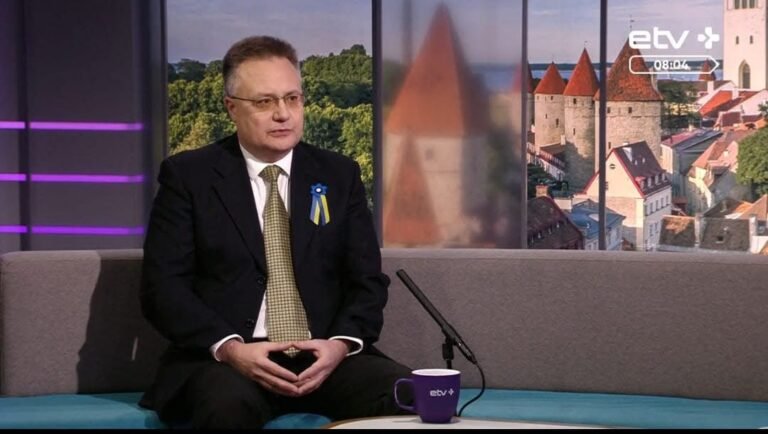
– One of the conference speakers, Roman Ianishkevichus, a Lithuanian professor of mathematics, while justifying the Lithuanian diocese’s ties to the Russian Orthodox Church, stated the following: “A canonical connection is not equal to legal subordination and even less equal to political disloyalty. A canonical connection is not a presumption of disloyalty on the part of the entire church. From the standpoint of canon law, Lithuanian Catholics are also connected with a religious centre located outside Lithuania, namely the Vatican. The appointment of bishops, their connection with Rome, and the entire canonical subordination demonstrate that the mere existence of a church centre abroad does not in itself mean any threat to the state. Therefore, an abstract reference to dependence or subordination proves nothing.” How would you comment on this?
– I completely agree. However, let us not forget that the Vatican, even as a subject of international law, does not bless aggressors and does not publicly and openly sanctify weapons that are used or will be used in a war against another Christian community. Can you imagine a situation in which Poland attacks Lithuania, and the Vatican blesses the Polish army and even declares such a war “holy”? Would that mean that from a canonical point of view everything is in order and that I, as a Christian, must unquestioningly fulfil the will of the Vatican and pray for such a pope? Perhaps only for his fallen soul.
Using such comparisons is incorrect and dishonest. It is manipulation and demagoguery, as well as deception of believers under the cover of the supposed infallibility of the clergy and the unconditional humility of believers before them. Out of infinite love for us, God granted us not only absolute freedom but also reason, including so that with the help of His grace we may distinguish where His will is and where the influence of the devil lies.
CAN YOU IMAGINE A CHURCH IN ANY COUNTRY BEING DEFENDED BY A FOREIGN INTELLIGENCE SERVICE?
– One of the speakers stated that dioceses of the Russian Orthodox Church of the Moscow Patriarchate also operate in Germany, France, and the United States, and that there are supposedly no problems there. What conclusion should be drawn from this?
– Germany, France, and especially the United States have not been and are not occupied by Russia. They are not “Moscow’s church territory,” and there are very few Russian speaking Orthodox believers there. Nevertheless, in several Scandinavian countries, intelligence services have already documented attempts by representatives of churches canonically subordinate to the Moscow Patriarchate to establish themselves near NATO bases. It is also worth paying attention to Moscow’s “canonical” efforts to entrench itself in a number of African countries that belong to the church territory of the Patriarchate of Antioch.
Incidentally, the speaker Roman Ianishkevichus, PhD, claims that subordination has legal or political significance only when it is proven that a canonical connection results in specific anti state behaviour, political loyalty to a foreign state, or hostile activities in Lithuania. I believe that this is not the only issue. Canon law on the territory of Lithuania does not take precedence over Lithuanian laws.
Incidentally, the evidence was provided by Russia’s Foreign Intelligence Service itself, formerly the First Chief Directorate of the KGB, which stood like a wall in defence of the Orthodox Church in Lithuania, which it considers its own branch. Can you imagine a church in any country being defended by a foreign intelligence service? Not by a human rights organisation or a group defending religious freedoms, but by intelligence services themselves.
Thus, the question remains: to which state is this community loyal if foreign intelligence structures are defending it?
The fact that Moscow considers Lithuania its church territory does not mean that we are satisfied with such dependence and its canonical interpretations or that we automatically recognise them.
I would like to remind the “friends” of the Kremlin that in 1990 we proclaimed ourselves independent from all other international subjects, and in 1991 we were recognised as such by the international community. Therefore, we have the right to choose and independently decide whether we recognise traditional Orthodox churches and their jurisdiction, as long as the actions of the metropolias, whether Moscow or Constantinople, comply with international law.
For my part, I would call upon those harmed by the actions of Metropolitan Innokentii and the priests removed from ministry, namely the five priests of the Lithuanian diocese of the Moscow Patriarchate who in 2022 refused to commemorate Patriarch Kirill because of his support for Russia’s invasion of Ukraine and were stripped of holy orders by church leadership, to go to court in order to determine whether the actions of this metropolitan, who seeks Lithuanian citizenship, complied with Lithuanian law, including norms regulating the activities of associations or public institutions.
How did it happen that another Orthodox church, namely the Church of Constantinople, restored their priestly rank on the basis of the same canons? Perhaps this means that canon law itself was also violated.
Observing the situation, one gets the impression that the Moscow Church has created its own version of Orthodoxy, namely “Russian Orthodoxy,” and, possessing enormous support from the Kremlin, has begun demonstrating a desire to dominate or even usurp the rights of other Eastern Christian Orthodox churches. It seems they have forgotten that they themselves received their tomos from the Bishop of Constantinople, who among the Eastern churches is recognised as first among equals.
Now they have become bolder and have begun questioning an order that existed for a millennium simply because they receive enormous funding from the Russian authorities and, together with it, an assignment to implement Russia’s imperial will, namely the splitting of the entire Christian world. It seems that soon they will begin claiming that Jesus Himself was Russian.
Since they themselves are incapable of building anything, Russia for centuries has used its old method of destroying and weakening its neighbours, thereby creating for the world the illusion of its own superiority. “We will force others to love us,” and “if they fear us, then they respect us,” these quotations they use speak for themselves. There is another one recently heard in Ukraine: “Who allowed you to live so well?” This is how superiority is demonstrated through violence, coercion, and lies.
In our folklore there is a saying: “Let a pig into the churchyard and tomorrow it will climb onto the altar.”
UNDER THE COVER OF ACADEMIC RHETORIC, THEY ARE TRYING TO OBSCURE THE BLOODY CRIMES THAT THEIR “CANONICAL” MASTERS COMMIT IN UKRAINE
– I noticed that representatives of the Lithuanian Orthodox diocese did not mention Russia’s invasion of Ukraine during the conference, nor did they mention the position of Patriarch Kirill, who openly supported and continues to support this aggressive war.
– One must understand that their statements are being listened to and their actions observed by the Foreign Intelligence Service, which has already openly begun defending this church of theirs in Lithuania. Hiding behind academic rhetoric, as though detached from sinful earthly matters and other “trifles,” including war, they are trying to draw everyone into a so called scientific and theoretical discussion while obscuring the bloody crimes that their “canonical” masters commit every day in Ukraine. It seems that for them the killing of neighbours living on their church territory justifies everything.
– The Church of the Moscow Patriarchate says that “we pray for Lithuania” and that it supported Lithuania’s independence. They say, “we pray for Lithuania.” But the question arises: for what kind of Lithuania?
– During Soviet times, the communists also said they were “for Lithuania.” But for which Lithuania? A Soviet Lithuania? And now I would ask them the same question. For a Lithuania free from the EU and NATO? If at the same time they commemorate the Moscow patriarch, then it becomes clear what model of Lithuania they support. A Lithuania with the ideology of the “Russian world.”
How should the state authorities act?
On the one hand, they should support alternative Orthodox structures.
On the other hand, they should demand clarity from the Russian Orthodox Church in Lithuania. If you claim independence, specify a timetable and concrete steps.
They say they are striving for independence. But one can “strive” for a thousand years.
If they are sincere, they will do it. But so far the opposite is visible: manipulation, delays, and the absence of real action.
Sofiia Ianauskaite