 Priit Rohtmets
 Priit Rohtmets
Associate Professor, University of Tartu
Russia’s full-scale war in Ukraine has caused enormous suffering for the Ukrainian people. However, it has also had a sobering effect. The West has begun to recognize Russia’s imperial ambitions and the role of the Russian Orthodox Church (ROC) as an apologist for and soft-power instrument of the “Russian World,” providing justification for the actions of the Russian authorities.
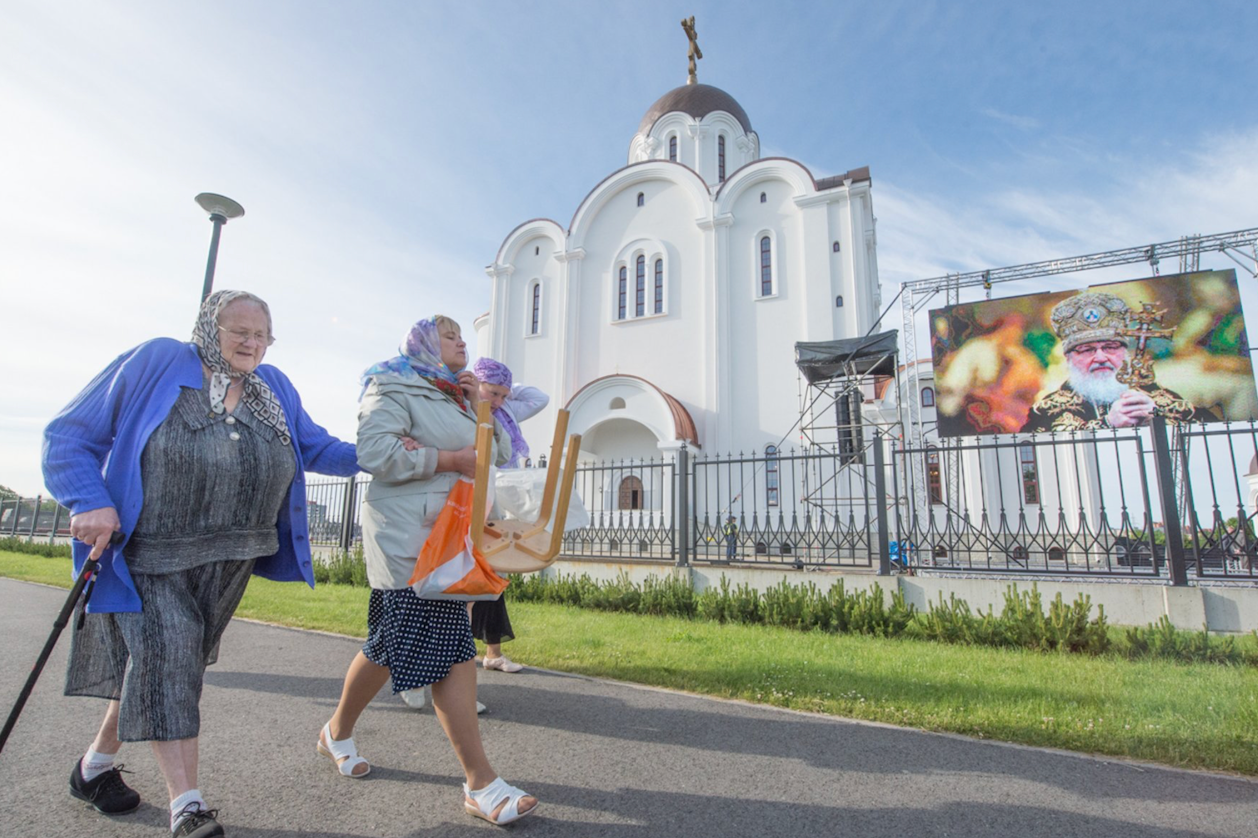
For decades, Western politicians, church leaders, and scholars viewed the ROC as a religious organization with a centuries-old history, while underestimating its significance as a vehicle of Russian influence. The ROC operated throughout Europe and other parts of the world, extending its influence into new territories. In Europe, both before and after the turn of the millennium, churches were built in a number of strategically important locations.
After the outbreak of the full-scale war, ROC communities in Western Europe initially experienced profound shock. Several priests and parishes left the ROC. However, depending on the attitudes of local community leaders, responses to how the war should be discussed and how the ROC’s role should be described varied considerably.
Particularly in Eastern Europe, where there is a large Russian Orthodox population, this led to intense public debate about the presence of the ROC and efforts by state authorities to minimize the influence of Patriarch Kirill. In Estonia, the smallest of the Baltic republics, located on the eastern coast of the Baltic Sea, Metropolitan Evgeny, a Russian citizen and head of the Estonian Orthodox Church of the Moscow Patriarchate (EOC MP), made a number of controversial statements. In 2024, this resulted in the Estonian authorities deciding not to renew his residence permit. On May 6, 2024, shortly after a similar statement by the Parliamentary Assembly of the Council of Europe, the Estonian parliament declared the ROC an organization supporting aggression.
Whereas in 2022 communities of the EOC MP published two open letters urging Metropolitan Evgeny to unequivocally distance himself from Patriarch Kirill, during the war the EOC MP community increasingly accused the Estonian state of persecution and did not oppose its own church leadership. The state did indeed adopt a tougher stance toward the Church and its public actions. However, to understand the reasons for this, it is necessary to trace the chronology of events since 2022, because the statements of the EOC MP clearly demonstrate how the Church participates in promoting Russian narratives, placing itself at odds with the history and self-understanding of the rest of Estonian society. This pattern is also applicable to other countries with similar historical experiences.
While in Ukraine, following the adoption of Bill No. 8371, signs emerged that the Ukrainian Orthodox Church of the Moscow Patriarchate might leave the canonical structures of the Russian Orthodox Church with the mediation of the Ukrainian state and the participation of the Ecumenical Patriarchate, in Estonia Auxiliary Bishop Daniil (Lepisk) stated on August 21 that canonical ties with the Russian Orthodox Church would remain. Under these circumstances, there appears to be little point in negotiating with the Estonian Orthodox Church. At the same time, the EOC MP continues to present a Russian imperial approach to history in the Estonian media, in contrast to the views of Metropolitan Stefan of the Orthodox Church of Estonia.
The attitude of the Russian Orthodox community in Estonia primarily reflects uncertainty about how to act after the war. It is important to focus on how different communities assess what is actually taking place in Russia, the history of the ROC, and the ROC’s role in the ongoing war. The ROC is also waging an ideological war. The question is what its foundations are and who exactly is participating in it.
In the West and among the Russian émigré community, Putin and his closest allies are generally regarded as the culprits behind this war. In the case of the Church, only Patriarch Kirill is usually mentioned. This understanding is mistaken. First, behind the Patriarch stands an entire ROC apparatus that refines and disseminates his messages. Second, we must also consider the collective responsibility of the Church for communicating those messages to the public. A large number of bishops attended the World Russian People’s Council in March 2024, where the war was described as a holy war. Yet among the ROC bishops there is not one who has publicly challenged the Church’s official line. Imperial self-awareness is promoted with little criticism by the majority of ROC representatives, despite the existence of a small anti-war opposition within the Church itself. There are, of course, priests who remain silent. Some consider the Church’s current methods wrong, but the identity of the ROC, its size, history, and related issues are not questioned.
Yet it is precisely the history of the ROC that forms the ideological foundation of the war. Alar Kilp of the University of Tartu studied the Patriarch’s sermons and speeches and concluded that the ROC began promoting an imperial worldview immediately after the collapse of the Soviet Union. This intensified in the late 2000s.
We can see this today when Kirill speaks of “Holy Rus,” the “Russian World,” and similar concepts. Recently, the EOC MP, responding to the World Russian People’s Council, stated, without mentioning Kirill by name, that the concept of the “Russian World” had replaced the Gospel. How short, in this regard, is the Church’s memory in Estonia?
Beginning in 2009, the EOC MP published a number of books with support from the Russkiy Mir Foundation. Even a book by Alexy II about the Orthodox faith in Estonia was published partly with Russian funding.
Most important is the historical narrative presented in these books. For decades, the EOC MP has promoted an alternative interpretation of Estonian history.
Today it is well known that, in the context of Russian aggression against Ukraine, both the ROC and Putin speak of a unified thousand-year-old Christian Russia that must be defended. This imperial narrative is the cornerstone of the EOC MP’s official historiography.
In the Estonian context, a cornerstone of Russian imperial history is the claim that Russian Orthodoxy became established in Estonia in the eleventh and twelfth centuries. Metropolitan Evgeny most recently referred to this in September 2022 in the EOC MP magazine Pravoslavny Sobesednik, attempting to justify why the ROC and the EOC MP, rather than the Orthodox Church of Estonia, an autonomous church under the jurisdiction of the Ecumenical Patriarchate, have the right to operate in this territory.
This assertion appears doubtful both from a historical perspective, since we know nothing definite about Orthodox settlements here at that time, and from the perspective of church history and canon law. The ROC extended its influence into Estonian territory only in connection with the expansion of the Russian Empire in the eighteenth century and gained a wider following among the population only from the nineteenth century onward. According to the founding document of the Moscow Patriarchate of 1589, Estonia was not considered part of the ROC.
Nevertheless, the EOC MP emphasizes that Estonia is an ancient Russian land upon which much Russian blood was shed many centuries ago. Therefore, the events of the 1920s, when the Estonian Orthodox community entered the jurisdiction of the Ecumenical Patriarchate, are portrayed as uncanonical and nationalist. The authors of the EOC MP’s history have failed to understand that the desire for ecclesiastical independence was a consequence of Russian imperial nationalism. For Estonian Orthodox believers, nationalism was viewed as resistance to earlier Russian nationalism. Although people of many nationalities were represented within the ROC during the Russian Empire, in language, culture, and tradition it was predominantly a Russian nationalist church.
By contrast, ROC historiography emphasizes that the ROC was and remains a multinational church. Perhaps this explains its sensitive reaction to criticism of ethnophyletism, Russian imperial ultranationalism, within the ROC.
Defenders of the ROC argue that Estonians are motivated by nationalism. This conflict is clearly visible in the writings of ROC clergy who only a few years ago, in the collective monograph Eesti Õigeusu Kirik: 100 aastat autonoomiat (2021), described the activities of the Estonian Orthodox community and its leader Metropolitan Aleksander (Paulus) during the 1920s and 1930s as politically motivated, nationalist, and uncanonical.
At the same time, the policies of the Russian government in the 1890s are portrayed positively as a period “when the Russian state first began consistently caring for the peoples of the Baltic provinces,” as Metropolitan Evgeny wrote in 2021.
Thus, Estonia is presented as naturally belonging within the Russian religious and cultural sphere, occasionally with a distinctive Baltic flavor.
Finally, the fact that the Soviet Union occupied Estonia in 1944 is ignored, while emphasis is instead placed on the achievements of the Red Army in liberating Europe from Nazism. Yet this was the same army that, after defeating Germany, did not return to Russia but continued occupying Estonia, an independent country, for nearly fifty years. For many years Metropolitan Evgeny visited the Soviet memorial in Tallinn on May 9. Although after the outbreak of war in 2022 all public events glorifying the Soviet Army, as an indirect glorification of the Russian Army, were prohibited, he nevertheless found an opportunity to visit the memorial on May 10.
It is therefore difficult to speak of the EOC MP as an organization capable of integrating the Russian-speaking community into Estonian society. Over recent decades it has not developed practices characteristic of a local church, but has instead preserved the image of imperial Orthodoxy, the very image that fuels the current war. Religion thus serves Russian imperial history and the political ambitions of the Russian state. Through historical narratives, it challenges Estonia’s sovereignty.
The clergy of the EOC MP also deserve attention. While the Orthodox Church of Estonia trains its priests in a seminary located in Estonia, the overwhelming majority of EOC MP clergy are Russian-speaking priests educated in Russian seminaries and academies. With rare exceptions, EOC MP parishes remain predominantly Russian-speaking.
As a result, the EOC MP is more or less isolated within Estonian society, and its relations with other Christian churches are fairly restrained. Personal relationships between clergy are more common, but even these are relatively rare. Under such circumstances, it was easy for Metropolitan Evgeny and other clerics to claim that the Church was under attack.
One month before the 2022 aggression against Ukraine, the EOC MP published a special issue of Pravoslavny Sobesednik in both Estonian and Russian, whereas it is normally published only in Russian, criticizing the independence of the Orthodox Church of Ukraine and defending the ROC’s historical right to Estonian territory. Similar statements frequently appear in EOC MP periodicals, along with numerous references to the pronouncements of Patriarch Kirill.
For example, in November 2018, four years after Russia’s invasion of Ukraine began, Pravoslavny Sobesednik published an article about an Orthodox festival in Moscow where a participant from Estonia asked Patriarch Kirill for guidance on how Orthodox Christians should act in troubled times. The discussion concerned the future of Orthodoxy in light of events in Ukraine. The Estonian delegate spoke about the 1990s, when conflict arose between two Orthodox communities in Estonia, and claimed that the ROC maintained its position in Estonia because the Orthodox community took to the streets. Kirill explained that the plan to destroy the unity of the ROC had global dimensions. This was not merely a struggle over jurisdiction, but an effort to destroy the world’s only strong Orthodox power. According to Kirill, the ROC remains free from global deception, meaning the ideologies of the liberal West. Is this truly how the Bishop of Moscow addresses his flock?
In a similar way, the entire Russian-speaking community of the EOC MP remains under the ideological influence of the ROC. The ideology of the Great Russian Empire has been cultivated among Estonia’s Russian population for so long that their identity is inseparable from it. This also makes it difficult for them to understand the current war. Even if they condemn Putin, that does not mean they are prepared to reassess Russian imperial ideology. This is especially difficult because Patriarch Kirill himself is directly engaged in providing ideological justification for the war within Russia. Through an imperial approach to history, war has been transformed into an ideological weapon. This is why, after two and a half years, no significant alternative interpretation of the Russian past has emerged and is unlikely to emerge in the near future. Putin may eventually fade from the scene, but imperialism itself faces no real threat. This poses a danger not only to Estonia but also to Russia itself, because without a reassessment of its imperial past there can be no hope for a new Russia.*
First published on publicorthodoxy.org