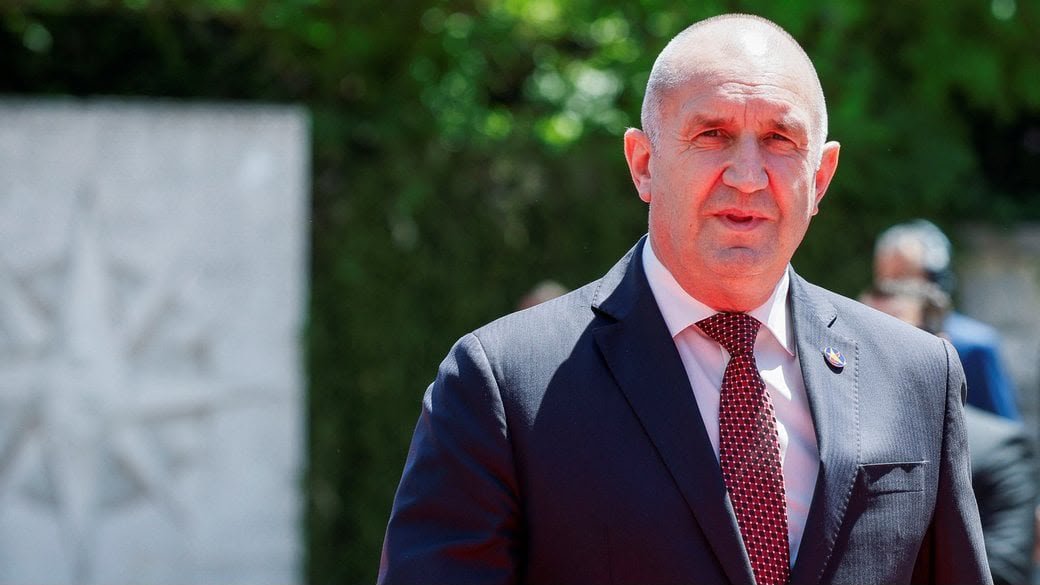
This was stated by Bulgarian Prime Minister Rumen Radev upon his arrival at the EU summit, NOVA.bg reports.
According to Radev, it is “not Patriarch Kirill who interests him,” but rather the Russian Orthodox Church, which is related to the Bulgarian Orthodox Church.
“I am not interested in Patriarch Kirill, but I am interested in the Russian Orthodox Church. Russian Orthodoxy made an important contribution to our liberation from five centuries of Ottoman rule. I am interested in Russian society as a whole, which has a church related to ours. We are members of one family. When we speak about sanctions of this kind, we must therefore know the position of the Bulgarian Orthodox Church. Furthermore, it is unclear how sanctions against the patriarch would help bring the war to an end,” he said, adding that Bulgaria would seek the removal of Patriarch Kirill from the sanctions lists.
As LF previously reported, Bulgaria stated that it would not support the new, 21st package of European Union sanctions against Russia because it includes the head of the Russian Orthodox Church, Patriarch Kirill. Two EU diplomats familiar with the discussions, speaking on condition of anonymity in Brussels, reported this.
The new EU sanctions package against Russia was discussed by EU ambassadors last week. At that time, Bulgaria expressed its opposition to adding Patriarch Kirill to the sanctions list, viewing it as interference in religious affairs.
Earlier, we reported that Brussels is preparing another package of sanctions against Russia which could, in particular, target senior members of the Russian Orthodox Church and its primate, a close ally of Putin. According to Politico, officials see an opportunity to move forward with sanctions that were previously blocked by the government of Viktor Orbán, the former Prime Minister of Hungary.
As LF reported, the new Hungarian government has declared its readiness to support European Union sanctions against the head of the Russian Orthodox Church, Patriarch Kirill, and other individuals who had been protected by former Prime Minister Viktor Orbán. The 21st package of economic sanctions is expected to be presented in June, with final approval anticipated by 15 July.
According to religious affairs expert Aleksandr Soldatov, although the EU leadership has not officially announced the forthcoming inclusion of the Russian Orthodox Church’s primate in the 21st sanctions package, reports in respected media outlets have caused concern for the 79-year-old patriarch.
As LF reported, the name of the head of the Russian Orthodox Church has been included in the draft of the new EU sanctions package. The official list of individuals to be targeted has not been published, but three diplomats confirmed to Euronews that Kirill is on the list. Within the EU, the patriarch is accused of spreading revisionist propaganda intended to justify the war in Ukraine.
According to information obtained by LF, the European Union has placed Metropolitan Tikhon (Shevkunov) of Simferopol and Crimea on its sanctions list. This is stated in a decision of the Council of the European Union. Shevkunov is often described as “Putin’s confessor” and as a likely successor to Kirill.
Commentary by LF:
Let us recall that we have already published a commentary by a Balkans specialist who explains the situation as follows.
The Syndrome of Unfulfilled Greatness and Resentment Toward the EU
Bulgaria has historically aspired to play a leading role in the Balkans, yet it experienced a succession of national catastrophes and losses. Membership in the European Union improved the economy, but it also reinforced among many Bulgarians a sense of peripheral status and secondary importance. Having failed to obtain the symbolic recognition they sought from the West, part of the elite and society retreated into political nostalgia.
The Politics of Negation, “Baba Yaga Is Against It”
Lacking the ability to offer a large-scale geopolitical project of their own, Bulgarian politicians have capitalized on historical grievances. The demonstrative refusal to support pan-European sanctions serves as a way to attract attention and restore a perceived sense of significance through the obstruction of decisions made by others.
Psychological Envy of Ukraine
The attitude of part of Bulgarian society toward the Russian-Ukrainian conflict carries a deep psychological dimension. Ukraine today is doing what Bulgaria was unable to achieve in its own time: waging a determined struggle for full historical agency and for an escape from the shadow of empire. Ukraine’s successes and the international attention focused on it provoke latent irritation and envy among a frustrated segment of Bulgarian society.
Seeking Greatness in Another’s Shadow
Like Hungary, Bulgaria has become trapped in a mindset that blames the “destroyers of a stable past” for its troubles rather than confronting its own dependence. A significant part of the Bulgarian political class still seeks influence not through strengthening domestic institutions but through proximity to Moscow, mistakenly equating a return to an old dependency with the restoration of former greatness.
Bulgaria’s position on Patriarch Kirill can be interpreted as an attempt by a small nation with large unrealized ambitions to make its voice heard against the mainstream, using longstanding ties with Russia as a political instrument of self-assertion.