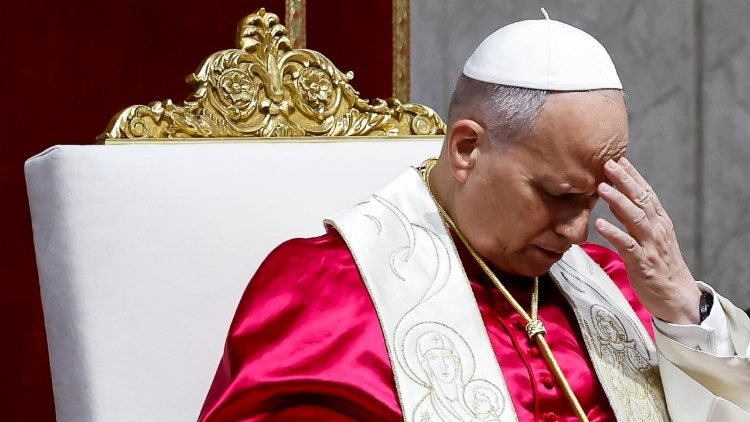
For the second time in the past three months, Pope Leo XIV has found himself at the center of international media attention.
Previously, it was his dispute with President Trump, in which the pontiff’s position appeared anti-war and, broadly speaking, consistent with both logic and the Gospel.
That controversy, connected to opposition to war, has now entered a less visible phase. Yet Pope Leo XIV’s decision not to attend the celebrations marking the 250th anniversary of American independence, having declined an official invitation from the White House and cited political disagreements, including criticism of U.S. policies and differing views on international conflicts, is unlikely to have gone unnoticed by Trump.
If, in the first dispute, public opinion largely sided with the Apostolic See, the events of last week can hardly be regarded as a victory for the head of the Roman Catholic Church. This time, the issue concerns a major ecclesiastical schism.
The New York Times has described it as the largest schism in the Catholic Church since at least 1870, when a considerably smaller group of Catholics in Germany broke relations with the Vatican.
WHAT IS THE DISPUTE ABOUT?
For more than sixty years, Roman Catholics have lived under the guidance of the documents of the Second Vatican Council.
These documents define the modern development of the Catholic Church. They have been described as a program of pastoral renewal and a revolution of continuity.
The Council lasted three years and held four sessions. Approximately 2,500 bishops attended, and decisions were adopted through formal voting procedures. Any document required a two-thirds majority for approval. As a result, the program of pastoral renewal was adopted by an overwhelming majority, and the documents were signed by Pope Paul VI.
The Council did not change Catholic dogma, but it fundamentally renewed the Church’s language, culture, and relationship with the modern world.
Sixteen documents, including constitutions, decrees, and declarations, were adopted and transformed the Church.
The Mass was permitted in national languages rather than exclusively in Latin. The Church acknowledged the value of modern culture, science, and progress. It recognized that other Christian traditions, including Orthodoxy and Protestantism, also contain elements of salvation. Efforts toward Christian unity were encouraged. The declaration Nostra Aetate condemned antisemitism and acknowledged spiritual values within Islam, Buddhism, and Hinduism.
The Church also ceased to be viewed solely as a hierarchical structure led by the Pope and bishops. It was proclaimed a community of all believers.
In many respects, these were optimistic documents adopted in accordance with established procedures. They reflected an effort by Roman Catholics to demonstrate that Christians could engage constructively with the modern world.
Every religious tradition includes a proportion of fundamentalists, and the Roman Catholic Church is no exception.
One Catholic community, the Society of Saint Pius X, opposed the Council’s reforms from the very beginning. Relations between the Vatican and the Society have resembled a pendulum, swinging between complete rupture and attempts at reconciliation, culminating in the current crisis of 2026. Both of Pope Leo’s predecessors, Benedict XVI and Francis, took steps toward restoring unity. Benedict permitted wider celebration of the traditional Latin Mass, while Francis temporarily recognized the validity of confessions and marriages performed by Society priests.
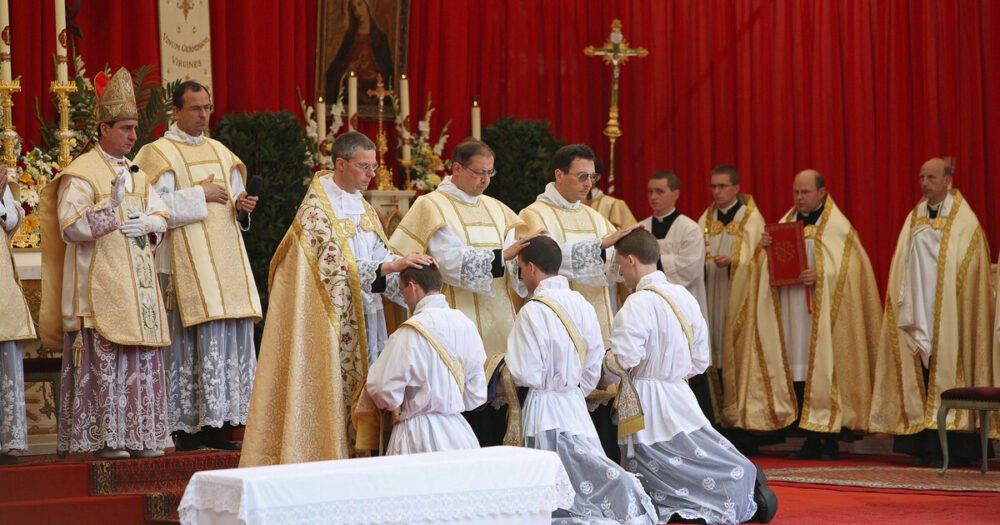
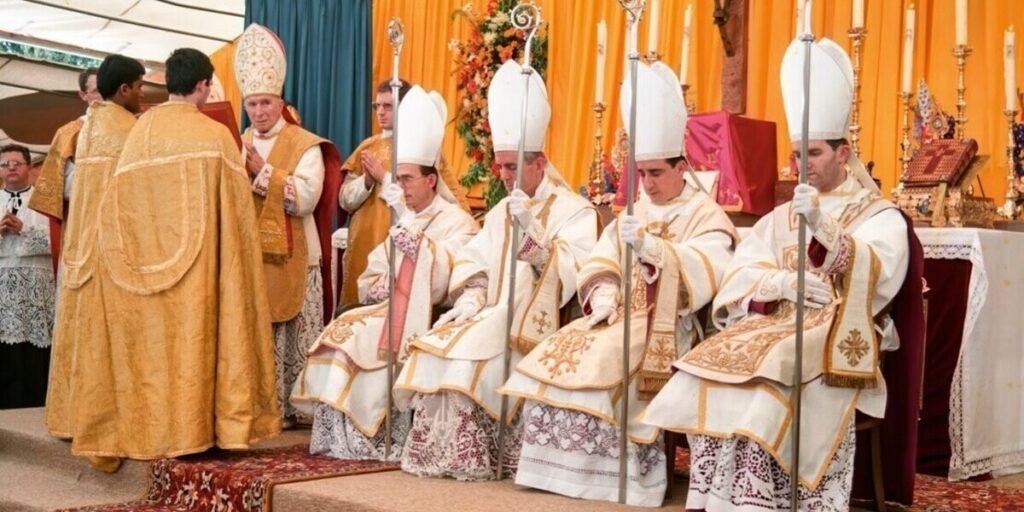
What happened in the Swiss town of Ecône at the beginning of July? New bishops were consecrated there.
The consecration of bishops is both a sacramental act of immense significance and a highly regulated administrative process. Within the Roman Catholic Church, episcopal consecrations require papal authorization.
The Mass and consecration ceremony took place on Wednesday in Ecône, where the Society’s headquarters are located.
Were the participants aware of the consequences? Yes. This was not the first time such an event had occurred.
In 1988, thirty-eight years ago, the Society’s founder, Archbishop Marcel Lefebvre, defied a Vatican prohibition and carried out similar unauthorized episcopal consecrations, for which he was excommunicated by Pope John Paul II. That penalty was later lifted by Pope Benedict XVI.
Did the current pontiff attempt to reach an agreement with the ultraconservatives?
Without question.
THE POPE TO THE ULTRACONSERVATIVES: PLEASE RETURN
In 2026, the Society’s superior, Father Davide Pagliarani, formally rejected the Vatican’s proposal to resume theological dialogue. Pope Leo’s final warning came one day before the consecrations. In a letter, he warned that those involved would face excommunication. “Please return,” the Pope wrote on the eve of the ceremony.
His appeal went unheeded.
The Vatican’s response unfolded in stages and proved far more severe than many had anticipated.
After the consecrations took place, the Apostolic See issued an official decree stating that:
- the Society’s actions constituted a schism
- the bishops who performed the consecrations, along with the four newly consecrated bishops, had incurred excommunication
- the Society existed outside communion with the Catholic Church
The Vatican further stated that Society priests were prohibited from witnessing marriages and hearing confessions. The faithful were strongly encouraged to stop attending Masses celebrated by Society clergy and to refrain from participating in its activities.
At the same time, the decree left open the possibility of reconciliation for those willing to renounce involvement with the Society. The document stated that “the Church, as a caring mother, will receive with sincere love and living concern all those who wish to return to full communion with her.”
HOW MANY ULTRACONSERVATIVE CATHOLICS ARE THERE, AND WHO USES THEM?
An interesting detail emerged in the Financial Times, which reported that among the approximately 15,000 attendees were members of National Future, a recently established far-right Italian political party. Reports also indicated the presence of members of the far-right movement Forza Nuova.
This is hardly surprising.
Journalists have long noted that the Society of Saint Pius X and ultraconservative Catholic movements more broadly have maintained deep connections with far-right, nationalist, and populist political forces.
The Society’s founder, Archbishop Marcel Lefebvre, openly supported Jean-Marie Le Pen, leader of the far-right National Front. For decades, the parish of Saint-Nicolas-du-Chardonnet in Paris served as a bridge between Catholic traditionalists and French nationalists. The Society’s history has also been marked by controversy.
Paul Touvier, a member of the collaborationist Vichy Militia accused of crimes against humanity, was arrested on May 24, 1989, at the Monastery of Saint Francis in Nice, which belonged to the Society of Saint Pius X. A detailed investigation of this sheltering operation and the connections between clergy and far-right radicals later formed the basis of a report by a commission of historians led by René Rémond.
This was not an isolated case.
The exact number of Society supporters remains difficult to determine. Its representatives estimate between 300,000 and 600,000 followers.
Independent observers, however, regard these figures as exaggerated.
The Society currently has six bishops, 751 priests, 264 seminarians studying in five seminaries, 145 religious brothers, 88 oblates, and 250 nuns representing fifty nationalities. It is difficult to imagine how roughly seven hundred priests could effectively serve between three hundred thousand and six hundred thousand faithful. It is equally difficult to believe that more than half a million Catholics worldwide wish to worship exclusively in Latin and reject dialogue with other religions.
Some commentators criticize the Vatican’s severe sanctions. In the past, Rome described members of the Society as people whose canonical status remained unresolved. The creation of a parallel ecclesiastical jurisdiction, however, appears to have crossed a line the Apostolic See could not accept.
Although most analysts agree that a schism should be called a schism, they also emphasize the importance of keeping the door open for the faithful and clergy.
Church schisms rarely remain purely religious phenomena, especially within major denominations. They often influence politics, society, and even international relations. The scale of their impact depends on how closely a state is connected to religious institutions.
There is little doubt that private donors and populists of every variety, many of whom have never read the documents of the Second Vatican Council, will seek to make use of the “ultracatholics.”
Populist leaders in Europe and the United States frequently employ traditional Catholic imagery, including the defense of the Latin Mass, to appeal to conservative voters.
There is no need to exaggerate the scale of the revolt. The Catholic Church has 1.4 billion members worldwide, and traditionalists account for less than one tenth of one percent of all Catholics. Nevertheless, this appears to be a classic case of the instrumentalization of religion. In this instance, ideas associated with Catholic traditionalism are being used to mobilize the political right.
Notably, some of the dissenters continue to insist publicly that an understanding with Rome remains possible.
We will continue to monitor developments. Even now, however, it is clear that the future unity of Roman Catholics will depend in part on the willingness of right-wing political forces to support and amplify ultraconservative movements.
Anna Jansone