A memorandum submitted to the United Nations Special Rapporteur on Freedom of Religion or Belief argues that the escalating violence against Christians and moderate Muslims in Nigeria amounts to genocide.
This was reported by Christian Today.
The document calls on the United Nations to investigate systematic religiously motivated violence carried out by jihadist groups in various parts of Nigeria.
The memorandum was prepared by the organizations Genocide Watch and the Alliance Against Genocide and addressed to United Nations Special Rapporteur Nazila Ghanea.
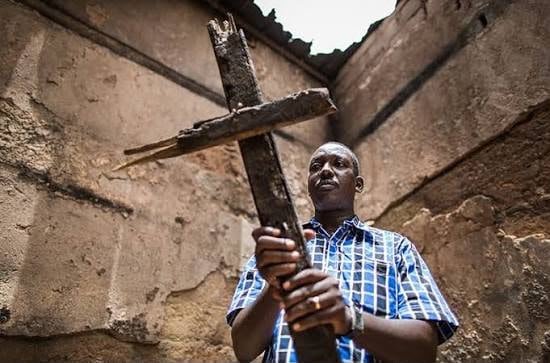
The human rights organizations state that militant groups, including Boko Haram, the Islamic State West Africa Province (ISWAP), Fulani jihadist militias, and Lakurawa, have collectively killed more than 60,000 people and displaced more than 2.2 million since 2001. The attacks have targeted churches, Christian villages, schools, and civilians across the Middle Belt and northern regions of the country.
The memorandum also states that certain members of Nigeria’s security forces failed to intervene during attacks on Christian communities. Members of the country’s political and military establishment are accused of complicity. It further emphasizes that kidnapping for ransom has become a primary source of funding for armed groups. The authors state that at least 580 civilians, including women and children, were abducted in 2024 alone. They also allege that some hostage camps continue to operate near military installations.
The text refers to the June 2025 attack on Yelwata, a predominantly Catholic village in Benue State, where Fulani militants reportedly killed between 100 and 200 people and burned homes. The victims reportedly included young children and elderly residents. It also cites a separate attack in Plateau State in July 2025 in which at least 27 civilians were reportedly killed in the Christian farming village of Bindi. According to the memorandum, nearby security forces participating in Operation Safe Haven allegedly ignored requests for assistance.
Genocide Watch argues that many affected communities have been left without adequate protection and accuses the Nigerian government of downplaying the religious dimension of the violence while attempting to portray the incidents solely as herder-farmer conflicts or banditry.
A substantial section of the memorandum is devoted to what it describes as the Nigerian government’s “tactics of denial.” The document alleges that government officials and some international organizations have sought to portray the crisis primarily as climate-related migration, a longstanding intercommunal conflict, or criminal activity rather than deliberate religious persecution.
The authors also accuse the authorities of discrediting those who document the violence and of prioritizing political stability, economic interests, and peace negotiations over holding those responsible for the killings accountable. Journalists investigating such incidents have reportedly faced intimidation, detention, and death threats from the Nigerian authorities.
The memorandum concludes with a call for the United Nations Special Rapporteur not to soften the assessment of religious persecution in Nigeria. It also urges stronger international engagement, including reforms of Nigeria’s security institutions and increased global pressure on armed extremist groups.