A representative of Russia’s Foreign Ministry has accused authorities in Moldova and Estonia of exerting “active political pressure” on structures of the Moscow Patriarchate.
Mikhail Melekh, Russia’s Foreign Ministry special representative for international cooperation on freedom of religion, made the statement on the sidelines of the 63rd session of the UN Human Rights Council in Geneva, RIA Novosti reports.
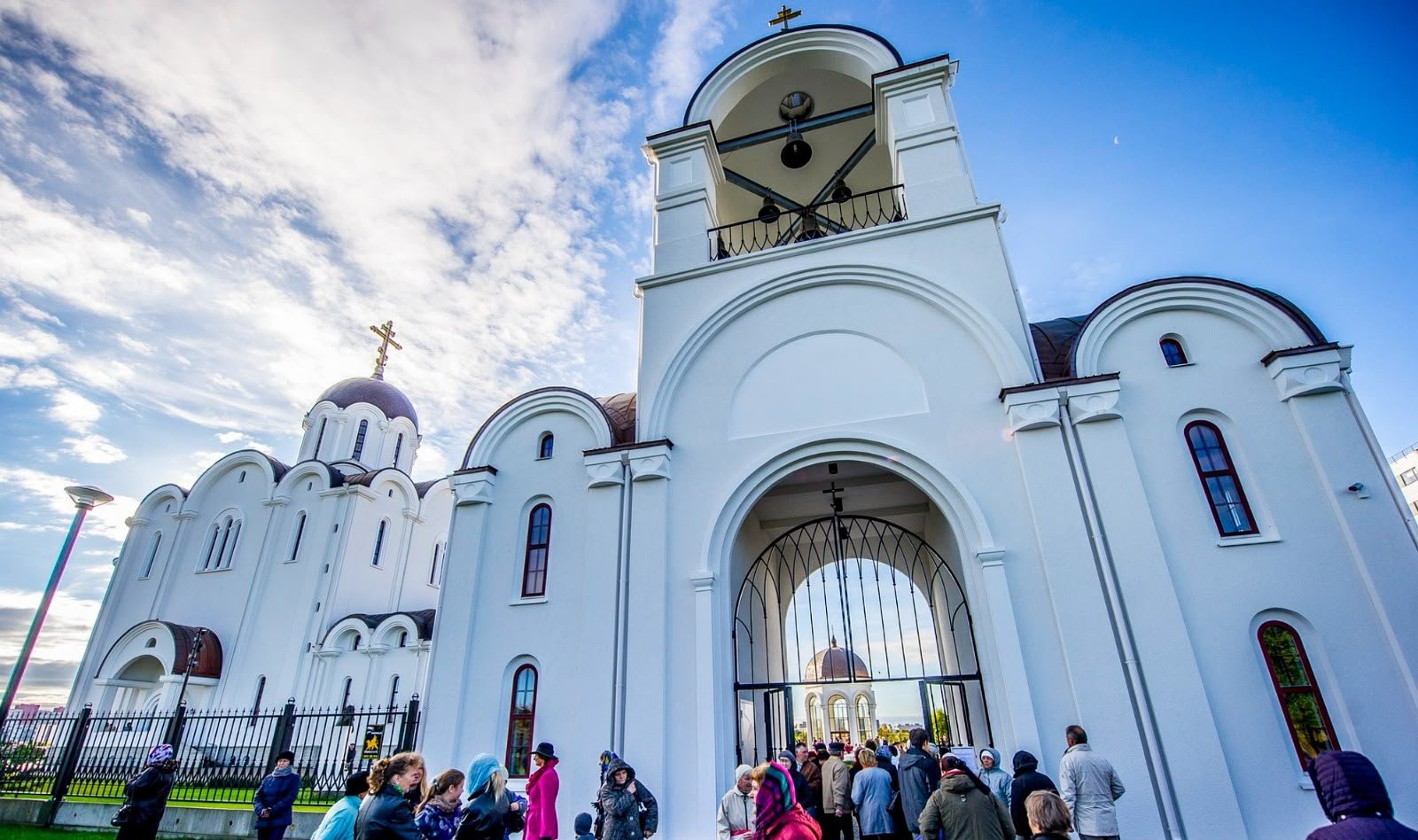
“Undoubtedly, pressure is being exerted on structures of the Moscow Patriarchate in Moldova. For now, this is taking the form of political pressure. But we should also not forget the Baltic states, particularly Estonia, where direct legislative pressure is being applied to force the Estonian Orthodox Church to sever its ties with the Moscow Patriarchate,” Melekh told Russian journalists in Geneva.
According to him, “politicians are interfering in canon law, and pressure is being exerted on the internal religious sphere.”
Melekh said that Russia “builds relations between the state and religious denominations according to a policy of non-interference” and that “in this respect, Russia has extensive experience.”
As LF reported, in early May, the European Parliament’s Committee on Foreign Affairs (AFET) voted on a draft resolution describing how authoritarian states, including Russia, and structures linked to them persecute, intimidate and control dissidents, opposition figures, journalists, human rights defenders, activists and diaspora communities outside their countries.
Earlier, we reported that analysts have described Council of Europe Parliamentary Assembly and European Parliament documents concerning the ROC as a major European awakening to the Russian Church’s influence on European communities.
As LF reported, Russian authorities have sought to strengthen control over Moldova through widespread bribery of voters and local Russian Orthodox Church priests. The investigation reported that ROC priests serving in Moldova were hired for propaganda purposes.
In Moldova, the Liberal Party called on parliament to adopt legislation requiring the Metropolis of Moldova and Chișinău, which is affiliated with the Moscow Patriarchate, to permanently sever ties with the Russian Church. Otherwise, the party argues, the religious organization should be outlawed because it is an instrument of Russian influence.
Earlier, we reported that the Russian Orthodox Church had once again claimed that its canonical church structures were facing “pressure from the authorities of Ukraine, Moldova, Estonia, Latvia and Lithuania.”
Will the Russian Orthodox Church manage to preserve its ecclesiastical influence in Moldova by distorting the information space and changing the country’s political course? LF analysis on the issue is available here.
Earlier, Russian Orthodox Church Patriarch Kirill Gundyaev claimed that a campaign against the Russian Orthodox Church was allegedly continuing in several countries, including Estonia.
Although the Russian Orthodox Church considers Estonia part of its canonical territory in its official documents, this is not the case under Orthodox canon law, according to church historian Priit Rohtmets and Orthodox canon law specialist David Hait-Shtade.