An interview with Orthodox Church of Ukraine priest Petro Bokanov about Russian influence on Orthodox communities in Germany, Ukrainian refugees and the long-term consequences for German society
In Germany, Russian church structures have an extensive network of parishes, participate in interchurch organisations and interact with German religious organisations. Since the beginning of Russia’s full-scale invasion of Ukraine, providing pastoral care to Ukrainian refugees has become one area of their activity.
But the influence of the Moscow Patriarchate is not confined to its own parishes. Through interchurch meetings, relations with other Orthodox jurisdictions and cooperation with German churches, it has opportunities to participate in shaping approaches to work with Ukrainians.
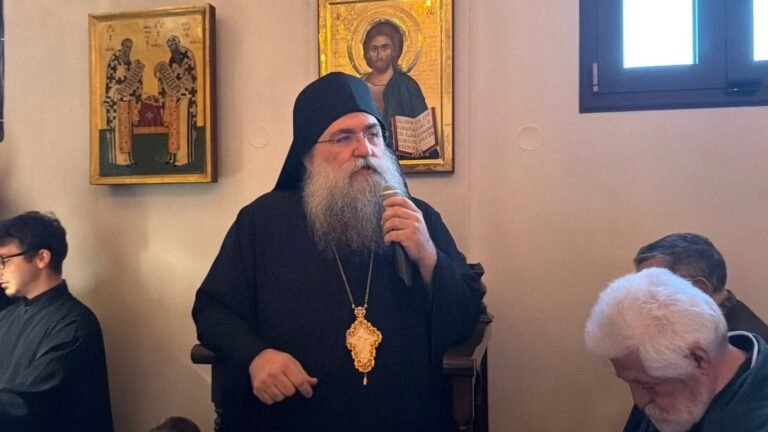
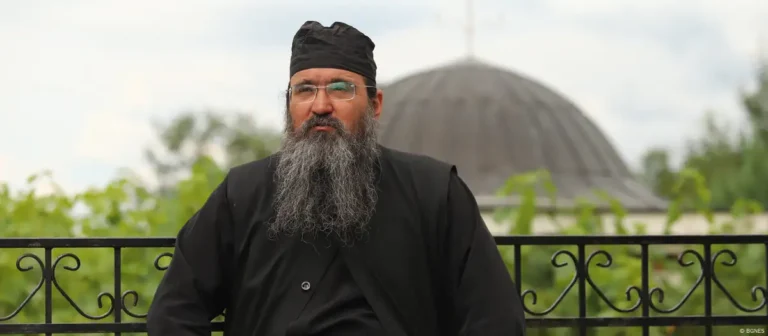
According to Orthodox Church of Ukraine priest Father Petro Bokanov, who has lived in Germany for almost 30 years, such activity could have consequences far beyond church life. A significant proportion of Ukrainian refugees will remain in Germany, which means that the views being formed among them today could also influence German society in the future.
Why do other Orthodox churches continue to engage with representatives of the Moscow Patriarchate? How does the language used to discuss Russia’s war change at interchurch meetings? Why are structures of the Ukrainian Orthodox Church actively expanding their presence in Europe, while the Orthodox Church of Ukraine faces difficulties in organising pastoral care for its own faithful?
We discussed these issues with an OCU priest who ministers to Ukrainian communities in Frankfurt and Mannheim and assists refugees, wounded Ukrainian servicemen and seriously ill Ukrainians.
“In Ten Years, Germany Could Have People With a Completely Different Attitude Toward Russia”
– Father Petro, there are currently large numbers of Ukrainian refugees in Germany. Many of them will remain here permanently. What could be the long-term consequences of Ukrainians coming under the influence of the Russian Orthodox Church and structures linked to the Moscow Patriarchate?
– I believe this is a very serious problem. We are not talking only about which church a person attends today. We are talking about who that person will become in five or ten years, what views they will hold, and how they will perceive Russia, Ukraine and the war.
If people spend years in an environment where they are told about the “three brotherly peoples,” that Ukrainians and Russians have nothing to divide them, and that politicians or the West are to blame for everything, this will influence their views. A person may gradually start saying, “What difference does it make? There are good Russians, after all.” That is already a completely different perception of what is happening. I am concerned that such activity could work not only against Ukraine, but also against Germany’s own interests.
– So this is not simply about the religious life of the Ukrainian diaspora, but about a potential change in public attitudes within Germany itself?
– Exactly. A significant proportion of Ukrainians will remain here and become part of German society. I can see how actively Russian propaganda operates. In Germany, there are political forces, particularly Alternative for Germany and Sahra Wagenknecht’s political movement, whose rhetoric includes arguments that echo Russian narratives. I do not know whether the Russian Orthodox Church cooperates with them or, if so, how. But in my view, some of their arguments are very similar.
The question, therefore, is what views will be formed among people who are currently under the influence of such church structures. And this is no longer an issue concerning only the Ukrainian church.
“The Russian Church Exerts Influence Not Only Through Its Parishes. Other Churches Give It a Seat at the Table”
– You speak about the influence of the Moscow Patriarchate in Germany. But there are other Orthodox jurisdictions here, including Ukrainian ones. What are their relations with the Russian Orthodox Church like?
– This is precisely where one of the most serious problems lies. The Russian Church does not operate in isolation. It participates in interchurch organisations, maintains relations with other Orthodox jurisdictions and, through these connections, gains opportunities to influence discussions on issues concerning Ukrainians.
Look at what happened after the beginning of the full-scale invasion. In August 2022, a meeting of church representatives devoted to Ukrainian refugees was held in Frankfurt. By then, the world had already seen Bucha, Irpin and devastated Mariupol. Ukrainians were fleeing the war. As volunteers, we were working virtually around the clock, helping people at refugee reception centres, providing humanitarian assistance and supporting the wounded. Patriarch Kirill, meanwhile, had already fully aligned himself with the Russian authorities and was presenting awards to servicemen in church even after Bucha.
Representatives of the Evangelical Church in Germany, the Russian Orthodox Church Outside of Russia, the Ukrainian Orthodox Church of the Moscow Patriarchate and the Ukrainian Orthodox Church in the Diaspora under the Ecumenical Patriarchate all sat at the same table in Frankfurt. May the latter forgive me, but they were there too. In other words, representatives of church structures linked to Moscow, which had both blessed and justified the war, were among those involved in providing pastoral care to Ukrainians who had fled Russia’s war.
– But participating in the same meeting does not in itself mean that the other churches share the position of the Russian Orthodox Church?
– Of course, participation in itself does not mean agreement with all of its positions. But what matters is the outcome of these meetings and the perceptions they create among German partners. When a representative of the Moscow Patriarchate sits at the same table as representatives of other Orthodox churches, that person is perceived as one of the full participants in discussions about pastoral care for Ukrainian refugees. And I believe this helps the Moscow Patriarchate strengthen its position.
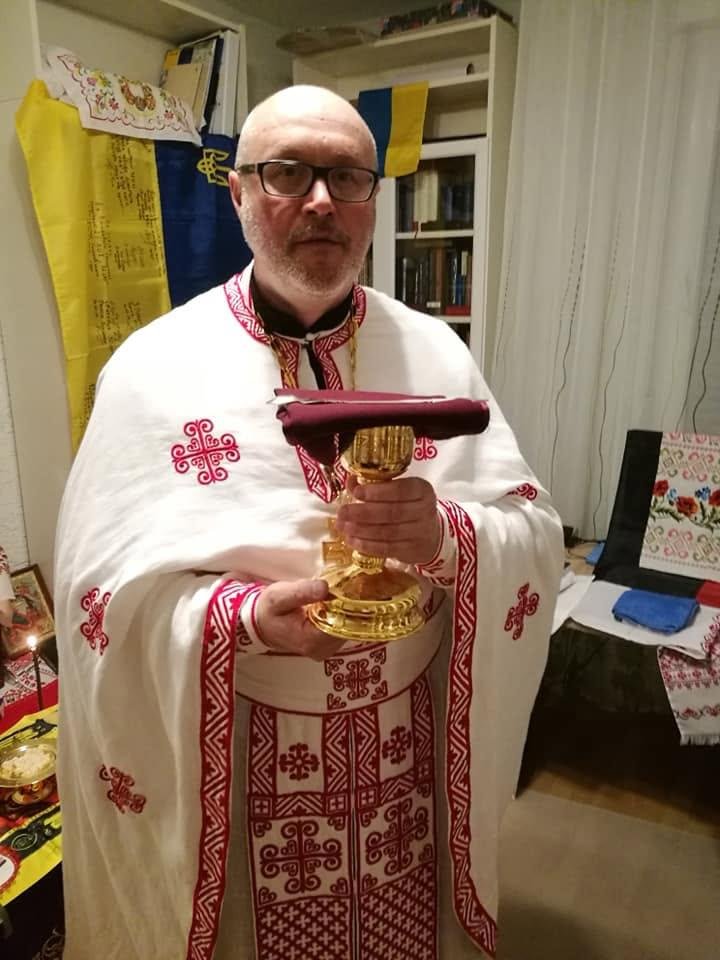
– So the problem is not only direct influence on believers, but also the fact that other churches effectively help legitimise the Moscow Patriarchate within Germany’s church landscape?
– I am convinced that joint events can contribute to legitimising its activities. The Moscow Patriarchate gains access to interchurch platforms and an opportunity to participate in discussions about how assistance to our people should be organised.
At the same time, I do not understand why Ukrainian Orthodox jurisdictions whose centres are not in Russia should interact with the Moscow Patriarchate specifically on matters of pastoral care for Ukrainians who have suffered because of this war.
“There Is No Need to Say Who Is to Blame”: How Russia’s War Is Discussed at Interchurch Meetings
– Can you give specific examples of how these interchurch contacts influence the discussion of the war?
– This was not an isolated meeting. On June 12, 2023, another event devoted to Ukrainian refugees was held in Frankfurt. This time the Russian Orthodox Church itself also took part, having been specifically invited by the organisers. Another meeting was held in Berlin on February 5, 2024. Representatives of the same church structures participated. The representative of the Ukrainian Orthodox Church in the Diaspora was unable to attend because of a church council, but sent an official apology for his absence.
The German newspaper Frankfurter Allgemeine Zeitung reported on this meeting. I was particularly struck by some of the arguments voiced during the discussion. It was said that everyone wanted peace and did not want the conflict to be brought into Germany. The idea was expressed that there was no need to say who was to blame. A ceasefire and negotiations with Moscow and Kyiv were discussed. The article also cited claims that a coup had taken place in Ukraine in 2014 and that Russians and Ukrainians were brotherly peoples.
The representative of the Ukrainian Orthodox Church of the Moscow Patriarchate did not want to comment on political issues, explaining that his goal was dialogue, including with the Russian Church. A representative of the Ukrainian Orthodox Church in the Diaspora told the journalist that priests do not wage wars. They say that the war should not be brought into Germany. But the war is already here! Ukrainian refugees are a consequence of the war. Severely wounded Ukrainian servicemen and civilians receiving treatment in German hospitals are also a consequence of the war.
This creates a strange logic: there is no need to notice the war in Germany, there is no need to talk about who started it, but church structures linked to Moscow can nevertheless participate in providing pastoral care to people who have suffered because of that war.
– And as a result, German church partners may come to see this as a conflict between two peoples who simply need to be reconciled?
– That is exactly the danger I see. When talk of aggression is constantly replaced by words about peace, brotherly peoples and the need for dialogue, it can change the very understanding of what is happening. And here we return once again to the question of long-term influence. Such perceptions can spread not only among parishioners, but also within German church and civic organisations.
“They Talk About Peace, but Do Not Name the Aggressor”
– What specific narratives, in your view, are being spread in church communities linked to the Moscow Patriarchate?
– First and foremost, there is talk about peace. “We are for peace,” “war is bad,” “Ukrainians and Russians are brotherly peoples,” “we have nothing to divide us”… At first glance, it all sounds very good. Who could be against peace? But behind these words, the central question can disappear: who started the war and who bears responsibility for it? Instead, people are offered the idea that politicians set us against each other, that the West is to blame, that we are all Slavs and should be together. In my view, this is a very dangerous substitution of concepts.
– So you believe that the rhetoric of reconciliation can become an instrument of influence?
– Absolutely. On the one hand, they have to present themselves as peace-loving and say the right things. On the other, the narratives that the Moscow Patriarchate has spread for years have not disappeared. What concerns me most is that all of this is happening among people who have experienced war, lost their homes, or have relatives at the front or in the occupied territories.
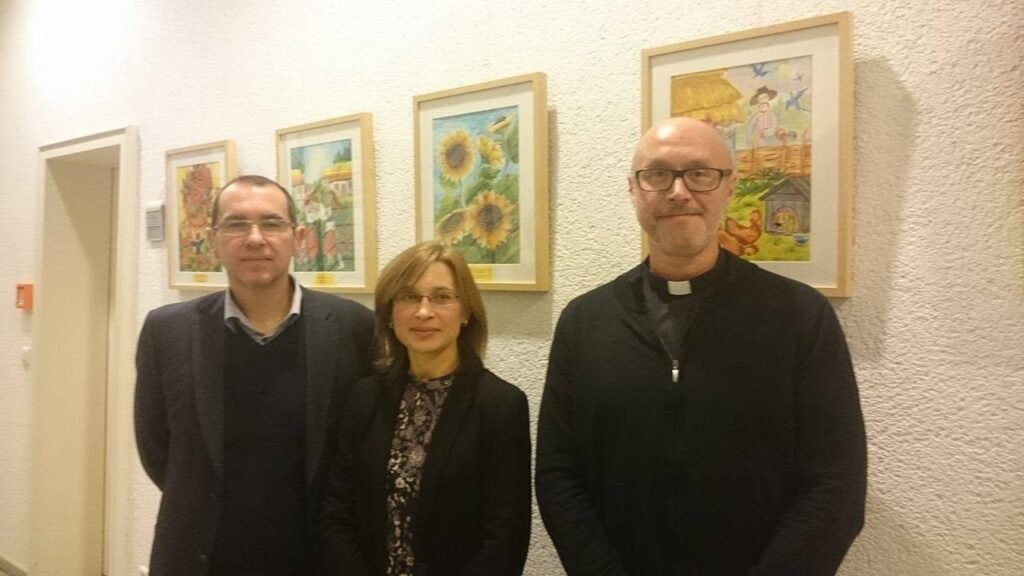
– You have also spoken about possible security risks. What exactly concerns you?
– I am concerned about how much personal information could become accessible to people linked to Russian structures. Almost every Ukrainian family has someone at the front, in captivity or in the occupied territories.
People come to a priest with very personal concerns. They talk about their loved ones and what is happening to them. I fear that such information could be of interest to Russian intelligence services. I am particularly concerned about attempts by representatives of Moscow-linked church structures to establish contact with our wounded servicemen. I believe this issue needs to be treated with great caution.
“Russian Church Structures Have Hundreds of Parishes. The OCU Has Only a Handful”
– How extensive is the presence in Germany of Russian Orthodox structures and those linked to the Moscow Patriarchate?
– It is important to understand that we are not talking about a single organisation. There is the Russian Orthodox Church itself. There is the Russian Orthodox Church Outside of Russia, which retains its own administration but is in canonical unity with the Moscow Patriarchate. There is the Ukrainian Orthodox Church of the Moscow Patriarchate, which began actively establishing communities abroad after the start of the full-scale invasion. There is also the Ukrainian Orthodox Church in the Diaspora, which is under the jurisdiction of the Ecumenical Patriarchate.
But the scale of these churches’ presence is completely different. According to data I collected for my publication, the Russian Orthodox Church itself had about 130 parishes in Germany, while ROCOR had 78. At the time, the Ukrainian Orthodox Church of the Moscow Patriarchate had 25 parishes, 10 pastoral centres and 36 priests. The OCU had three parishes and two active priests.
If someone comes to Germany and wants to find an Orthodox community, they are far more likely to find themselves near a parish of the Russian Orthodox Church, ROCOR or the Ukrainian Orthodox Church of the Moscow Patriarchate than an OCU parish. And we are talking about people who have found themselves in a foreign country, lost their homes and experienced enormous stress. They need spiritual support. If there is no Ukrainian church nearby, they go where they have an opportunity to attend a service.
Orthodox Jurisdictions in Germany
– You said that some communities of the Ukrainian Orthodox Church of the Moscow Patriarchate have begun using Ukrainian. How do you view this?
– Yes, they suddenly started speaking Ukrainian. Someone looking for a Ukrainian Orthodox church may not understand exactly which church structure they have entered. They hear Ukrainian, see a familiar rite and meet a priest who speaks to them. For someone who has fled the war, that may be enough to inspire trust. And then the question arises of what views they will hear in that environment.
– How actively is the Ukrainian Orthodox Church of the Moscow Patriarchate expanding its presence outside Ukraine?
– Very actively. According to the data I cited in my publication, by the end of 2023 the UOC had 58 parishes and 26 pastoral centres abroad, a total of 84 communities. They operated in 15 Western European countries. In March 2023, the UOC’s Western European Vicariate was established, bringing these overseas communities together. In other words, this is not a matter of individual priests who happened to find themselves abroad. An organisational structure is being created, parishes are being opened and bishops are coming. This is systematic work.
– Do you believe this structure receives support from outside the church itself?
– I am convinced that it has substantial resources and support. Look at how quickly new parishes are opening, how issues involving premises are resolved, and how priests and bishops arrive. At the same time, our priests face enormous difficulties. In my view, such a disparity in capabilities requires attention.
“German Churches Sometimes Genuinely Do Not Understand Whom They Are Helping”
– You have said that the Russian Church has significant influence within Orthodox organisations in Germany. What about the Catholic and Protestant churches? Do they understand the differences between Ukrainian and Russian Orthodox structures?
– In my experience, far from always. I receive letters from German priests who understand which church they are dealing with and who try at the local level to prevent the expansion of the Moscow Patriarchate. But there are other cases as well.
Many German church organisations sincerely want to help Ukrainian refugees. They provide premises, support parishes and participate in organising pastoral care. At the same time, they do not always understand the relationships among the different Orthodox jurisdictions or the positions those jurisdictions take on the war. As a result, German churches may help strengthen Moscow Patriarchate structures without intending to do so.
– So the Russian Orthodox Church also exerts influence through existing church connections and infrastructure?
– Yes. This involves access to premises, participation in interchurch organisations and interaction with civic organisations. According to the information available to me, structures of the Ukrainian Orthodox Church of the Moscow Patriarchate are also seeking to build their own churches and participate in Orthodox religious education in German schools. Imagine what that means in the long term.
Today a church structure receives premises for worship. Tomorrow it becomes a permanent participant in interchurch meetings. Then it may gain an opportunity to participate in children’s religious education. This is no longer simply a question of where people will pray. It is about how church structures establish themselves in German public life.
– And what, in your view, needs to be done?
– First of all, work needs to be done with German society and with civic and church organisations. The differences between Orthodox jurisdictions, their relations with Moscow and their positions on the war need to be explained. Conferences, round tables and continuous dialogue are needed.
Many Germans support pastoral care for Ukrainian refugees by Russian and affiliated church structures out of a sincere desire to help. But they need to understand exactly whom they are helping.
“In 2014, People Wearing St. George Ribbons Began Coming to Church. We Left”
– Let us return to your own story. You have lived in Germany for almost 30 years, but became a priest much later. How did your experience with the Russian Church begin?
– I have lived in Germany for 29 years and have served as a priest since 2015. When we arrived here, there were virtually no Ukrainian Orthodox communities nearby. So I attended the Russian Orthodox Church Outside of Russia.
But when Russian aggression began in 2014 and Crimea was annexed, everything changed. People wearing St. George ribbons began coming to services. I told the priest that if I saw it again, I would not come back. And we left. Immediately.
– Did the preaching itself change, or the atmosphere within the community?
– This theme of “brotherly peoples” was constantly present. Although I should say that our priest was a perfectly reasonable person and did not promote the “Russian World” ideology so aggressively. But there were other communities, for example in Wiesbaden, where all of this was much more pronounced. There were Cossacks there, and they are still there. We saw what was happening and said: no, this is unacceptable to us. After that, we began establishing a parish of the Kyiv Patriarchate, and in 2015 I was ordained to serve in Germany.
“For Years We Could Not Find a Church. The Russian Church Had Money and Influence”
– When you began establishing Ukrainian parishes in Frankfurt and Mannheim, what difficulties did you encounter?
– First of all, it was very difficult to find premises for services. Germany has an Orthodox Episcopal Assembly. It was headed by Metropolitan Augoustinos of the Ecumenical Patriarchate, but the Russian Church always played a significant role because it had money and influence.
When we belonged to the Kyiv Patriarchate, we encountered serious opposition. For a very long time, we could not find premises in either Frankfurt or Mannheim. I believe Russian church structures obstructed us. Resolutions were adopted at episcopal assemblies describing our church as schismatic. They bore the signatures of representatives of various Orthodox churches.
– So the position of the Russian Orthodox Church influenced how other Orthodox jurisdictions treated the Ukrainian Church?
– That is exactly how I perceived it. The Russian Church had significant influence, and we experienced the consequences of that influence ourselves. We could not find premises, faced non-recognition and encountered negative attitudes. And this did not come only from Russian church structures themselves.
– How did you eventually manage to find premises?
– Through personal contacts. I approached a Catholic priest in Frankfurt and a Protestant pastor in Mannheim. We simply sat down and talked. They understood what was happening in Ukraine. Crimea had already been annexed and the war in Donbas was underway. They saw what was happening as aggression. And they accommodated us. We have been holding services in the same churches ever since. We rent the premises, but if we were unable to pay, I am sure they would not throw us out. That is genuine Christian friendship. A gift from God.
“After the Full-Scale Invasion, the Russian Orthodox Church Went Quiet for a While. Then Everything Returned”
– In 2019, the Orthodox Church of Ukraine received the Tomos of autocephaly. Russia’s full-scale invasion followed. Did this change the attitude of Orthodox structures in Germany toward the Ukrainian Church?
– I did not feel any direct support. We approached Metropolitan Augoustinos and wanted to meet with him, but the meeting never took place. I do not want to speak badly of him. He is a good metropolitan and is already advanced in years. But the situation in Europe is somewhat different from how we see it from Ukraine. Contacts between representatives of other Orthodox churches and Russian church structures continued. After the full-scale invasion, the Russian Orthodox Church went quiet for a while. They kept a low profile. But after about a year, everything began to return.
– In what sense?
– They are once again actively participating in interchurch life, including discussions concerning Ukrainian refugees. And this brings us back to where we began our conversation. Representatives of the Russian Orthodox Church, ROCOR and the Ukrainian Orthodox Church of the Moscow Patriarchate participate in meetings where pastoral care for people who fled Russia’s war is discussed. Meanwhile, their patriarch has not even expressed regret. On the contrary, he encourages the war in every possible way. To me, this is absurd.
– Have you personally participated in such meetings?
– No, we refused. I remember the first such conferences well. Representatives of the Moscow Patriarchate, ROCOR, other Orthodox structures and Protestant churches were there. I still have materials, photographs and publications about them.
“I Worked With Refugees Around the Clock. But We Simply Did Not Have Enough Priests”
– What was the beginning of 2022 like for you? How did Ukrainian refugees find your parishes?
– For the first seven or eight months after the beginning of the full-scale invasion, I worked virtually around the clock. I had four or five large refugee reception centres in different cities. I immediately became involved in this work. I arranged with my employer to perform my professional duties at night whenever I had time. My workplace accommodated me because everyone was shocked by the war. I worked as an interpreter, helped people as a social worker and dealt with all sorts of issues. The refugees knew me well. Of course, many of them were Orthodox.
– Did they come to your parishes?
– Those who could get there did. But Germany is a large country. Sometimes people had to travel very long distances. We simply do not have enough parishes to reach everyone. My two main communities are in Frankfurt and Mannheim. I am also invited to conduct services in other cities, such as Marburg. But it is physically impossible to be everywhere. I also work with our wounded servicemen, help the sick and visit palliative care patients. Sometimes I have to travel 200 to 250 kilometres. And I also have my regular job.
In recent years, I have had to conduct a great many funerals. People of different ages are dying, young and old. People have been through enormous upheaval. And we try to be there for them.
“We Have an OCU Chaplaincy Mission. But It Is Barely Developed”
– What needs to be done to ensure that Ukrainians in Germany can receive pastoral care in their own church?
– Systematic work is needed. We have had an OCU chaplaincy mission since the autumn of 2022, but unfortunately it is insufficiently developed. Look at how the Moscow Patriarchate structures operate. Priests arrive, new parishes open and bishops visit them. It is difficult for our priests to come here. They can stay for a certain period, then they have to leave and later return again. But it is impossible to build a stable community that way.
– Is the problem also connected to the fact that, under the Tomos, the OCU cannot independently establish parishes outside Ukraine?
– Yes, we understand that this problem exists. But a full-scale war has been underway since 2022. Millions of people have been forced to leave Ukraine. They need spiritual support. Some kind of solution should have been found. Because while we are resolving these issues, the Moscow Patriarchate is opening parishes, obtaining churches and expanding its activities. They have an organisation, resources and a system. And in my view, this system works against Ukraine.
– So the ecclesiastical restrictions faced by the OCU indirectly create additional opportunities for other Orthodox structures?
– Exactly. People constantly write to me asking where the nearest OCU parish is. Sometimes, before a child is baptised, or when relatives of someone who has died ask for a funeral service, they specifically ask: “You are definitely not from the Moscow Patriarchate, are you?”
So there is demand for a Ukrainian church. But we are far from always able to meet it.
“Today They Gain Parishes and Recognition. Tomorrow They May Seek a Role in Educating Children”
– Looking at what is happening from a broader perspective, how might Germany’s church landscape change?
– We can already see it changing. Parishes are being established, ties with German church organisations are being strengthened, and participation in interchurch organisations is expanding. According to the information available to me, structures of the Ukrainian Orthodox Church of the Moscow Patriarchate are seeking further expansion, the construction of their own churches and participation in Orthodox religious education. It is important to understand that this is a long-term process.
Today a church structure receives premises for worship. Tomorrow it becomes a permanent participant in interchurch life. Then it may gain an opportunity to participate in educating children.
– So this is no longer only about the religious life of Ukrainian refugees, but also about an institutional presence within Germany itself?
– Of course. This is a question of which structures will represent Orthodoxy in Germany, which organisations German churches will interact with, who will provide pastoral care to Ukrainians and, most importantly, what perceptions of Russia, Ukraine and the war will circulate in this environment. I believe this is an issue not only of Ukrainian national security, but also of German national security.
“In Ten Years, the Consequences Could Be Felt Far Beyond the Church”
– We began our conversation by asking what Ukrainian refugees might become in five or ten years. To sum up, what do you see as the main danger for Germany?
– The danger is that today we may underestimate the long-term consequences. We see individual parishes, meetings, discussions about peace and pastoral care for refugees. But all of this is gradually forming a system. Church structures gain recognition, establish relationships with German organisations and expand their network of parishes. People become accustomed to particular perceptions of the war, Russia and Ukraine. And it is important to understand that the Ukrainians who are in Germany today as refugees may tomorrow become permanent residents of the country, and some may become its citizens. That is why I am concerned not only about who provides their pastoral care today. I am concerned about the influence this activity could have on German society in ten years.
– What, in your view, needs to change today?
– First of all, it is necessary to recognise that this is a serious problem requiring systematic work. Ukrainian church communities need to be developed, priests need support, and people need help in accessing pastoral care. Work needs to be done with German church, civic and government organisations to explain what is happening. And, of course, Ukrainian church jurisdictions need to look for opportunities to cooperate.
Because if we do not take care of our people, others will.
And we may see the consequences not only in church life, but also in public attitudes in Germany.
Anna Jansone