After the start of the full-scale war, Central and Eastern European countries began reassessing their relations with structures of the Russian Orthodox Church.
Different states across the post-Soviet space are taking different approaches to reducing the influence of Russian Orthodox Church structures. They are employing different methods and testing different models.
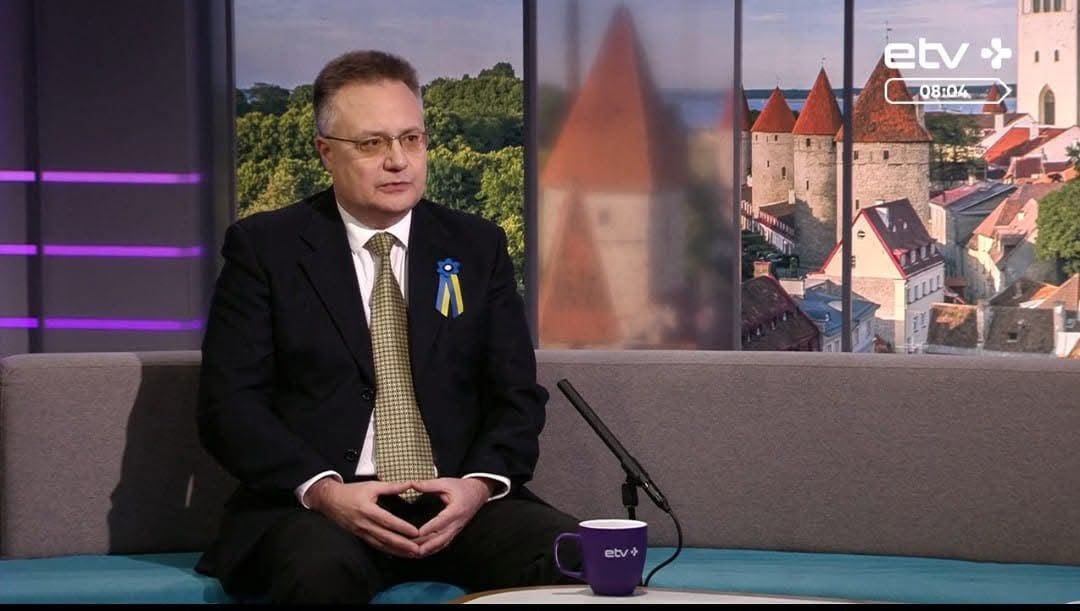
We spoke with Evhen Tsybulenko, an Estonian scholar, one of the founders of the Estonian Human Rights Centre and a professor of international law of Ukrainian origin, about Estonia’s efforts to legally separate local Orthodox structures from the Moscow Patriarchate, what is happening within the parishes themselves, and how prepared society is for protracted court proceedings.
“Estonia has taken the most legally rigorous path”
— Evhen Mykolayovich, since 2022 we have seen different countries of the former Warsaw Pact and the post-Soviet space trying to transform their relations with Russian Orthodox Church parishes. They are using different legal models. Which path has Estonia chosen?
— Estonia has chosen what may not be the fastest path, but it is the most legally rigorous one.
It is important to understand the historical context here. After Estonia gained independence following the collapse of the Russian Empire, the Estonian Orthodox Church received a tomos from Constantinople as early as 1923. During the first Republic of Estonia, it was a church under the Patriarchate of Constantinople.
After Estonia was occupied by the Soviet Union, its parishes were transferred to the Russian Orthodox Church of the Moscow Patriarchate. However, part of the Estonian clergy evacuated, and the Estonian Orthodox Church of the Patriarchate of Constantinople continued to exist abroad, particularly in Sweden. In other words, its canonical ties with Constantinople were never severed.
After Estonia restored its independence, the church of the Patriarchate of Constantinople was restored to its rights. In 1996, with international mediation, a certain compromise was reached, and Estonia effectively became a unique case in the post-Soviet space, with two Orthodox jurisdictions operating in parallel, those of the Patriarchates of Constantinople and Moscow.
The church of the Patriarchate of Constantinople had its rights restored, including its property rights. Structures of the Moscow Patriarchate were allowed to continue using church buildings, primarily under long-term leases.
This arrangement remained in place until Russia’s full-scale aggression against Ukraine, after which Estonia decided to limit the local Orthodox structure’s dependence on the Moscow Patriarchate.
The Riigikogu (parliament, ed.) amended the Churches and Congregations Act. The president rejected the bill twice because he considered certain legal aspects questionable. Ultimately, the amendments were reviewed by the Supreme Court, Estonia’s highest court.
The court found them constitutional, while also stressing that each individual case must be considered separately in order to avoid collective punishment and violations of believers’ rights.
And this is a very important point: every parish is a separate legal entity.
Six months to sever ties with Moscow
— What exactly are the parishes now required to do?
— The law gave them six months to completely dissociate themselves from the church of the aggressor state. The Russian Orthodox Church’s support for Russian aggression has already received the relevant political and legal assessment at the level of the Estonian parliament.
The transition period ends on December 28. After that, if a particular parish has not severed its canonical, administrative and other ties with the Russian church as required by law, the question of its continued operation may be referred to a court.
But I want to stress once again that there will be no blanket decision to “close the entire church.” Each parish will be considered as a separate legal entity.
If a parish fails to bring its activities into compliance with the law, its operations may be suspended by a court.
Nor does this mean that the church building will automatically be closed. Various options are possible: bringing the structure into compliance with the law, moving under another ecclesiastical jurisdiction, or adopting a temporary governance model provided for by law.
— Could one option be to move under the Patriarchate of Constantinople?
— Yes. That is one option. But they could also exist as an autonomous structure. The main requirement is a genuine break from dependence on Russia.
A new name, but old ties
— Are there currently any signs of preparations for a genuine break with Moscow?
— So far, it is more an appearance of change than actual change.
The structure has changed its name. It is now called the Estonian Christian Orthodox Church, and the reference to the Moscow Patriarchate has disappeared from its name. Some amendments have also been made to its charter.
Their position now is roughly as follows: we were already financially and administratively independent, but we cannot sever the canonical relationship.
At the same time, the leadership has effectively remained unchanged. Metropolitan Yevgeny, who was sent from Russia, spent some time in Estonia. His residence permit was subsequently not renewed. He is now in Russia but continues to lead the church from there.
This raises the question of how far these changes constitute genuine separation and how far they amount merely to formal compliance with the requirements.
“There are different groups within the church”
— Are there people within this church structure who are prepared to renounce subordination to Moscow?
— Of course. There are very different positions within it.
There are the most hard-line supporters of maintaining ties with the Moscow Patriarchate. This is particularly evident in structures directly subordinate to Moscow, the Pyukhtitsa Monastery and the Aleksandr Nevsky Cathedral.
There are pragmatists who understand that they need to comply with Estonian law and look for possible solutions.
Finally, there is a kind of quiet opposition, people who consider a move to the Patriarchate of Constantinople a perfectly normal option. But they fear the reaction of the church leadership and rarely speak about it publicly.
The actual balance among these groups will become much clearer after December 28, when individual parishes will have to make decisions: maintain their previous position and litigate, leave Russian jurisdiction, move under the Patriarchate of Constantinople, or create another model that complies with the law.
The Pyukhtitsa Monastery and the Aleksandr Nevsky Cathedral are a special case
— Looking at the situation surrounding the Pyukhtitsa Monastery, one gets the impression that Moscow has no intention of backing down. How much influence does the Moscow Patriarchate have over the day-to-day life of the parishes?
— Here we need to distinguish between ordinary parishes and the Pyukhtitsa Monastery and the Aleksandr Nevsky Cathedral.
The monastery has stavropegial status and is directly subordinate to the Moscow Patriarchate. Naturally, this is where the most committed supporters of maintaining ties with Moscow are found.
They will probably have to be dealt with exclusively through legal means.
The situation in other parishes may be entirely different, especially in regions outside Tallinn and Ida-Virumaa.
So it is impossible to generalise. This is precisely why the Estonian model provides for each parish to be considered separately.
The Pyukhtitsa Monastery and the Aleksandr Nevsky Cathedral are likely to be among the most active parties in the legal disputes. Significant informational and other support from Russia can also be expected.
“For Estonian society, this is primarily a security issue”
— But is Estonian society ready for this? Such a profound change in the status of Moscow Patriarchate structures is, after all, a fairly unusual process.
— If we are talking about the Estonian-speaking part of society and the Estonian political class, there is a fairly broad consensus.
The fact that the local church structure remains dependent on the leadership of the Moscow Patriarchate, which publicly supports Russia’s war against Ukraine, is perceived primarily as a security issue.
In Estonia, there is a clear understanding of Ukraine’s experience and of the role religious structures can play not only in the spiritual sphere, but also in the political and information spheres.
At the same time, it is important to remember that the Russian-speaking community itself is far from homogeneous. There are Russian-speaking residents who are fully integrated into Estonian society and have a clear understanding of what is happening. There are openly pro-Russian people. There is also a large group that takes a passive position.
So it is impossible to speak of any single position held by “Estonia’s Russians.”
Moscow speaks of “discrimination”
— In January 2026, Russia’s Foreign Intelligence Service made strongly worded statements about the situation in the Baltic states and the displacement of Russian Orthodox Church structures. Does Estonia respond to this kind of rhetoric?
— Russian claims about the alleged discrimination against the Russian-speaking population and Russian structures have been directed at Estonia virtually since the early 1990s.
So people here have long been accustomed to such accusations.
As for the current situation specifically, Estonia has deliberately chosen the most legally rigorous path, even at the expense of speed.
There is a Supreme Court ruling. No one intends to administratively close churches through a single blanket decision. Every case will go through the judicial procedure established by law.
The Supreme Court specifically stressed that this is not about restricting freedom of conscience or people’s right to practise their religion.
The issue concerns the institutional dependence of a religious organisation on a structure whose leadership supports a war of aggression.
Ukrainian refugees and the competition for parishioners
— Many Ukrainians have arrived in Estonia since 2022. Does the state see a risk that Ukrainian refugees could become targets of influence by Moscow Patriarchate structures?
— Yes, that is understood.
Historically, one of the centres of Ukrainian religious and cultural life in Estonia has been the Ukrainian Cultural Centre in Tallinn, which is associated with the Ukrainian Greek Catholic community.
But after the start of the full-scale war, a large number of Orthodox Ukrainians arrived, raising the question of providing appropriate church options for them.
The Estonian Orthodox Church of the Patriarchate of Constantinople established a Ukrainian parish at the Church of the Transfiguration in Tallinn. Services in Ukrainian or Church Slavonic are also held in some other parishes. Ukrainian clergy are invited to serve there.
The problem is primarily one of information.
In Tallinn, and particularly in Ida-Virumaa (the cities of Narva, Sillamäe and Kohtla-Järve), parishes historically associated with the Moscow Patriarchate (EOC) overwhelmingly predominate. This is due to the region’s demographics and its proximity to the Russian border. Someone who has recently arrived and is not particularly familiar with church jurisdictions may simply go to the nearest Orthodox church without understanding which structure it belongs to.
That is why, in my view, alternative Ukrainian Orthodox parishes need greater informational support.
But the option to choose does exist.
“Everyone understands that there will be lengthy court proceedings”
— Will the state be able to withstand the pressure? Once a process like this begins, lawyers, international organisations and lobbyists become involved, and numerous court proceedings follow.
— Everyone understands perfectly well that the process will be difficult and lengthy.
No one doubts that some parishes will use every legal mechanism available to them and try to keep litigation going for as long as possible.
But that is precisely why this path was deliberately chosen.
The aim is to ensure that once the procedure has run its course, as few legal questions as possible remain about it.
The cases may well eventually reach the European Court of Human Rights. But if the entire procedure is legally rigorous and carefully handled, the state expects to be able to justify its decisions.
In other words, the principle here is not to act hastily, but to follow the entire legal process through.
Anna Yansone