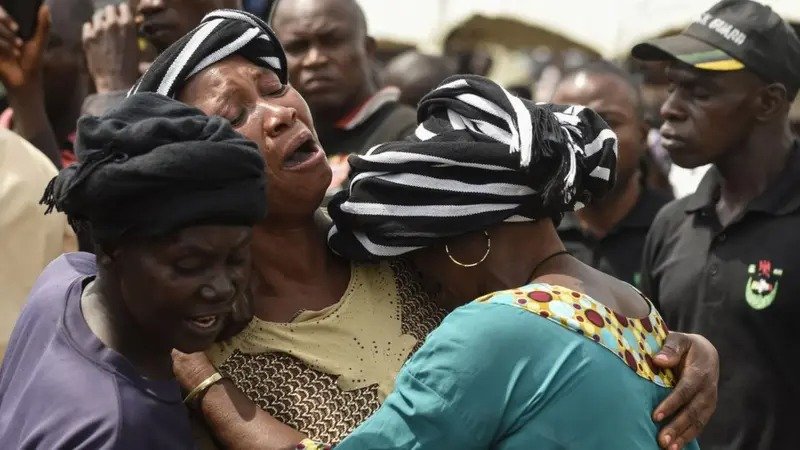
According to a new report by a U.S. aid organization, 4,216 Christians have been killed in Nigeria since the beginning of the year. Most of them were killed in the Middle Belt, a region that receives little attention in Nigerian and U.S. security policy.
This was reported by Christian Daily.
According to Equipping The Persecuted’s (ETP) report, “The Middle Belt Crisis: Religious Persecution and Security Failure in Nigeria,” Fulani militants are responsible for more deaths than Boko Haram and Islamic State West Africa Province (ISWAP) combined.
Many ethnic and religious communities in Nigeria suffer from violence, but it is important to take into account the religious motivation behind attacks on Christian farmers in order to avoid misguided policy responses, the report states.
According to ETP, Nigeria’s Middle Belt has experienced village raids, abductions, intimidation, land seizures and limited accountability for attackers.
Mass killings and abductions have displaced millions of Christians. This is changing the region’s demographics and requires measures that go beyond short-term assistance, the report notes.
According to the report, impunity has long provided attackers with an additional incentive to commit atrocities. Operating at both local and state levels, they repeatedly carry out attacks and return to communities that have already been targeted.
The report also notes that kidnapping victims in Nigeria are often subjected to torture and starvation in captivity, while women and girls face the additional risk of sexual violence.
The report states that U.S. intelligence and law enforcement agencies, as well as agencies involved in counterterrorism, should broaden the scope of their analysis beyond the activities of Boko Haram and ISWAP and conduct a comprehensive assessment of Fulani militant networks and other armed groups operating in the Middle Belt region.
As LF reported, Christian women and girls in Nigeria face a heightened risk of killings, abductions, sexual violence and forced marriage. These concerns were outlined by five UN human rights experts in a joint letter to the Nigerian government, which noted the “deteriorating security situation” in northern Nigeria and the Middle Belt.
We previously reported that a memorandum was submitted to the UN Special Rapporteur on freedom of religion or belief calling on the United Nations to investigate systematic religiously motivated violence perpetrated by jihadist groups in various parts of Nigeria.