An international conference devoted to Christian nationalism, the political instrumentalization of religion, war, and Christian hospitality was held in Vilnius.
Theologians, historians, and researchers from across Europe discussed where the boundary lies between faith and national identity, and at what point Christian symbolism begins to serve political ideology, justify violence, and become an instrument of war.
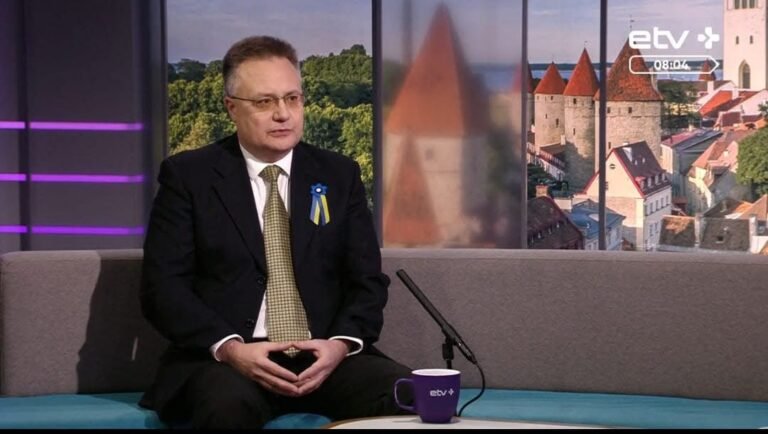
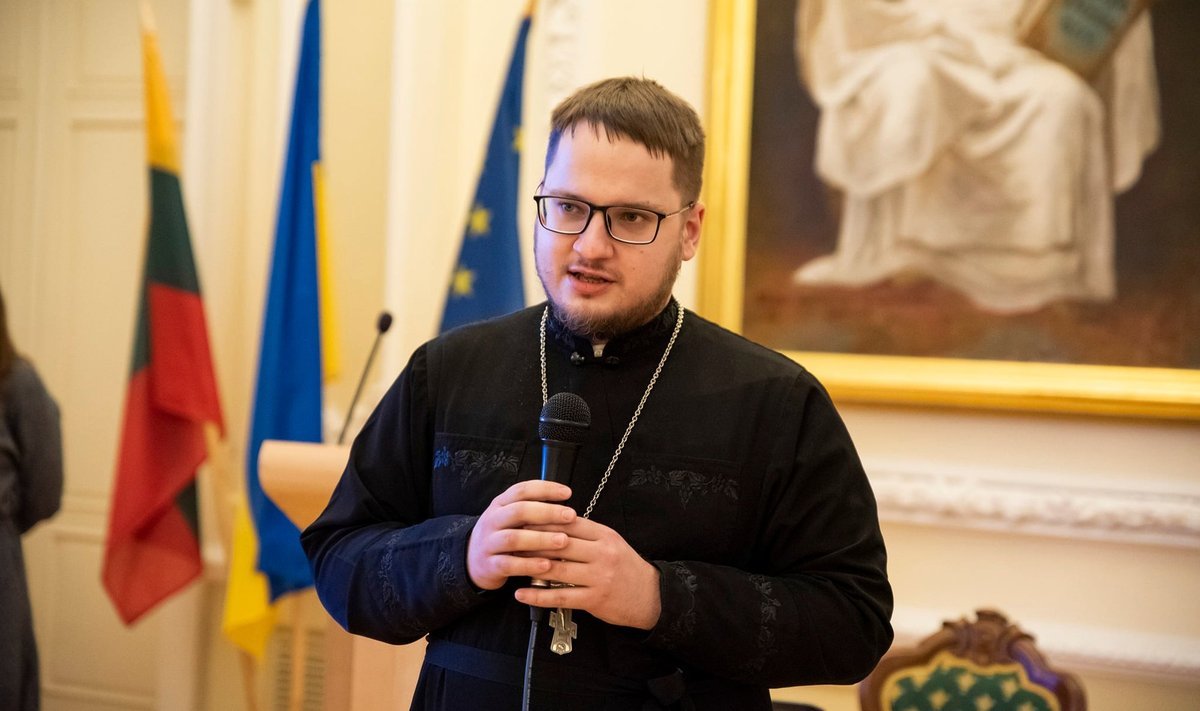
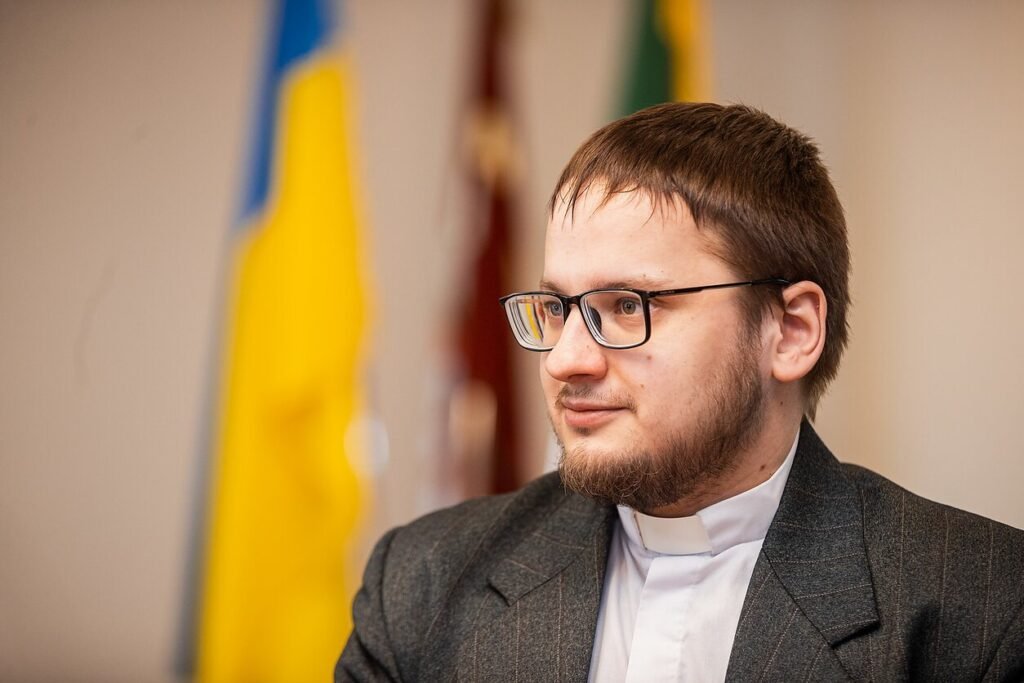
With the permission of DELFI, we are republishing an interview with Gintaras Sungaila, a priest, PhD, director of the Orthodox Christian Institute of Education and Research in Vilnius, a board member of Oikosnet Europe, an international network of Christian lay academies, spiritual communities, and religious education centers, and one of the conference organizers.
When Christianity Becomes Little More Than a Banner
– Why did you decide to make nationalism, Christian nationalism, and hospitality the central themes of the conference at this particular moment? And how would you assess its outcomes?
– We organized the conference in conjunction with the General Assembly of Oikosnet Europe, a network of Christian academies and educational centers representing different denominations across Europe. It brings together Protestants, Orthodox Christians, and Catholics.
The General Assembly usually includes various working meetings devoted to the organization’s internal affairs, as well as a study day, an opportunity for members to learn something new and deepen their knowledge. Last year, the assembly was held in Germany, and this year in Vilnius. We decided to use this opportunity, when scholars from different countries come together, to exchange insights drawn from both academic research and the life of the Church.
This year’s General Assembly took place in Vilnius because the Orthodox Christian Institute of Education and Research joined Oikosnet last year. We wanted to bring together scholars from different countries so they could share both their academic expertise and their experience of church life.
Why did we choose the theme “Christian Nationalism and Hospitality”? Because it proved relevant to people from very different countries and Christian denominations.
For Lithuania, the subject is particularly important in the context of ethnophyletism, the idea that the Church should be organized along national lines, which has been condemned by the Orthodox Church. And, of course, it is important in the context of the “Russian World” ideology, which emphasizes the special role of the Russian people within the Church and exploits that idea for political purposes.
But the conference demonstrated that the problem extends far beyond the “Russian World.” Scholars examined it as one form of Christian nationalism. Participants from Western countries discussed how Christianity is used by far-right political movements in Europe and North America.
This is where the danger arises: Christianity becomes entangled with nationalist ideology.
As one conference participant aptly put it, all that remains of Christianity in such cases is something resembling a flag, a banner to be raised aloft.
Instead of discussing the meaning of the Cross, Christ’s sacrifice on the Cross, and what the Gospel has brought to humanity, the Cross itself and Christianity become almost an idol, a symbol of a particular political force. They are used to win votes in elections or justify political actions.
PATRIOTISM OR SACRALIZED GEOPOLITICS?
– But don’t you think the distinctions matter? For a long time, proponents of the Russian World ideology, official Moscow, the Kremlin, and the Russian Orthodox Church argued that love for one’s earthly homeland was insignificant compared with the supposedly higher ideal of a triune Russian World. Yet it is Moscow itself that exploits the idea of love for one’s homeland in the crudest and most cynical way. Were you able to draw a line between faith, national identity, and the all-encompassing political ideology that Moscow seeks to impose?
– That is indeed an important question.
When people in the West speak of Christian nationalism, they often have ideologies such as the “Russian World” in mind: imperialist projects that seek to extend one state’s culture and power over other countries while emphasizing the exceptional status of a particular nationality.
But the conference also raised another question, concerning healthy patriotism and entirely different historical contexts.
If we look not at great empires but at smaller nations, we can see that national movements can, under certain circumstances, play a liberating role.
Take Lithuania, for example. One of the conference organizers was the Lithuanian Catholic Academy of Science. Its very name recalls a historical period when Catholics considered it important to preserve not only their faith but also their Lithuanian identity.
There is a natural respect for one’s parents, family, and people. In Christian catechisms, patriotism is sometimes explained as an extension of the commandment to honor one’s father and mother.
But for a Christian, this is not an absolute value.
The early Christian Epistle to Diognetus expresses this beautifully: Christians live here on earth, but their true homeland is in heaven. We also remember the words of the Apostle Paul that in Christ there is neither Greek nor Jew.
This creates a kind of Christian paradox: a person respects their parents, culture, and people, loves their country, and at the same time understands that a higher value exists.
In the ideology of the “Russian World,” this hierarchy is reversed.
You mentioned the idea of a “triune Holy Rus’,” which is even constructed by analogy with the Holy Trinity. Here, nationalist ideology effectively begins to present itself as an alternative to the Gospel.
Instead of seeing salvation through Christ’s sacrifice on the Cross, salvation comes to be associated with the unity of a supposedly holy, sacralized geopolitical space.
WHEN RELIGION BECOMES IDEOLOGY
– Did the conference manage to identify the boundary between Christianity’s natural connection with national culture and the point at which faith becomes a civil or political religion and begins to serve the purposes of war?
– It is a difficult question. As often happens at academic conferences, sometimes more questions emerge than answers.
But I particularly remember an example Father Kirill Govorun gave in his opening presentation. He compared civil religion and political religion, attempting to demonstrate where the dividing line lies.
He used a very simple analogy.
Consider the popular soft drink Coca-Cola. If it represents a “civil religion,” it may be widespread and universally familiar, but individuals remain free to decide whether or not to buy it.
If it becomes a “political religion,” however, people are punished or even imprisoned for refusing to buy it. They no longer have a choice.
This illustrates quite clearly the distinction between a set of beliefs that may be widespread in society and an ideology imposed through coercion.
The central question is: Are people free to accept or reject it? Or are we dealing with a compulsory ideology that everyone must obey or face punishment?
In Russia, we have witnessed a similar transformation, particularly since 2010, as the majority religion gradually became an ideological system promoted through the power of the state.
Father Kirill emphasized that, in the case of the “Russian World,” a person does not even have to be Orthodox. But there are certain criteria for belonging to this ideological system, and people are expected to meet them.
Those who fail to do so may face very real consequences.
Religious freedom, of course, is also absent in Russia. Members of religious minorities are imprisoned. In the occupied territories, clergy belonging to the Orthodox Church of Ukraine and the Ukrainian Greek Catholic Church face persecution precisely because they do not conform to the state’s ideological system.
CAN IMPERIAL NATIONALISM BE EQUATED WITH THE NATIONALISM OF THOSE DEFENDING THEIR COUNTRY?
– This raises another difficult question. The history of Ukraine, Lithuania, and other countries shows that national movements have often helped preserve national identity, and people who called themselves nationalists were capable of tremendous self-sacrifice. By condemning nationalism in general, don’t we risk treating fundamentally different phenomena as though they were the same?
– We discussed precisely this question as well. And in my view, the key word here is context.
There is a fundamental difference between a state or political regime engaged in imperialist expansion, extending its territory and imposing an ideology of its own exceptionalism on others, and countries defending themselves and fighting for freedom.
Lithuania and Ukraine have very similar historical experiences in this respect, as well as comparable national heroes.
That is why we cannot equate the Christian nationalism of countries engaged in conquest with the national movements of countries fighting for liberation.
But from a Christian perspective, the central question remains: What do we place first?
We should love our parents, our people, our country, and our native land. Yet in the Gospel, we hear Christ say that whoever loves their father or mother more than Him is not worthy of Him.
This uncompromising demand of the Gospel is extremely important.
If we remain Christians, then even as we love our country and homeland, we must put Christ first.
This does not negate patriotism. In Lithuania, for example, there were tautininkai, nationalists who fought for both their faith and their homeland. In the context of a struggle for liberation, the word itself takes on a completely different meaning.
What matters is that the national idea must never take the place of God.
Different Christian Denominations Confronted the Same Problem
– Which presentations and discussions at the conference stood out most in your memory?
– Probably two things.
The first was Father Kirill Govorun’s opening presentation. It was the longest, highly conceptual and theoretical. Many participants later said that it had completely changed the way they viewed the issue. He managed to present the entire subject in a remarkably systematic way.
The second was the final panel discussion, which brought the conference to a close.
The panel included representatives of the Catholic, Protestant, and Orthodox traditions. What particularly struck me was that all three denominations were essentially grappling with the same problems.
Initially, we thought Christian nationalism was a rather specialized subject and might not be particularly relevant to Catholics, for example.
But it turned out to be relevant to everyone.
And regardless of denomination, people who sincerely seek to understand the essence of Christianity and follow the Gospel arrive at similar conclusions.
Beyond Russia: Christian Nationalism as an International Problem
– So the discussion was not limited to the Russian-Ukrainian context? Which other countries were discussed?
– Certainly not. Participants spoke about the situations in their own countries.
Scandinavia, the United States, Germany, Italy, the United Kingdom, and other countries were discussed.
Christian nationalism manifests itself somewhat differently in each country, but the problem exists in many societies.
– Am I right in understanding that one of the problems is the ability of far-right political forces to appropriate Christian themes, exploit national and religious sentiments, and ultimately distort the very substance of the Gospel?
– Yes. For politicians, it is important to unite people around particular issues or identities.
Christianity is quite often used simply as a unifying symbol, without any serious attempt to engage with its actual teachings.
People are brought together around traditional values, customs, and culture, and Christianity then becomes merely an element of cultural identity, a political instrument.
How “Sacred” Quotations Are Fabricated to Justify War
– The conference addressed the war in Ukraine and Orthodox narratives. To what extent was the instrumentalization of religion discussed in this context?
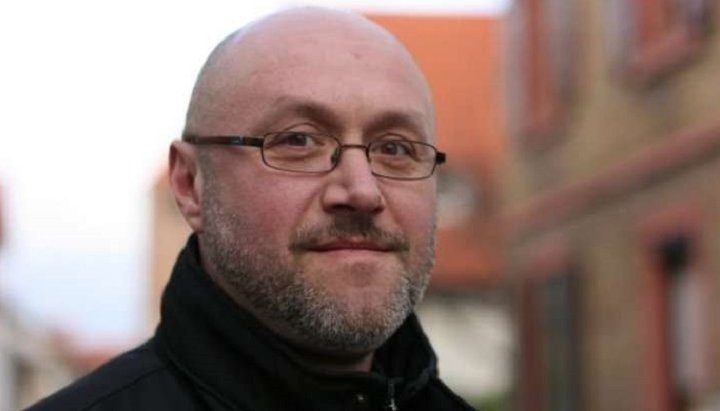
– One presentation dealing with these narratives was given by Sergei Shumilo.
As a historian, he examined a very specific example: statements about Holy Rus’ and its supposed “triune” nature attributed to Saint Lavrenty of Chernigov.
Through textual analysis, he demonstrated how such quotations were constructed, placed in the mouth of a saint, and subsequently used in political contexts, including to justify war.
In other words, we can see how even statements supposedly made by saints could effectively be fabricated and attributed to them for the purpose of subsequently justifying war.
CHRISTIAN HOSPITALITY AS AN ALTERNATIVE TO EXCLUSION
– There are heated debates about migrants in the Catholic world today as well. Did this issue arise in your discussions of Christian hospitality?
– It was not a central topic, and the conference did not formulate a common position on migration.
But when we discussed Christian hospitality, it emerged as one possible response to the broader problem under consideration.
Christian hospitality means loving the stranger, loving someone who needs help.
In this sense, it offers a counterweight to retreating exclusively into one’s own national identity, into the confines of a small ethnic world.
The Instrumentalization of Religion Goes Beyond War and Nationalism
– One of the conference’s main themes was the political instrumentalization of religion. How familiar and meaningful did participants find this concept?
– It resonated with many of them.
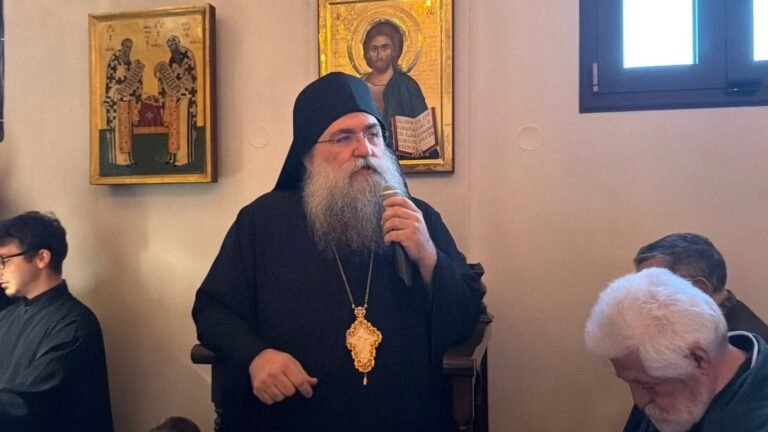
I proposed the term “instrumentalization,” drawing in part on statements by Ecumenical Patriarch Bartholomew, who frequently speaks about the instrumentalization of religion.
And when we began examining developments through this lens, it became clear that the problem was much broader.
There was even a proposal to continue the discussion at the next conference.
One of the revelations for me was a presentation by participants from Germany, who spoke about the instrumentalization of religion to justify discrimination against women.
Until then, we had focused primarily on the nationalist dimension, on how political ideologies use religion as a tool to justify wars and conquests.
But religion can also be instrumentalized in other areas, for example, in society’s treatment of women. And this concerns not only Christianity but other religions as well.
We did not have time to explore this issue in depth, but I found it a particularly important direction for future discussion.
“Many Heard for the First Time That Religious Arguments Are Used to Justify the War Against Ukraine”
– If you were to summarize the conference’s main outcome, did any shared understanding emerge regarding hospitality, the instrumentalization of religion, and the ideology of the “Russian World”?
– I think people from different countries and denominations took away very different things from this conference.
But something else is particularly important to me.
Many participants from Western European countries gained a new understanding of how and why the war against Ukraine is taking place, what arguments are being used to justify it, and what the “Russian World” ideology actually represents.
For those of us living in Lithuania and closely following developments in Russia, many of these things already seem self-evident.
But some participants from Sweden, Germany, and other countries admitted that this was the first time they had heard just how extensively religious arguments are being used to justify the war against Ukraine.
They also began to examine this more deeply in connection with developments already taking place in their own countries, particularly Christian nationalism and the political exploitation of religious identity.
For me, as a resident and citizen of Lithuania, this is one of the conference’s most important practical outcomes.
These people will return home and speak with their students and colleagues. Perhaps they will be better able to explain why this war is taking place and how religion is being used to justify it.
I believe that this represents another step toward a deeper understanding of the problem in Western society, and it was one of the most tangible outcomes of our gathering.
Anna Yansone for Delfi