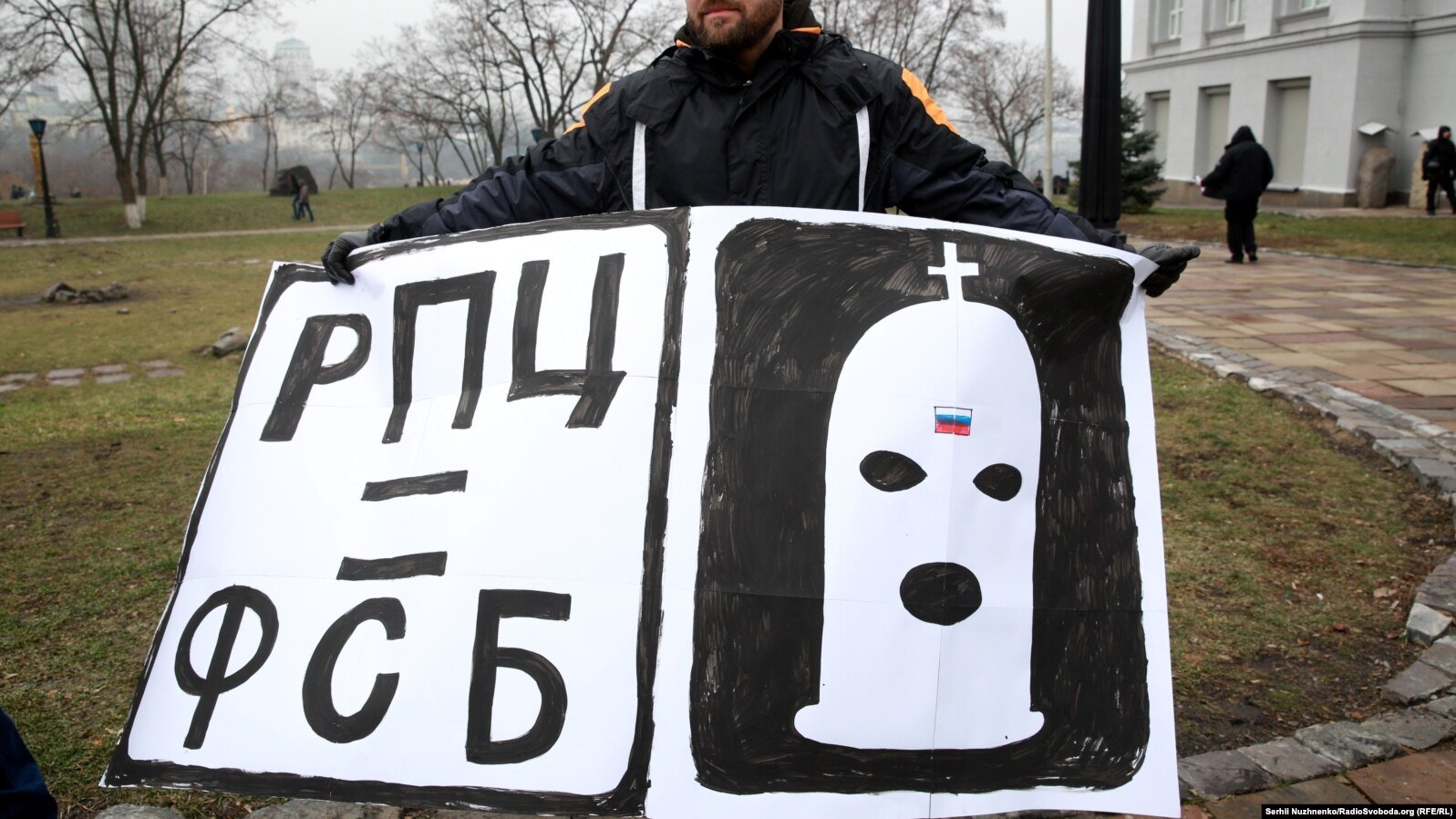
Networks affiliated with the Russian Orthodox Church (ROC) play a key role in Moscow’s influence operations worldwide. Repeated efforts to promote a pro-Russian worldview are accompanied by extensive intelligence activities.
This is according to an article by Zarmina Zarifi, an expert on religion and hybrid warfare at the Ukrainian Centre for Security and Cooperation, published in New Eastern Europe.
According to the author, the ROC is now one of the Kremlin’s most covert channels of influence. This is particularly evident abroad, in Europe, the United States and Latin America, where the Church maintains a network of religious and cultural centres.
“European intelligence agencies have long documented links between Russian Orthodox Church structures and influence operations, including intelligence activities. In recent years, concerns about cooperation between representatives of the Russian Orthodox Church and intelligence services have only intensified,” the expert notes.
She cites examples of such influence in European countries.
In December 2023, Sweden’s Security Service confirmed that representatives of the Russian Orthodox Church had cooperated with Russian intelligence agencies and that church structures had been used for espionage with direct state funding. The authorities also expressed concern over the construction of a Russian Orthodox church in Västerås, near strategic infrastructure facilities. Diplomats who attended the church’s consecration ceremony were subsequently suspected of espionage.
That same year, Bulgarian authorities expelled the head of the Russian Orthodox Church’s representative church in Sofia and two other clerics on national security grounds.
Estonian intelligence warned that the local Orthodox Church remained under Russian influence despite formal organisational changes, while some of its leaders continued to publicly justify Russia’s aggression against Ukraine. Estonia also expelled Metropolitan Yevgeny, head of the Estonian Orthodox Church of the Moscow Patriarchate. The intelligence agency also described the Russian Orthodox Church’s overseas structures as a longstanding cover for Russian intelligence operations.
In Norway, security experts raised concerns about the Russian Orthodox Church’s acquisition of properties near military bases and critical infrastructure, warning that church premises could serve as cover for intelligence activities.
In 2022, Latvia passed legislation requiring the Latvian Orthodox Church to sever its canonical ties with the Moscow Patriarchate. The decision reflects growing concern that the Kremlin is using religious institutions as channels of influence.
Meanwhile, in the Netherlands, several Orthodox parishes distanced themselves from the Moscow Patriarchate after Patriarch Kirill expressed support for Russia’s invasion.
“These cases undoubtedly indicate that European governments are increasingly viewing certain Russian Orthodox Church structures through the lens of national security. However, much remains to be done,” the author emphasises.
As LF previously reported, more than 1,000 parishes in the European Union are under the influence and control of the Moscow Patriarchate.
We previously reported that analysts have described resolutions adopted by the Parliamentary Assembly of the Council of Europe (PACE) and the European Parliament concerning the ROC as a major awakening in Europe to the Russian Church’s influence on European communities.