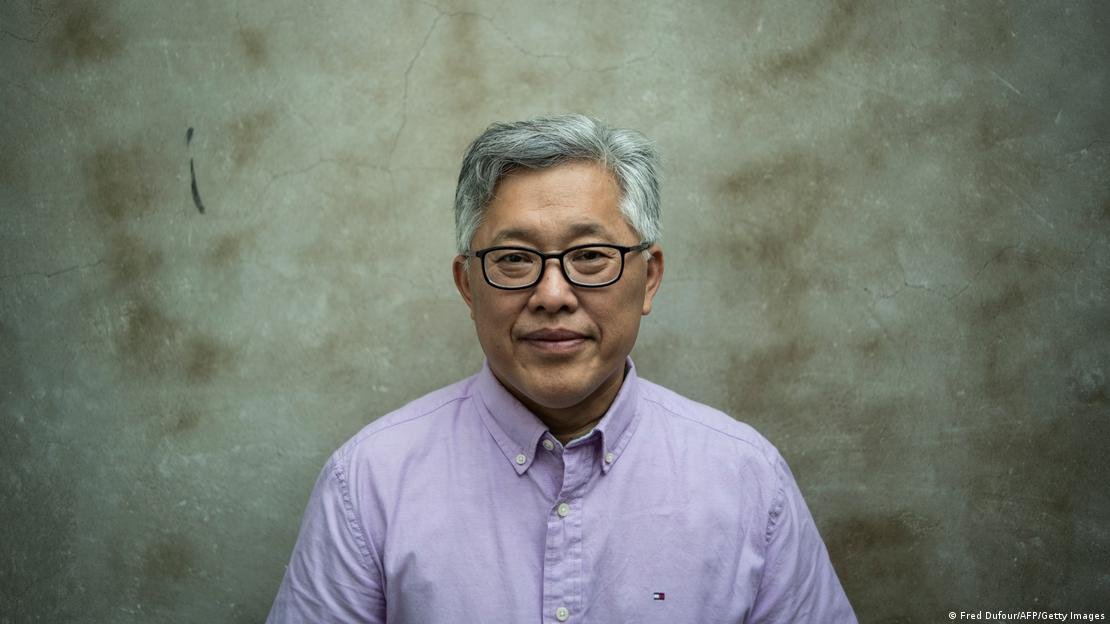
The release of Pastor Ezra Jin Mingri after nine months in detention in China marked a significant victory for advocates of religious freedom. However, the development has done little to change the situation of Christians who refuse to submit to state control.
This was reported by Persecution.
Eight leaders of Zion Church, to which Pastor Jin himself belongs, remain behind bars. Other independent religious communities across China continue to face police raids, surveillance and restrictions on worship services.
Pastor Jin, the founder of one of China’s largest unregistered Protestant churches, was arrested in October 2025 during a nationwide crackdown targeting Zion Church leaders and members. He was released on July 3, 2026, after US President Donald Trump raised his case with Chinese President Xi Jinping during their meeting in Beijing in May.
The intervention demonstrated that the United States can use its diplomatic influence to secure the release of people imprisoned in China on religious grounds. At the same time, the continued imprisonment of Pastor Jin’s associates highlights the limitations of an approach that focuses solely on a single high-profile case.
Zion Church had faced years of pressure even before the arrests began. In 2018, authorities shut down its main premises in Beijing after the church refused to install facial recognition cameras to monitor worshippers. Officials also pressured landlords to evict the congregation, disrupted worship services and restricted believers’ ability to gather openly.
The persecution of Zion Church is part of a broader campaign by the Chinese Communist Party (CCP) to bring religious life under the control of party ideology. Under President Xi Jinping, the government has intensified its policy of religious “Sinicization”, requiring religious communities to align their teachings and activities with the party’s political priorities.
The repression extends beyond Protestants. Uyghur Muslims in Xinjiang face mass detention and forced assimilation, while Tibetan Buddhists face restrictions on religious practices and government interference in the appointment of religious leaders. Independent Catholic clergy and members of other religious minorities are also subjected to state pressure.
As LF previously reported, the state-controlled Bishops’ Conference of the Catholic Church in China (BCCCC) supported the government’s ban on pastoral activities by unregistered clergy and the use of unauthorized venues for worship.
We previously reported that Chinese authorities have stepped up pressure on underground Catholic communities in an effort to force them to join the state-controlled official church.