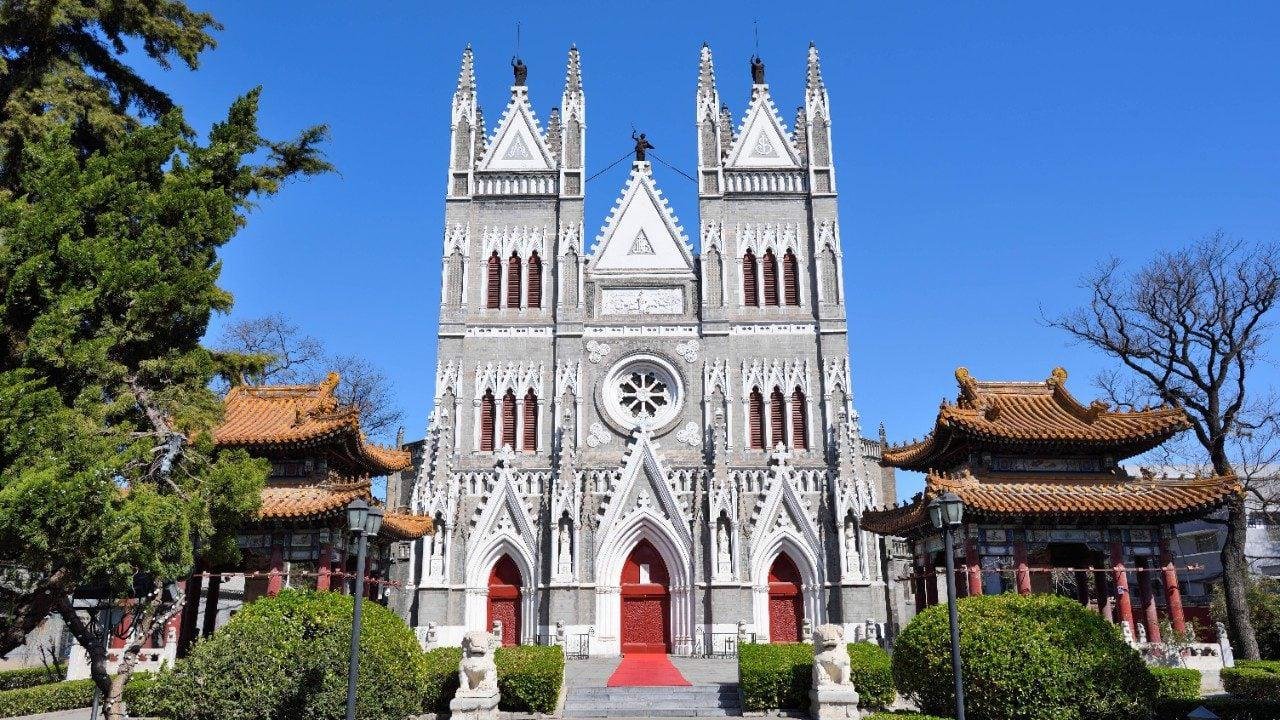
Chinese authorities are increasing pressure on underground Catholic communities in an effort to bring them into the state-controlled official church.
This was stated by the organization Human Rights Watch in its report. The Chinese government has intensified ideological control, surveillance, and travel restrictions affecting approximately 12 million Catholics in the country.
As part of President Xi Jinping’s campaign to “Sinicize” religion, which began ten years ago in April 2016, places of worship and religious teachings are expected to reflect Han Chinese culture and the ideology of the Communist Party of China. The 2018 provisional agreement on the appointment of bishops between the Holy See and China, which ended a long-standing dispute over episcopal appointments in the country, has contributed to repression against Catholics in China.
“Ten years after the launch of Xi Jinping’s Sinicization campaign and nearly eight years after the 2018 agreement between the Holy See and China, Catholics in China are facing escalating repression that violates their religious freedoms,” said Yalkun Uluyol, a China researcher at Human Rights Watch.
“Pope Leo XIV should urgently review the agreement and press Beijing to end the persecution and intimidation of underground churches, clergy, and believers,” he stressed.
The Chinese government does not allow independent researchers into the country and punishes individuals for communicating with foreign media or human rights groups.
The Chinese government has long restricted the freedom of religion of the country’s Catholics, who are permitted to worship only in official churches under the auspices of the state-sanctioned Chinese Catholic Patriotic Association. Underground Catholic communities that refuse to pledge allegiance to the Communist Party of China suffer the most. Although religious persecution in China has a long history, the situation has become even more repressive since Xi Jinping came to power in November 2012.
Under the 2018 agreement between the Holy See and China, Beijing proposes candidates for the positions of bishops, whom the Pope may veto, although the full text of the agreement has never been made public. The agreement has been renewed three times and remains in force until October 2028, yet no Pope has exercised the veto right, even after the Chinese government violated its terms by unilaterally appointing bishops. Pope Leo XIV, who has held office since May 2025, has also approved five of Beijing’s appointments.
As reported by LF, the state-run Conference of Bishops of the Catholic Church in China supported the government’s ban on pastoral activity by unregistered clergy and the use of unauthorized places of worship.