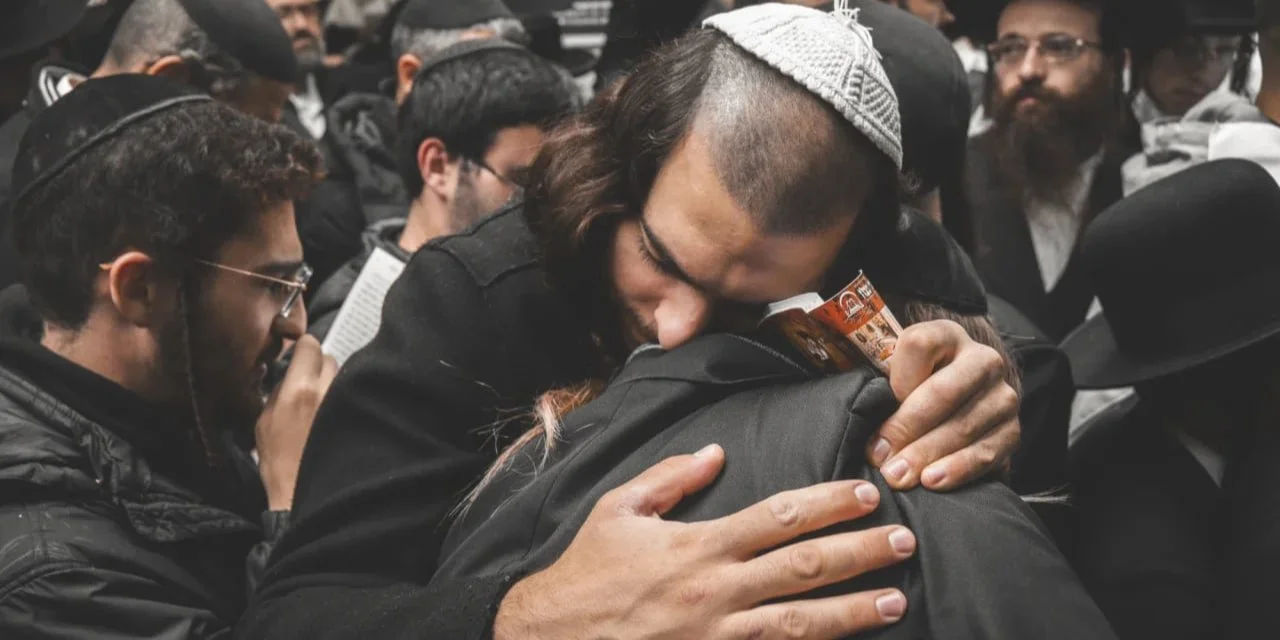
Despite the war and the threat of Russian strikes, tens of thousands of Hasidic Jews are once again gathering in the Ukrainian city of Uman to celebrate the Jewish New Year, Rosh Hashanah. By September 9, more than 25,000 pilgrims had crossed the Ukrainian border, with over 15,000 already in Uman itself. Around 40,000 people are expected during the holiday, which falls on September 11–13 in 2026.
The pilgrims come primarily from Israel, the United States and European countries. With Ukrainian airspace closed, the journey has become considerably more difficult. Many fly to neighboring countries and then spend hours traveling to Uman by bus and car through Moldova, Poland, Romania and other countries. Ukrainian authorities warn visitors about the risks posed by the war and the need to follow safety requirements during air raid alerts.
The main purpose of the mass pilgrimage is to visit the grave of Rabbi Nachman of Bratslav, one of the best-known Hasidic teachers. Born in 1772, he founded the Bratslav branch of Hasidism. Shortly before his death, Nachman settled in Uman and was buried there in 1810. He regarded Rosh Hashanah as an especially important time for spiritual renewal, and his followers have preserved the tradition of gathering at their teacher’s grave for the New Year.
For the pilgrims, the journey is not religious tourism. In Uman, they pray, study religious texts, sing and dance. A particularly important practice is the recitation of the Tikkun HaKlali, a set of ten psalms to which the Bratslav tradition attributes special spiritual significance. Rosh Hashanah in Uman is seen as an opportunity to reflect on the year that has passed, repent and make a new beginning.
Over the past several decades, Uman has evolved from a pilgrimage site for a single Hasidic community into one of the largest international centers of Jewish religious life. According to a study by the Israel Democracy Institute published in September, about 8% of Jewish adults in Israel have visited Rabbi Nachman’s grave at least once. Most of those who have visited Uman, however, went there at times other than Rosh Hashanah.
Modern Judaism also has larger religious gatherings. Before significant restrictions were introduced, hundreds of thousands of worshippers traveled to Mount Meron in Israel for Lag BaOmer, visiting the site traditionally associated with Rabbi Shimon bar Yochai. What distinguishes Uman, however, is the international nature of the pilgrimage. Worshippers cross borders and travel thousands of kilometers for a few days of prayer in a small Ukrainian city.
The tradition has become particularly striking since the start of Russia’s full-scale invasion. The war has not stopped the pilgrimage. People continue to come even though Ukraine cannot guarantee their complete safety. The religious celebration takes place alongside checkpoints and shelters, while familiar prayers may be interrupted by air raid sirens.
Uman’s story demonstrates the remarkable resilience of religious tradition. For tens of thousands of people, the place where their spiritual teacher was buried more than two centuries ago remains so important that war, closed airspace, an arduous journey and the risk of strikes have not persuaded them to abandon the pilgrimage. In this sense, Uman today is more than the site of Rabbi Nachman’s grave. It is an example of how faith can connect generations and preserve the significance of a particular place despite borders, politics and war.