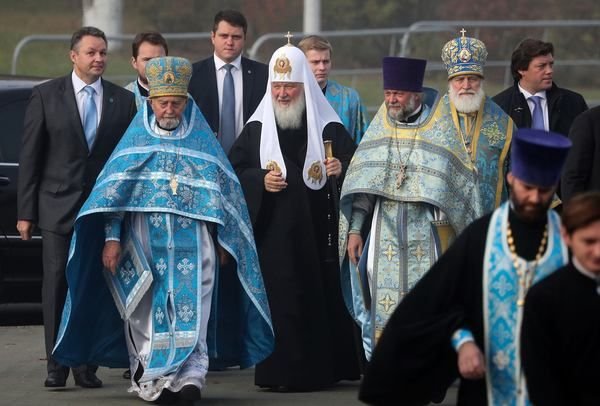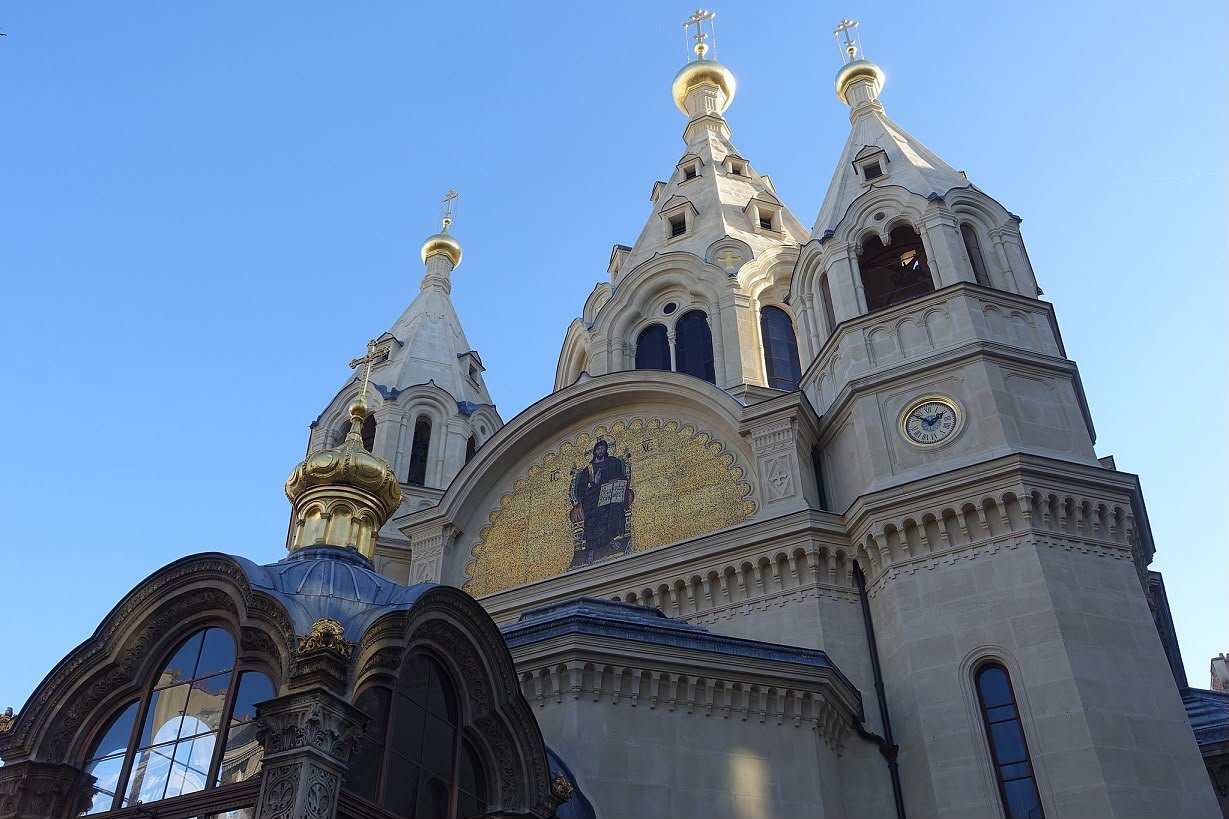
The Russian Foreign Ministry has complained that parishes of the Russian Orthodox Church in European countries are facing frozen bank accounts and refusals to rent premises for religious services and cultural events.
The statement was made by Mikhail Melekh, Special Representative of the Russian Foreign Minister for International Cooperation on Ensuring the Right to Freedom of Religion, TASS reports.
“In the overwhelming majority of countries, we are seeing biased treatment by the authorities. This manifests itself in the freezing of bank accounts belonging to parishes of the Russian Orthodox Church and refusals to rent premises for cultural events or purely religious services,” the diplomat told Russian journalists in Geneva.
According to him, there have also been “targeted attacks on clergy, with demands that they somehow demonstrate their loyalty to the local authorities.”
“In other words, there is pressure in every respect, including practical, material and financial pressure, as well as psychological pressure,” Melekh said.
He explained that the situation was “largely driven by the biased attitude of European elites” towards Russia in general and the Russian Orthodox Church in particular, which they perceive “as a direct instrument of humanitarian influence” on the part of the Russian Federation.
As LF reported, a representative of the Russian Foreign Ministry accused the authorities in Moldova and Estonia of exerting “active political pressure” on structures of the Moscow Patriarchate. Melekh also said that Russia “builds relations between the state and religious denominations on a policy of non-interference” and that “in this respect, the Russian Federation has a wealth of experience.”
We previously reported that more than a thousand parishes operating in the European Union are under the influence and control of the Moscow Patriarchate.
As LF reported, in early May, the European Parliament’s Committee on Foreign Affairs, AFET, voted on a draft resolution unprecedented in the clarity and severity of its assessment of how authoritarian states, referring to the Russian Federation, LF, and structures linked to them persecute, intimidate and control dissidents, opposition figures, journalists, human rights defenders, activists and diaspora communities outside their own countries within the European Union.
We previously reported that analysts have described documents adopted by PACE and the European Parliament concerning the Russian Orthodox Church as a major awakening in Europe to the Russian Church’s influence on European communities.