On Sunday, April 26, an international conference will take place in Vilnius on the topic “680 Years of the Dormition Cathedral. Orthodoxy in Lithuania: Continuity of the Canonical Order.” However, some of the papers are aimed at justifying the dependence of Orthodox parishes in Lithuania on the Moscow Patriarchate. In particular, a presentation by the scandal-tainted archimandrite of the Russian Orthodox Church Filipp Vasil’tsev has been announced.
The Bulgarian outlet Hristiyanstvo writes about who this figure is.
The forum will be held at the Cathedral of the Dormition of the Most Holy Mother of God of the Vilnius diocese under the omophorion of the Russian Patriarch. This church, built in the 14th century around 1346 in Vilnius, is historically connected with the Grand Duchy of Lithuania and the Kyivan Metropolis of the Ecumenical Patriarchate.
The conference program includes presentations by hierarchs, clergy, historians, scholars and theologians from Lithuania, Estonia, Poland and even Russia. The main topic will be the history and condition of Orthodoxy in Lithuania and the Baltic states from the standpoint of the Moscow Patriarchate. In particular, papers will be presented that substantiate the non-canonical annexation of the Kyivan Metropolis to the Moscow Patriarchate in 1686, to which Orthodox parishes in Lithuania and the Baltic states historically and canonically belonged, as well as criticism of the activities of the Ecumenical Patriarchate, which in essence can be perceived as hybrid propaganda of the “Russian world.”
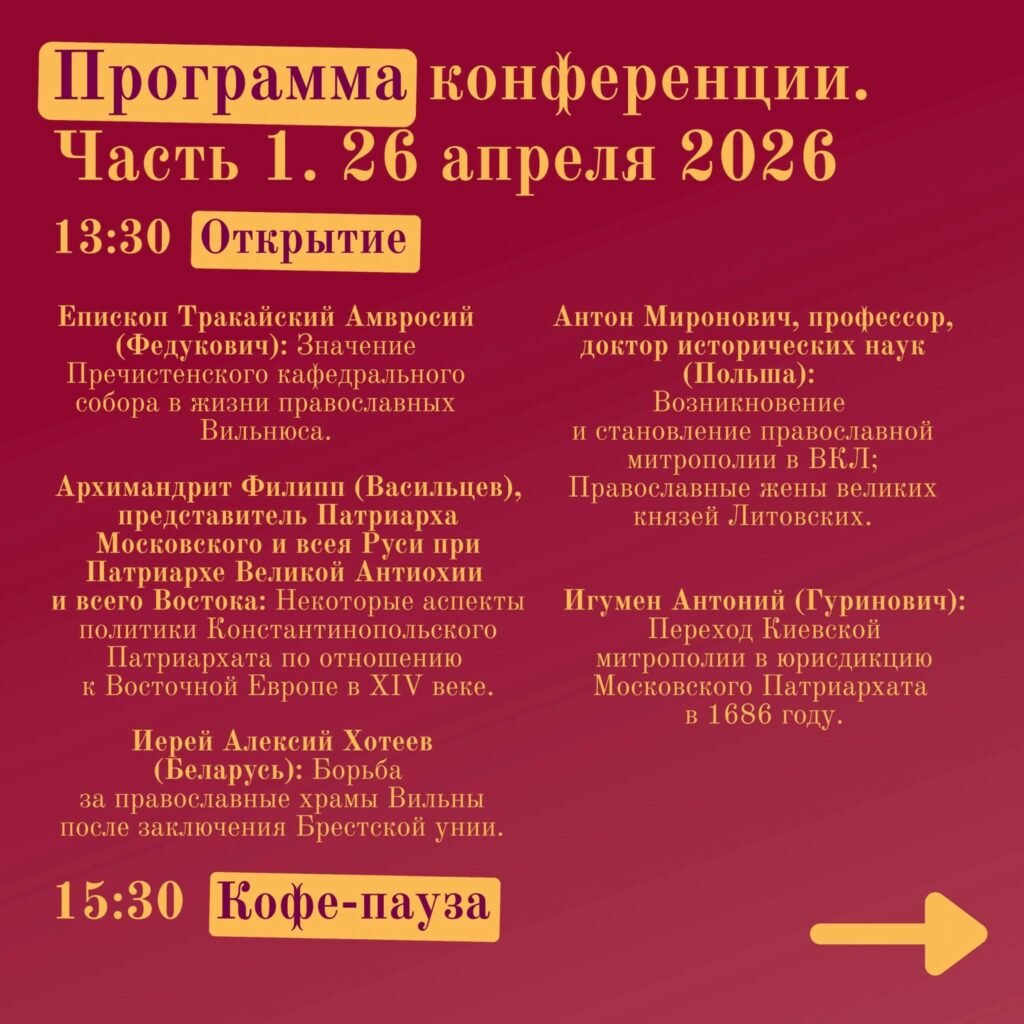
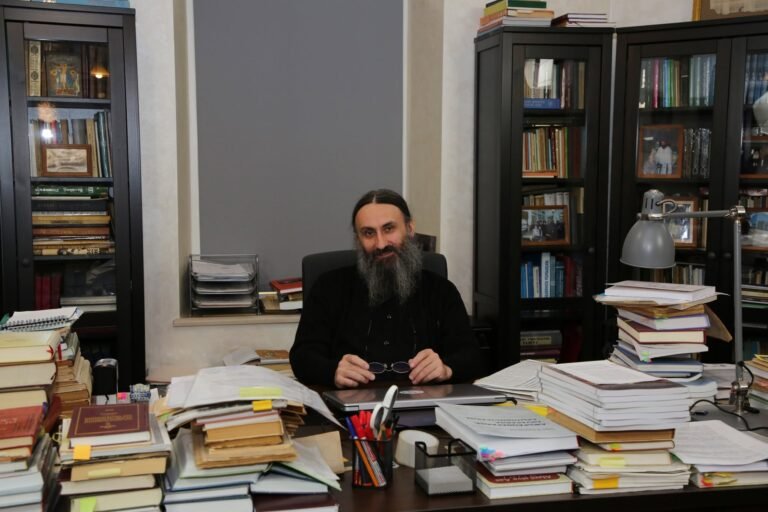
It is striking that on the page with photographs and paper topics all participants are presented except one, Archimandrite Filipp Vasil’tsev. For him there is only the text with the title of his paper, but it is sufficiently indicative: “Some Aspects of the Policy of the Constantinople Patriarchate toward Eastern Europe in the 14th Century.”
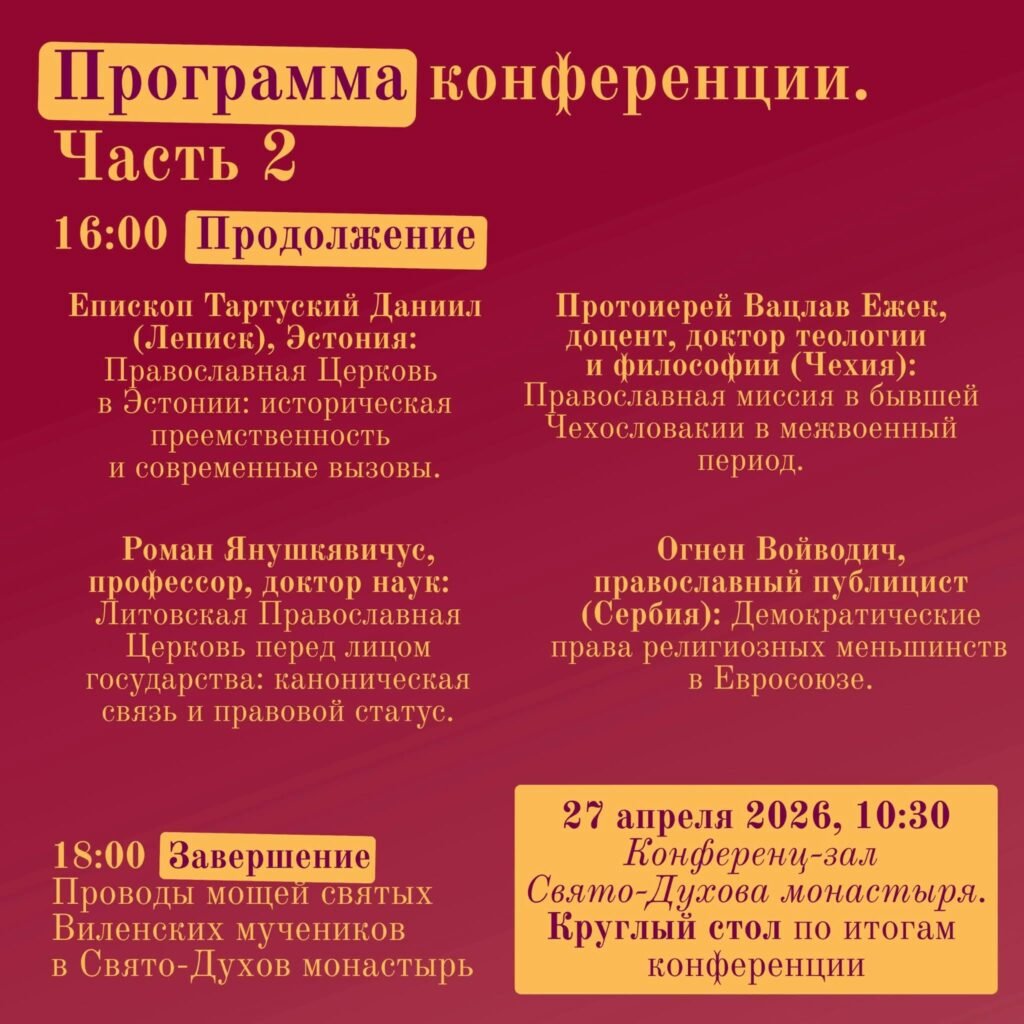
It is surprising that the scandal-tainted archimandrite from Bulgaria will be allowed into Lithuania at all, as the country is currently combating the influence of Russian propaganda. It may be worth recalling what kind of figure he is in the Russian and interchurch space.
According to the website Drevo, on October 6, 1999, by decision of the Holy Synod of the Russian Orthodox Church, Vasil’tsev was assigned to Bishop Innokentii Vasil’ev of Korsun, who has held the Vilnius see since 2010. Since May 2004, he has headed the Foundation of Saint Great Martyr Catherine in Rome and has been responsible for the construction of a church of the same name on the grounds of the Russian villa Abamelek. A little-known fact is that this church was built on territory belonging to the Embassy of the Russian Federation in Italy, located near the Vatican. In August 2007, Vasil’tsev was appointed a cleric of the parish of Saint Great Martyr Catherine in Rome. On January 17, 2008, he was appointed secretary to the administrator of the parishes of the Moscow Patriarchate in Italy. Then, in 2011, he was transferred to Sofia, where he became the representative of the Moscow Patriarch at the Russian monastery of Saint Nicholas. In Bulgaria he was elevated to the rank of archimandrite and participated in preparations for the canonization of Saint Serafim Sobolev.
However, the site does not note anywhere that in Bulgaria Archimandrite Filipp Vasil’tsev gained notoriety for expelling a large Bulgarian community from the Russian Church in Sofia. Just one year after his appointment in Bulgaria, Archimandrite Filipp established a Cossack organization at the Russian metochion, a “new fashion” that Archpriest Georgii Mitrofanov called a “masquerade.” His actions did not stop there. Vasil’tsev initiated the division of the parishioners of the Church of Saint Nicholas the Wonderworker along ethnic lines, Bulgarians and Russians, removing two Bulgarians, Priest Nikolai Neshkov, who had served there for 15 years and was the confessor of most parishioners, and a deacon. Parishioners appealed to the Bulgarian Patriarch Maksim to assist in the immediate recall of the head of the Russian metochion, Hegumen Filipp. The letter was signed by more than 100 active members of the parish, Russians and Bulgarians. It even escalated into a conflict with a team from Bulgarian National Television.
After all this became known to the Bulgarian public and reached a high level of intolerance, in May 2012 the Ministry of Foreign Affairs handed a note to the Russian ambassador over alleged violations of Bulgarian law by Archimandrite Filipp Vasil’tsev. In response, however, the archimandrite was supported by Metropolitan Ilarion Alfeev, who stated that the representative of the Moscow Patriarchate was not expelled from Sofia but left on his own due to visa problems. According to Metropolitan Ilarion, anyone claiming otherwise is an enemy of Russian Orthodoxy. Hegumen Filipp was awarded a golden mitre and an archimandrite distinction for diligent service in Sofia, despite the protest note delivered by the state only a few months earlier. Archimandrite Filipp was returned to Sofia, and the portal Dveri, which closely followed the case, interpreted this as follows: “The return of Archimandrite Filipp to Sofia is intended to show that he and his patron Metropolitan Ilarion Alfeev, head of the external relations department of the Moscow Patriarchate, have the final say in who will serve and govern the Russian church in Sofia. Coercive methods of dealing with parishioners, Bulgarian clergy, the Holy Synod of the Bulgarian Orthodox Church and state authorities were part of Russian church policy carried out by the Moscow Patriarchate through Archimandrite Filipp. A demonstration of force and disregard for Bulgarians marked the entire stay of the Russian cleric in our country.”
Filipp Vasil’tsev remained in Sofia for the renovation and preparation for the centenary of the Church of Saint Nicholas in 2014, and in 2018 he was transferred to the Russian metochion in Beirut. Thus, a large community of Bulgarians and Russians who worshipped at the church of the Russian metochion was dispersed, a wound that has left lasting consequences to this day.
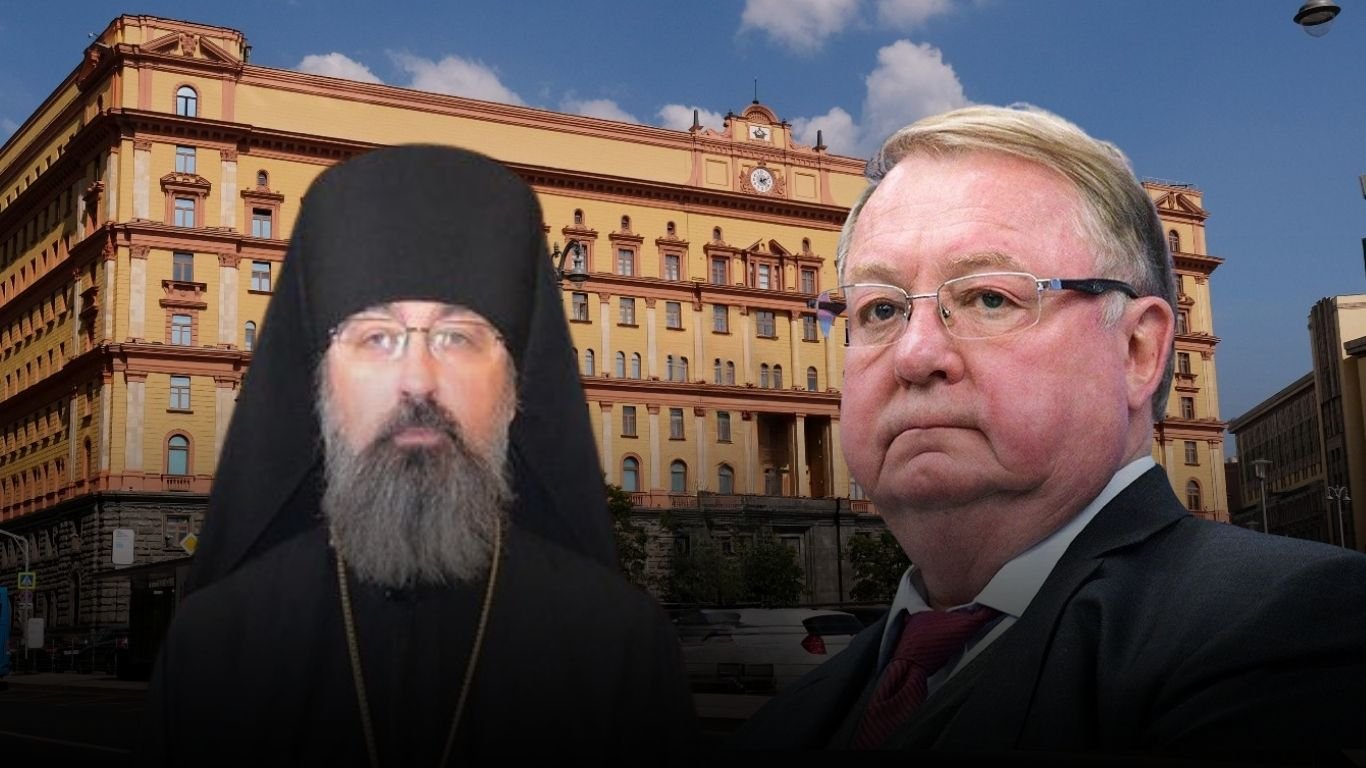
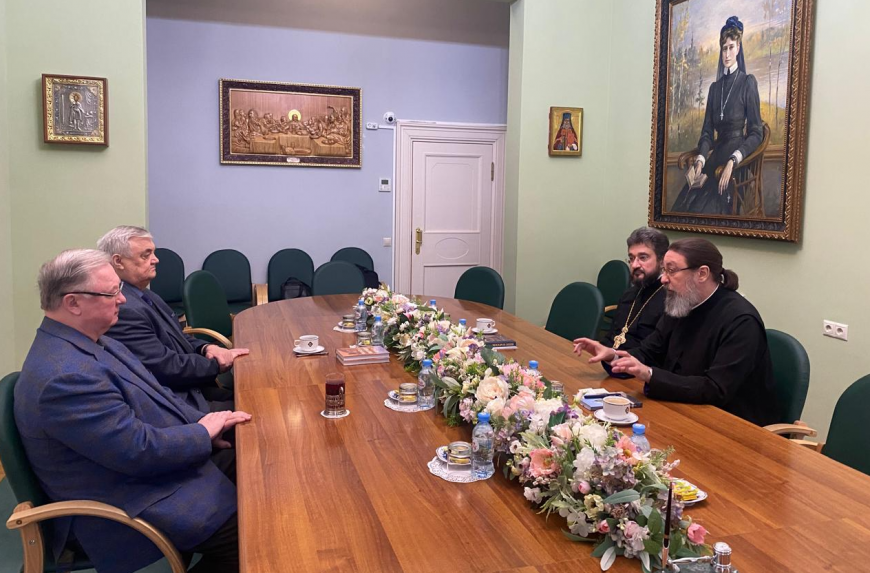
The name of Archimandrite Filipp Vasil’tsev also appears in more recent publications, for example on the website of the Imperial Orthodox Palestine Society, where a working meeting is reported between the head of the society Sergei Stepashin and Archimandrite Filipp as a representative of the Russian Orthodox Church in Damascus, Syria. In May, on the occasion of the 80th anniversary of Victory Day, Vasil’tsev attended a ceremonial reception and congratulated Russian diplomats in Syria, and a few months later, in June, cooperation between Vasil’tsev and the Russian diplomatic mission was launched in Damascus.
The relationship between Hegumen Filipp and Stepashin is noteworthy, as the latter is not an incidental figure in the Russian church sphere. Sergei Stepashin served as chairman of the Accounts Chamber of the Russian Federation and as the first director of the FSB, participated in the war in Chechnya and held senior posts in several Russian governments. An active proponent of the ideology of the “Russian world,” Stepashin is on the EU sanctions list for involvement in the illegal annexation of Crimea in 2014 and Russia’s war in Ukraine. Under his personal pressure and that of the Russian government, on October 5, 2008, the government of Israel decided to restore existing Russian property in the Holy Land known as the Sergievskoe Podvor’e or the Imperial Orthodox Palestine Society.
Several international scandals have surrounded this organization. In 2018, Bulgarian media reported that Greek authorities expelled two Russian diplomats over numerous coordinated attempts to increase Russia’s influence in Greece, in particular through the activities of the Imperial Orthodox Palestine Society. According to Greek authorities, the diplomats tried to influence church communities and metropolitans of the Greek Church and to gain influence on Mount Athos through financial incentives. The goal was for these individuals to support Russian political and economic interests in the country.
The BBC published an extensive article about the society on the occasion of the opening of its branch in Greece two years earlier, and Stepashin even allowed himself to comment on Bulgarians. The article describes interesting details about the organization’s activities. Two years ago, a branch of the Imperial Orthodox Palestine Society was officially opened in Greece. “It is customary to consider Bulgarians our brothers. But lately they have turned their heads in another direction. The Greeks truly are our brothers,” said the head of the society Sergei Stepashin at the time. This year, Athens suspected the society of attempting to influence internal affairs and stopped issuing visas to Russian clergy. Greeks who attended the opening of the branch prefer not to mention it at all.
In the same year, Ukrainian media published articles about the society, condemning it as a “Kremlin religious residence” and a “Kremlin hybrid crusade.” In February 2026, Israeli journalist Gai Assif from the newspaper Yediot Ahronot published an extensive investigation titled “A Village for Sale,” in which he directly stated that the organization is under Putin’s control.
What report Archimandrite Filipp Vasil’tsev will deliver in Vilnius is more than clear.
After the international conference held in February, “Constantinople and Moscow: Transformations of Church Affiliation and the Influence of Imperial Policy,” which brought together leading theologians, scholars, clergy and international experts to discuss the role of religion in contemporary geopolitical processes with particular emphasis on Russia’s influence and the war, the Russian Orthodox Church has also decided to use a Lithuanian Orthodox feast to demonstrate how strong Orthodoxy in Lithuania is under the omophorion of Patriarch Kirill of Moscow.
In the context of pressure from Moscow, due to which a group of clergy left Lithuanian churches of the Russian Orthodox Church because they spoke out against Russia’s war in Ukraine, it should be recalled that in 2024 the US Department of State awarded nine Orthodox priests from Lithuania and Belarus the International Religious Freedom Award “for their courage and determination to defend religious freedom around the world.”
The award citation states: “Under pressure from Moscow, this group of nine Orthodox clergy were expelled from their churches for protesting Russia’s war in Ukraine. They created a new religious community in Lithuania that brings together Orthodox believers who wish to worship without Moscow’s influence, including Lithuanians, Ukrainian war refugees and exiles fleeing oppression in Belarus and Russia.”
Five Orthodox clergy were defrocked by the Vilnius and Lithuanian diocese of the Russian Orthodox Church “for canonical crimes,” in the wording of the Russian Orthodox Church, but the Constantinople Synod stated that this occurred not because of violations of church rules but because of their position on Russia’s invasion.
In the exarchate under the omophorion of the Ecumenical Patriarch in Lithuania there are ten priests and ten parishes in different cities of the country.