The Embassy of the Russian Federation in Tallinn has expressed dissatisfaction with the inclusion of the Estonian Orthodox Christian Church of the Moscow Patriarchate in a report by Estonia’s security services as an organization threatening the constitutional order.
RIA Novosti reports this, citing the Russian Embassy in Tallinn.
The Russian mission stated that the information published by KaPo is “an element of a campaign to discredit the largest denomination.”
“We believe that the inclusion in the annual review of the Estonian Internal Security Service, KaPo, of information about the allegedly destructive role of the Estonian Orthodox Christian Church is an element of an ongoing campaign in the country to discredit the largest denomination,” the embassy said.
As is known, the annual report of Estonia’s Internal Security Service, KaPo, states that the Estonian Orthodox Christian Church of the Moscow Patriarchate, while attempting to present itself as independent, continues to be governed by the Russian Orthodox Church. Although the church changed its name last year, only cosmetic amendments were made to its statute in order to create the appearance of independence from the Moscow Patriarch, who continues, using Christian rhetoric, to justify Russia’s aggressive war against Ukraine.
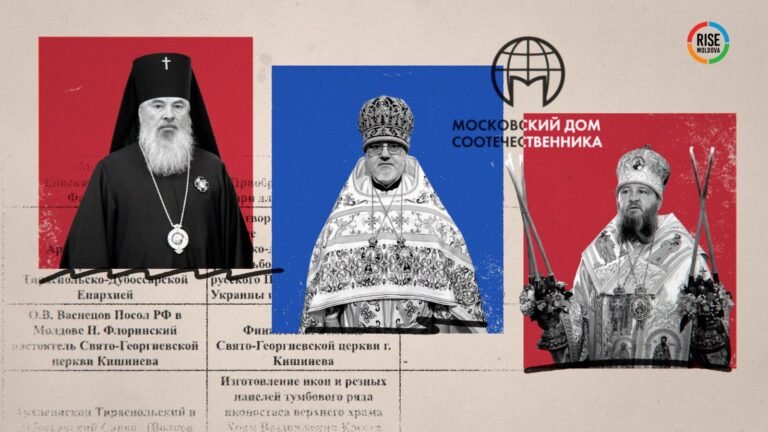
As LF reported, the Internal Security Service named clergy and individuals associated with the Russian Orthodox Church whose activities were deemed a threat to national security. Due to their support for Russian aggression against Ukraine and the promotion of the Kremlin’s foreign policy, these individuals were barred from entering Estonia and the Schengen Area.
For its part, the Estonian Orthodox Christian Church of the Moscow Patriarchate stated that it disagrees with the conclusions of the Internal Security Service that it poses a threat to the constitutional order. The church asserts that its activities are independent of the Moscow Patriarchate.
As LF reported, the Supreme Court of Estonia, in an open hearing on February 3, considered a petition by President Alar Karis to declare amendments to the Churches and Congregations Act unconstitutional. The church of the Moscow Patriarchate believes the document is directed against it, while parliament cites considerations of national security.
Earlier, Patriarch Kirill Gundyaev of the Russian Orthodox Church stated that in a number of countries, including Estonia, there is allegedly an ongoing campaign against the Russian Orthodox Church.
Although the Russian Orthodox Church, in its documents, regards Estonia as part of its canonical territory, this is not the case from the perspective of Orthodox canon law. This is stated by church historian Priit Rohtmets and specialist in Orthodox canon law David Hutt-Stade.