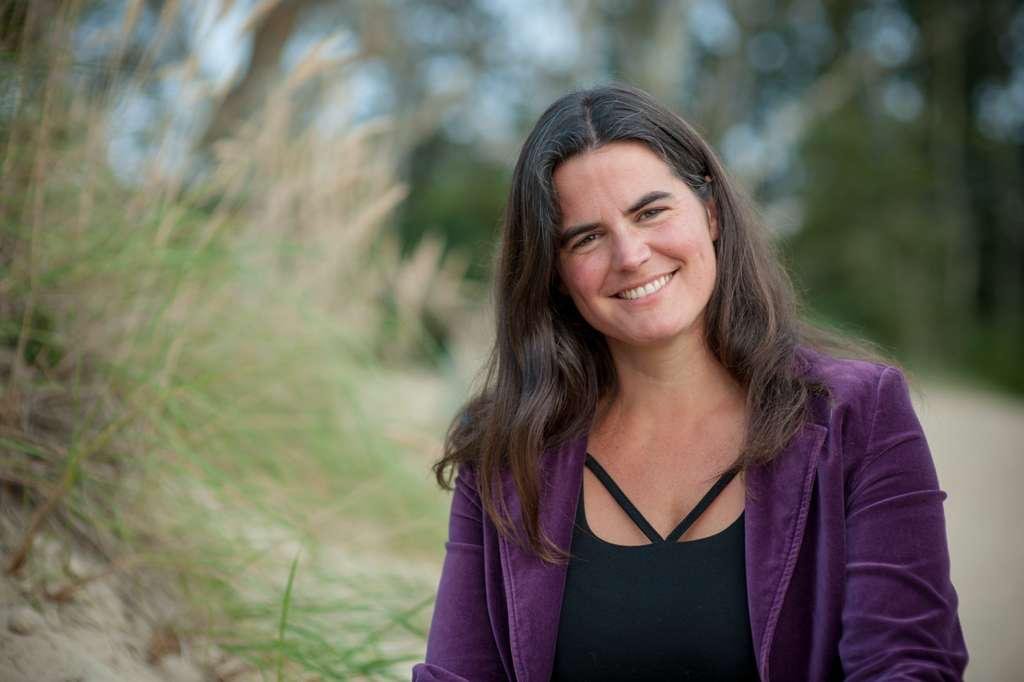
We continue our series of conversations with researchers studying the instrumentalization of religion. Willemijn Kemp is undoubtedly a particularly compelling interviewee.
In our conversation, the Dutch researcher specializing in religion, conflict, and social transformation, and author of the study “The Imagined Great Russian World: Putin’s Religious Motives for Justifying the Invasion of Ukraine,” examines how the Kremlin and the Russian Orthodox Church use religious ideas and symbols to legitimize Russia’s aggression against Ukraine, and why they have found it so easy to “hijack” the religious agenda in the modern era. Today, we publish the first part of our conversation.
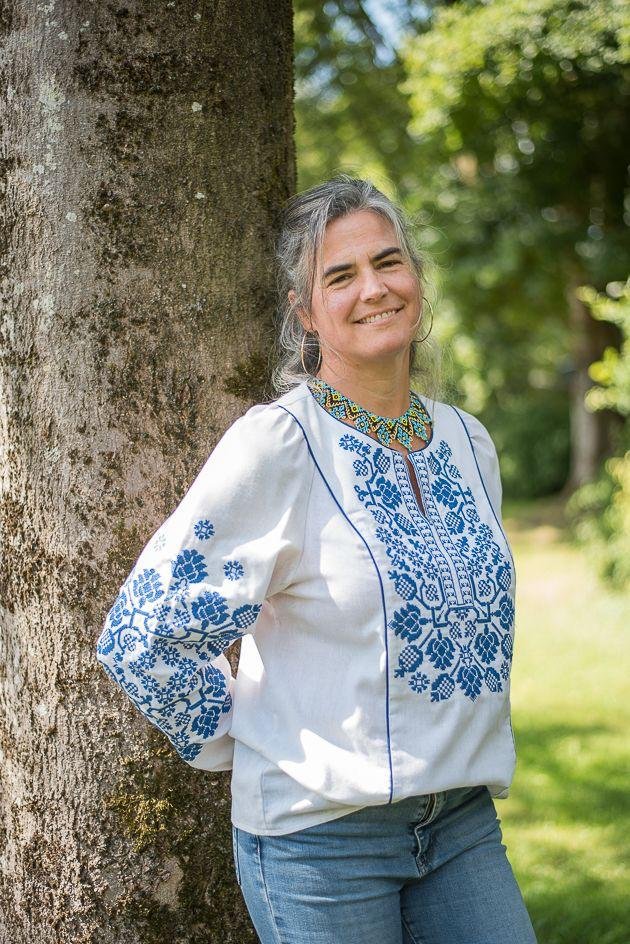
Willemijn,in your work The Imagined Great Russian World, you examine how Putin uses religious ideas to justify the invasion of Ukraine. What drew you to this subject? What was the most surprising conclusion you reached during your research?
My main interest is how something that is meant to unite and guide people, that provides people with meaning and resilience can be used to divide, oppress, or even destroy them. Religion is often misunderstood and instrumentalised to legitimise violence, oppression and political power for one’s own interest. With my academic background in religious studies and organisational change, I am particularly interested in understanding how religious narratives shape collective identities, influence people’s moral judgement and contribute to systems of power and control. My involvement in Ukraine has made these questions much more than an academic interest. I have witnessed the human consequences of war and spoken with people whose lives have been profoundly affected by it. Therefore I wanted to understand how the Kremlin uses religion in their concept of The Great Russian World.
My research examined how religious narratives, institutions and symbols have been instrumentalised by the Kremlin to legitimise Russia’s imperial ambitions and its invasion of Ukraine. My central conclusion was that religion, particularly through the concept of RusskyiMir, has become closely intertwined with political power, national identity construction and mechanisms of societal control. The relationship between the Russian Orthodox Church and the Kremlin serves to reinforce their mutual authority, while religious narratives help legitimise aggression, suppress pluralism and portray political conflicts as existential struggles between civilisations. An important additional finding was that this strategy has also produced unintended consequences: rather than consolidating the imagined unity of the Russian world, it has contributed to the strengthening of Ukrainian national and religious independence.
Where did you study religion? Did you also receive any formal theological training, and how has your academic background shaped your understanding of the relation ship between faith, politics, and war?
I obtained my Bachelor’s degree in Religion and Worldviews from the Faculty of Theology at Vrije Universiteit Amsterdam in 2004. In 2023, I completed my Master’s degree in Religion, Conflict and Globalisation at the Faculty of Religion, Culture and Society at the University of Groningen. I have not received formal theological training in the traditional sense. My academic background regarding the topic is primarily in religious studies, which means that I approach religion and worldviews from multiple perspectives: historical, sociological, political, cultural and ethical. I combine this with my background in organisational change and transition processes (MA in Change Management), as well as more than 25 years of professional experience in healthcare and the social sector. Throughout my career, the human being at the centre of our work has always been my primary focus.
This combination has shaped the way I understand the relationship between faith, politics and war. I am particularly interested in how religious beliefs and narratives influence people’s identities, moral choices and behaviour, but also how they can be instrumentalised by political and religious authorities to legitimise power, violence and oppression. At the same time, I am interested in the other side of religion: its potential to provide meaning, moral guidance and resilience, especially in times of war. Wat does religion, or God, means for a person? My academic research and fieldwork in Ukraine have brought these two dimensions together. I try to understand not only how religion is used by those in power, but also what faith means to individuals who are directly confronted with violence, suffering and moral dilemmas.
People have sometimes remarked that the way I conduct in-depth interviews resembles pastoral care. Although I do not have a pastoral background, I recognise something in that observation. For me, research is not only about understanding systems, ideologies and structures, but also about genuinely listening to the people whose lives are shaped by them.
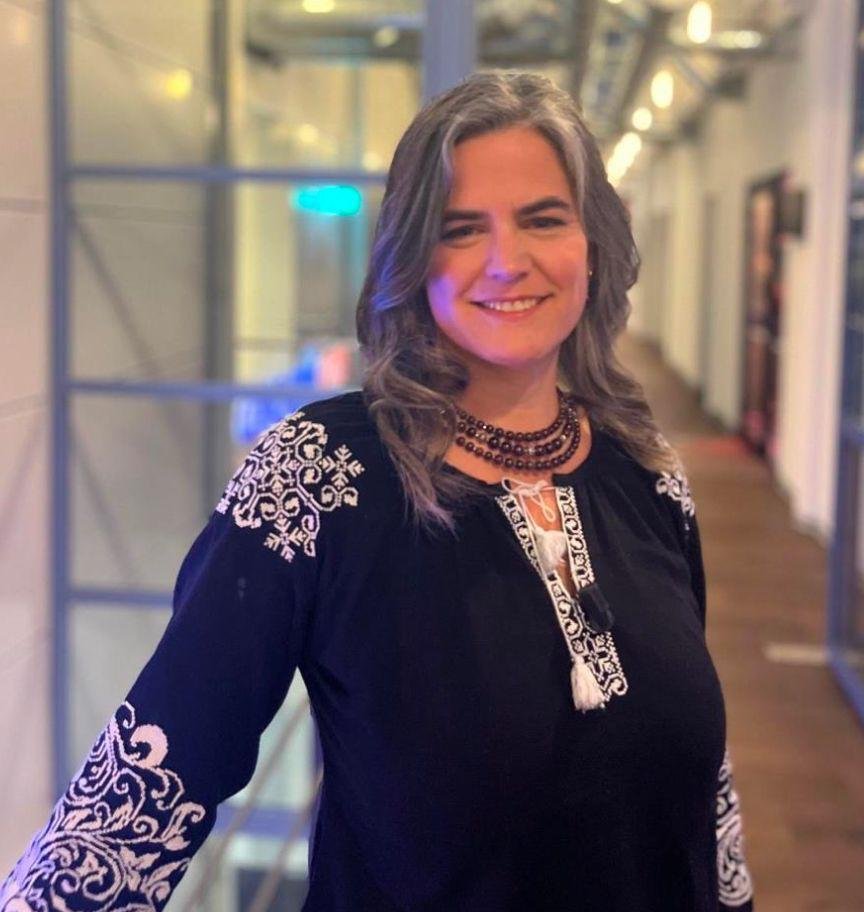
If you feel comfortable discussing something more personal, what role does faith play in your own life? Was there a particular moment when you made a conscious religious choice, and has that experience influenced the questions you ask as a researcher?
My father was a minister, so faith and religion were naturally part of my upbringing. However, during my young teenage years, I stopped attending church every week. That did not mean turning away from faith though, but rather beginning to explore what faith meant to me personally.
When I was 16, I made the decision that I wanted to live a ‘meaningful and conscious life’. I started meditating and exploring different religious and spiritual traditions, visiting places of worship and attending gatherings. I was searching for the deeper meaning behind things, trying to understand what truly matters in life. Looking back, I think I was searching for God, and for ways to recognise and experience God’s presence in everyday life.
My spirituality is therefore rooted in my personal relationship with God, rather than in belonging to a particular religious institution or following a specific doctrine. For me Jesus Christ is an important teacher, but I do not judge others by their faith of it doesn’t correspond with my ‘belief’. For me, faith is not primarily about what people believe, but about how those beliefs shape the way they live, treat others and take responsibility for their actions.
This has certainly influenced my approach as a researcher. I am interested in understanding what faith actually means in people’s lives, particularly when they face suffering, injustice or difficult moral choices. How does faith influence their humanity? Does it help them remain compassionate, courageous and morally responsible, even under extreme circumstances? Ultimately, what interests me most is how religion and faith can help people become better human beings. And perhaps that is also why I am so deeply interested in the opposite: how something that has the potential to bring people closer to God and to one another can be used to justify violence, oppression and even the destruction of other human beings? One of my favorite movies is ‘Kingdom of God’ with Stuart Bloom. In this story set during the crusades, these two sides of ‘good’ and ‘bad’ are made visible perfectly, in my view. It is not about what the people say in this film, for they all seem to say the same things, but it is about what they show in their behavior and activities.
For many years, Russia and the Russian Orthodox Church have promoted the narrative that Europe has lost touch with its Christian roots and that Russia is now the only true defender of traditional and eternal values. Why do you think Russia has been sosuccessful in appropriating this narrative and positioning itself as the guardian of Christian values?
This is a fascinating question, and I think the answer is much more complex than religion alone. Following my previous answer, I find myself asking a fundamental question: why would people follow religious leaders who preach violence, death and destruction, particularly when their message comes from a position of aggression rather than compassion? To me, there is very little that is Christian about that. Yet, apparently, such messages resonate with people. Why? I believe Russia and the Russian Orthodox Church have successfully identifiedandexploitedcertain vulnerabilities within Western societies. These vulnerabilities are partly connected to secularisation, but also to profound social and cultural transformations that have taken place over recent decades. Secularisation has changed our relationship with religion, but it has not necessarily erased our Christian heritage. European societies have been profoundly shaped by Judaism and Christianity, and many values associated with human dignity, compassion, solidarity and responsibility remain deeply embedded in our institutions and moral frameworks. These values have also been shaped by other religious, philosophical and humanist traditions, and are reflected in the Universal Declaration of Human Rights.
In many Western democracies, religion has increasingly become a matter of personal choice rather than collective obligation. People are free to believe, not to believe, or to explore different religious and spiritual traditions. I consider this freedom one of the great achievements of democratic societies. However, freedom also comes with complexity.
The more freedom we have, the more choices we must make, and the more responsibility we may feel for the consequences of those choices. In modern Western societies, there is a strong belief in the idea that life is largely makeable: that we can shape our own future, create our own happiness and achieve success through individual effort. This can be empowering, but it also creates pressure. If success is considered entirely your own achievement, then failure can easily become your personal responsibility as well. What happens when people struggle despite their own efforts? When they cannot meet society’s expectations, when their future feels uncertain, or when they feel they are falling behind? Such experiences can contribute to insecurity, anxiety and a sense of personal inadequacy.
Another important development is the growing independence and equality of women. Over recent generations, women have gained greater opportunities to shape their own lives, pursue careers, become financially independent and make choices about relationships, marriage and motherhood. I consider these developments essential achievements in human freedom and dignity. At the same time, these changes have challenged traditional gender roles and expectations, particularly concerning the position of men in relation to women. For generations, masculinity was often closely associated with being the provider, protector and head of the family. As women have become increasingly independent, these traditional definitions of masculinity have been questioned. For some men, this creates uncertainty about their identity, purpose and position regarding women and within society. They can ask themselves ‘who am I if women do no longer need me?’. It might even touch a very existantial level of being for some men. If their understanding of what it means to be a man has largely been defined by traditional roles, changing relationships between men and women may leave them searching for new ways to understand themselves.
I believe conservative and authoritarian movements can exploit these uncertainties by offering a seemingly simple answer: a return to clearly defined gender roles, traditional family structures and established hierarchies. Such narratives promise stability and certainty in a world that may otherwise feel increasingly complicated.
A third development that influences this development is the growing emphasis on individualism in Western societies. We increasingly celebrate independence, self-reliance and individual achievement. Yet human beings are fundamentally social beings. We need meaningful relationships, belonging, mutual responsibility and a sense of being part of something larger than ourselves. Individual autonomy is important, but it should not be confused with having to manage life entirely on our own. I sometimes wonder whether, in our pursuit of individual freedom, we have neglected the importance of building and maintaining communities. Traditional forms of social connection, including religious communities, neighbourhood networks and other collective structures, have changed or weakened in many places. New forms of community have emerged, but they do not always compensate for what has been lost. As a result, people may experience loneliness and social isolation, even while living in societies that offer unprecedented individual opportunities. And loneliness is not simply about being physically alone. It is also about feeling that you do not belong, that nobody truly needs you, or that you have no meaningful place within a larger community. I believe this touches something fundamental in human nature: our need for connection, recognition, purpose and belonging.
This is precisely where the Russian narrative of traditional values can become attractive.
Russia and the Russian Orthodox Church present an image of a society in which identities are clear, gender roles are defined, religion provides moral certainty, the family is central, and individuals belong to something greater than themselves: a nation, a civilisation and a shared spiritual tradition. For people experiencing uncertainty, loneliness or a loss of identity, such a narrative can offer psychological comfort. It provides simple answers to complex questions and identifies clear boundaries between right and wrong, good and evil, and ‘us’ and ‘them’. It also offers something that many people are searching for: a sense of belonging and purpose. However, there is a fundamental difference between a community built on mutual care, solidarity and freely shared values, and a collective identity imposed through authority, exclusion and obedience.
The Russian narrative presents itself as a defence of Christianity, but it also serves political objectives. By portraying Western societies as morally declining, Russia can position itself as a defender of civilisation and traditional values, while simultaneously legitimising authoritarian power and aggression. This is expressed through men (and women) who share their success through socials while seemingly supporting these values; the so-called manosphere. I would preferably distinguish between the genuine human needs to which this narrative appeals and the political purposes for which those needs are being exploited. Perhaps the greatest success of this narrative is not that Russia has convinced people of its moral superiority, but that it has managed to connect its political ambitions to real anxieties and uncertainties within modern societies. Social media plays a large role in this.
It brings me back to something I consider essential: religion should help people become better human beings. It should encourage compassion, responsibility, dignity and care for others.
The answer to loneliness, uncertainty and social fragmentation should not be less freedom or a return to imposed hierarchies. Rather, I believe we need to rediscover how to combine individual freedom with meaningful human connection, shared responsibility and strong communities. Because ultimately, human beings need both: the freedom to become who we are and the experience of belonging to something greater than ourselves.
Anna Yansone