The Estonian Orthodox Christian Church, subordinate to the Moscow Patriarchate, although it attempts to present itself as independent, continues to be governed by the Russian Orthodox Church.
This is stated in the annual report of the Internal Security Service (KaPo), ERR reports.
The Estonian Orthodox Christian Church, abbreviated as EOCC and formerly known as the Estonian Orthodox Church of the Moscow Patriarchate, remains connected to the Russian Orthodox Church, which continues to cooperate with Russia’s security agencies, KaPo noted.
Although the church changed its name last year, only cosmetic amendments were made to its statute in order to create the appearance of independence from the Moscow Patriarch, who continues, using Christian rhetoric, to justify Russia’s aggressive war against Ukraine. In addition, the EOCC is still led by Metropolitan Evgeniy from Russia, whose residence permit in Estonia was not extended on security grounds, forcing him to leave the country, the report states.
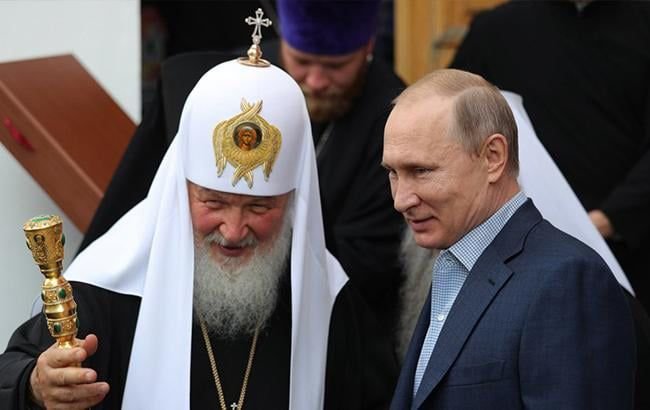
Although the EOCC seeks to portray itself as an independent and self-governing church, in reality its activities are directed by the Russian Orthodox Church. Instructions and coordination of activities on behalf of Patriarch Kirill are carried out primarily by the Department for External Church Relations of the Russian Orthodox Church and the Directorate for Dioceses in the Near Abroad, established on March 24, 2022, that is one month after the start of Russia’s full-scale war against Ukraine.
As reported by LF, Estonia’s Supreme Court, in a public hearing on February 3, considered a petition by President Alar Karis to declare amendments to the Churches and Congregations Act unconstitutional. The Church of the Moscow Patriarchate believes the document is directed against it, while parliament cites national security considerations.
Earlier, Patriarch of the Russian Orthodox Church Kirill Gundyayev stated that in a number of countries, including Estonia, there is allegedly an ongoing campaign against the Russian Orthodox Church.
Although the Russian Orthodox Church considers Estonia part of its canonical territory in its documents, this is not the case from the point of view of Orthodox canon law. This is stated by church historian Priit Rohtmets and specialist in Orthodox canon law David Hutt-Stade.*