The Balkans are a region not only of geopolitical fault lines but also of deep ecclesiastical divisions. Local states have traditionally romanticized the church, seeing it as a spiritual fortress that saved their nations from disappearance. However, modern governments use this institution in completely different ways.
What is distinctive about the church landscape of the Balkans? Are there actors who shape the religious agenda on the peninsula? Are new church movements emerging that could alter the balance of power in the future?
We discuss this with the well-known church commentator Lera Furman, an expert on the peninsula.
The Serbian Church’s Sphere of Influence Is Shrinking to 50 Percent or Less
— Lera, it is often said that Russia will always be present on the Balkan Peninsula, and that the Serbian Church is its loyal ally there. How decisive is the role of the Serbian Church in shaping attitudes within the church environment? Do you believe that a healthy, non-Russian Orthodoxy can prevail in the Balkans, given how long and systematically Russia has been operating there?
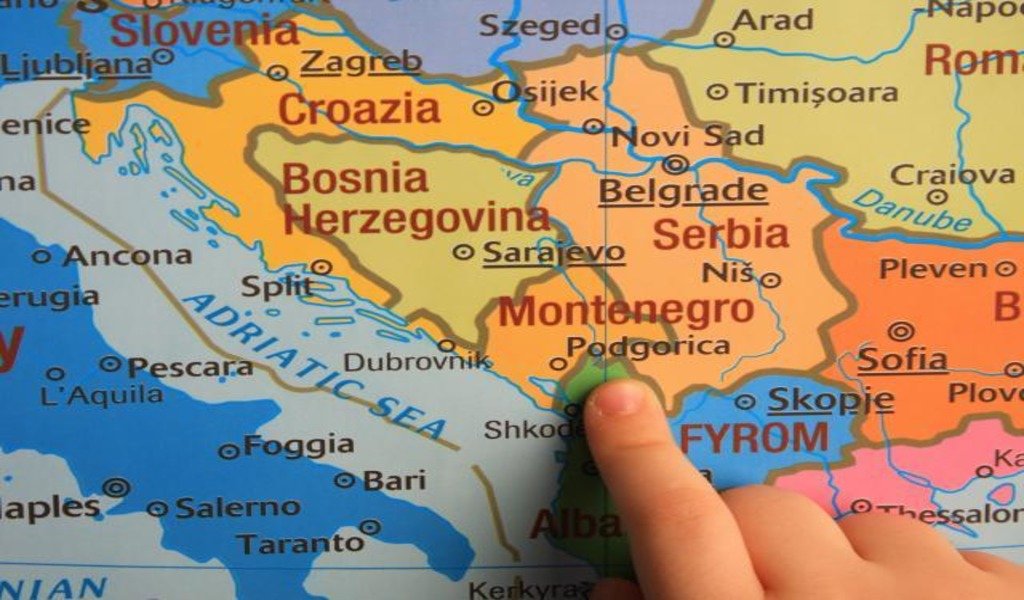
— First, we should define what we mean by the Balkans. There is a narrow understanding of the term and a broader one. If by the Balkans we mean the geographical area stretching from Romania to Croatia, Slovenia, and Greece, then such generalizations cannot be made. That is far too broad a statement. The Balkans include Greece, Romania, Albania, Kosovo, and North Macedonia.
Therefore, it is probably not worth absolutizing or exaggerating Serbia’s role. I would say that it accounts for about fifty percent of the shares on a pan-Balkan scale, if not less. Especially since a developing alliance among the Bulgarian, Macedonian, Albanian, and perhaps partly the Romanian Churches is becoming noticeable.
Translation into English:
Therefore, in my view, the Serbian Church’s sphere of influence is narrowing. It has already completely lost its influence in half of the countries of the former Yugoslavia, including North Macedonia. It is also gradually losing influence in Montenegro. There, an alternative to Serbian Orthodoxy exists.
There are projects aimed at establishing an independent Croatian Orthodox Church. They are already being implemented in practice, though in what might be called a non-canonical form, as self-proclaimed jurisdictions. There is also a project for a Kosovan Orthodox Church. Some activists there, though not bishops, are distancing themselves from the Serbian Patriarchate and advocating for an independent Kosovan Church within the territory of the Republic of Kosovo.
It seems to me that the trend is one of Serbia becoming increasingly insular and self-contained. There is also Republika Srpska within Bosnia and Herzegovina, where Serbian chauvinism and nationalism are arguably even stronger than in Serbia itself. This constitutes the entire area of direct influence of the Serbian Patriarchate: the Republic of Serbia itself and Republika Srpska within Bosnia and Herzegovina. In Montenegro, that influence is already significantly weaker.
Puppet of the Authorities: Lack of Agency and Financial Dependence on Moscow
Moreover, the Serbian Patriarchate is not an independent political actor. I became convinced of this through my visits there. We have tended to exaggerate its role. In reality, it is an even more dependent and less autonomous structure than the Moscow Patriarchate. While the Moscow Patriarchate at least developed some form of the “Russian World” concept and attempted to advance ideas and political programs through World Russian People’s Councils, the Serbian Patriarchate merely trails behind Serbia’s chauvinistic, nationalist, and political movements. Naturally, it is closer to nationalist parties and further removed from democratic, pro-Western opposition groups, with whom it maintains no contact whatsoever. In other words, it is a deeply secondary institution with no real agency.
As long as President Vučić remains in power, the Serbian Patriarchate will continue to orient itself toward Moscow and remain heavily dependent on it, including financially. If there is a change of government in Serbia, the Patriarchate will be forced to distance itself from Moscow, provided that the new government is pro-Western. Serbia is currently witnessing regular mass protests. Young people and students are demanding early elections. The president is constantly promising them that elections will take place, but in reality he keeps postponing them. They were supposed to be held in July, but he managed to push them back until autumn. The students have a variety of concerns, but overall their agenda is more or less pro-Western and democratic. So there is a chance that the balance of power may shift and that Serbia may move somewhat further away from Moscow.
The key point is that the Serbian Patriarchate lacks political agency. It is a puppet instrument of the current Serbian political regime and one of its components. It does, of course, perform certain delicate functions. The regime cooperates with the Kremlin, but does so cautiously. The Serbian Patriarchate, by contrast, does so openly and directly. It is possible that the regime uses it to maintain informal contacts that it cannot afford to conduct openly, since Serbia is a candidate country for membership in the European Union and has not abandoned that course. That is the paradox: the regime maneuvers, while the Serbian Patriarchate remains unequivocally pro-Moscow.
Greekophiles and Moscophiles in the Serbian Episcopate: What Is the Balance?
Yet when speaking with senior officials of the Serbian Patriarchate, after repeating the usual mantras about their love for Moscow, they often add in a near whisper: “Not everything is so clear-cut within our episcopate.” The number of bishops educated in Greece is growing, and they are bringing a spirit of Greekophilia with them. Soon the ratio of Greekophiles to Moscophiles may be fifty-fifty. For now, the Moscophiles remain the majority, but there is a clear trend toward a growing younger generation that favors Constantinople.
Some believed that Patriarch Porfirije would be somewhat pro-Western because he had served in Croatia before his election. So far, however, those hopes have not been fulfilled. He has behaved in a distinctly pro-Moscow manner. Since the outbreak of the war, he has visited Moscow twice and made statements that Russian propaganda interpreted as a blessing for the military operation. He spoke of Russia’s special mission as a “pan-Slavic gendarme.”
Blackshirts Instead of Parishioners: The Decline of Real Church Life in Serbia
— So, do you believe that the Serbian Church has a chance to recover if the regime changes?
— Not to recover, that is not quite the right word. There is a chance to bring it within reasonable legal boundaries. I tried to find an entry point into church life in Serbia and, unfortunately, I came away deeply disappointed. Comparing Serbia with France or Germany, I can say that it is easier there to find a parish, a center of spiritual life, a liturgical tradition, and beautiful singing.
In Serbia, liturgical life has been reduced to a minimum: hurried liturgies lasting thirty to forty minutes and equally rushed services of need. Most monasteries are neglected and abandoned. At best, they house two or three monks. Attendance at services is extremely low, with only a handful of parishioners present. It is a picture of complete decline.
As a result, the Serbian Church is visible primarily in the context of political actions, mass processions centered on political slogans concerning Kosovo or the tragedies of the Second World War, especially Jasenovac, and hostility toward the Croatian Ustaše.
Once, on Trinity Sunday, I attended a service at the Church of the Holy Archangels in Belgrade. Toward the end of the service, bearded men dressed in black shirts began gathering. Flags appeared. It turned out that a religious procession had been organized with radical slogans commemorating the victims of the genocide of Serbs: “We will not forgive, we will not forget, we will take revenge.” The Serbian Patriarchate can mobilize people for such marches or for demonstrations against gay pride parades. From my perspective, it resembles not a religious institution but an auxiliary political body.
The Montenegrin Deadlock: Weak Autocephaly and Internal Division
— We recently held a conference in Vilnius. A Serbian publicist claimed that the Montenegrin Church is merely part of the history of the Serbian Orthodox Church, that it was created by fanatical anti-Christians and communist criminal clans, and that its priests are clergy dismissed for various reasons. Clearly, he is sympathetic to Russia. Nevertheless, is the autocephalous Montenegrin Church growing or not?
— Unfortunately, the so-called self-proclaimed Montenegrin Church is not growing significantly. On the contrary, a split occurred in 2023. One part of the church elected Metropolitan Boris Bojović as its primate, and now there are two jurisdictions, that of Boris and that of Mihailo Dedeić.
What is interesting, however, is that the Serbian Church’s own Metropolitanate in Montenegro is strong, and within it there is a movement seeking canonical autonomy. Roughly one-third of the official clergy of the Serbian Orthodox Church in Montenegro consists of nationally minded clergy. They understand that Yugoslavia will not return, that Montenegro is pursuing its own path through integration into the European Union, and that the church’s status should be brought into line with current realities. This autonomist movement is more visible there than the autocephalous Montenegrin Church itself. It is even said that the late Metropolitan Amfilohije, in his final years, supported an elevation of the Metropolitanate’s status.
Within the autocephalous Montenegrin Church itself, the situation is deadlocked. It resembles the Kyiv Patriarchate after its revival by the late Patriarch Filaret. The brand is attractive and the history is distinguished. Any historian knows that there was no unified Serbian Patriarchate before the nineteenth century and that Montenegrin metropolitans were consecrated in Saint Petersburg before the First World War without any involvement from Serbia.
But Belgrade is not prepared for dialogue. It remains obsessed with pan-Serbian chauvinism and maintains that no separate Montenegrin nation exists. Identity is indeed a complicated issue there. Only twenty to thirty percent clearly identify themselves as Montenegrins, while the rest describe themselves as Serbs or Yugoslavs.
The autocephalous Montenegrin Church itself is weak and small, and it has also split. Metropolitan Mihailo does not recognize Boris at all. He has defrocked him and published a pamphlet containing compromising material about him. Boris, meanwhile, regards Mihailo as a retired metropolitan. Their dispute spills into the press and is conducted publicly. There was even a confrontation over a church in Cetinje that required police involvement.
At the same time, both Boris and Mihailo have repeatedly attempted to contact the Ecumenical Patriarch, but Constantinople has not responded. Mihailo’s vulnerability lies in the fact that he was previously defrocked by the Ecumenical Patriarchate when he served as rector of a parish in Rome. This makes it diplomatically difficult for Istanbul to establish contact with him. Moreover, the current Montenegrin authorities are not trying to help, unlike during the presidency of Đukanović, who in 2019 even passed a law returning church property to the state.
The legal situation there is highly irregular. The Serbian Patriarchate has effectively taken control of more than six hundred properties in Montenegro. Legally, this has never been formalized. It simply possesses them, but under what rights and on the basis of which documents remains unclear. The authorities wanted to return this property to the state so that it could then make the buildings available to different religious organizations, but the effort failed.
The Serbian Patriarchate succeeded in mobilizing its supporters and transformed the issue into a political one. This contributed to the fall of Đukanović’s government and the rise of a pro-Serbian administration. Montenegro now has a fairly pro-Serbian government. It continues moving toward the European Union, yet it does not want conflict with Serbia. Prime Minister Dritan Abazović, who succeeded Đukanović and is ethnically Albanian, made it his first priority to sign a concordat between Montenegro and the Serbian Patriarchate guaranteeing the inviolability of that church property.
In general, from what I can see, the Serbian Patriarchate derives roughly half of its budget from Russian sources. Major projects in Montenegro have also been financed from Russia through the Serbian Patriarchate.
North Macedonia’s Stockholm Syndrome: A Tomos from Belgrade and the Repetition of Russian Orthodox Narratives
— Tell me, what happened in North Macedonia? Why have they begun repeating Russian narratives? Why are they effectively seeking a new partnership with the Russian Orthodox Church, thereby allowing Russian influence to penetrate Macedonian church circles? What is behind this alliance and this willingness?
— I am not sure they are actually allowing Russian influence to penetrate. The Macedonian state, on the contrary, expelled the representative of the Moscow Patriarchate, declared him persona non grata, and did not replace him with anyone from Russia.
— The state expelled him, yes. That was the decision of the authorities. But church circles themselves once wanted to receive a tomos from the Ecumenical Patriarch and instead received it from Serbia. For some reason, they then began reproducing pro-Russian narratives.
— I think they place enormous value on that tomos. As a result, they view the Serbian Patriarchate as their benefactor, the institution that finally restored them to canonical communion and resolved their status.
The paradox is that Macedonians spent decades feeling insulted and mistreated by the Serbian Patriarchate, yet as soon as it finally “patted them on the head” once, they quickly came to love it and instantly forgot all past grievances. I think this is, first of all, an expression of simple gratitude toward Belgrade. Second, it is entirely possible that the Macedonian side received a certain amount of financial assistance, which, as we understand, often has Russian roots within the Serbian Orthodox Church.
The Bulgarian Trauma: Why Pro-Russian Forces Prevail in Sofia
— What are your thoughts on Bulgaria? Why did a pro-Russian primate win the patriarchal election there?
— Because the proportion of Greekophiles within the Bulgarian episcopate is significantly smaller than in the Serbian one. This is connected to deep historical traumas.
Serbia has not had any recent, acute conflicts or contradictions with the Greeks. Bulgaria, however, carried the issue of the so-called Bulgarian Schism, a church rupture with Constantinople, until the middle of the twentieth century. Even today, tensions occasionally flare up. Recently there was a dispute concerning a Bulgarian church on Turkish territory near Edirne, historically Adrianople. Because of this unresolved historical trauma in relations with the Greeks, a Greekophile episcopate simply cannot take root in Bulgaria.
By contrast, there are many influential bishops and metropolitans, such as Gavriil, who studied and served in Russia. In addition, Bulgaria is currently experiencing a very complex social dynamic. Part of society is Eurosceptic, and Eurosceptic forces have also succeeded in secular elections. In this case, the church is simply a reflection of broader public attitudes.
And, of course, a great deal of Russian money circulates there. Until recently, Russian business maintained a major presence in Bulgaria. For example, the country’s principal oil refinery belonged to a Russian corporation for a long time. Only after the introduction of stringent sanctions did the situation begin to change. The Bulgarian situation requires careful analysis. It cannot be reduced simply to the election of a pro-Russian primate.
Anna Jansone