The Moldovan authorities provided financial support to the Orthodox Church (under the jurisdiction of the Moscow Patriarchate, LF) for years, including through budget payments, tax benefits and amnesties, as well as by granting state-owned property for use by clergy.
This is stated in an investigation by the RISE Moldova portal published on 16 June, NewsMaker reports.
The journalists specify that the period in question is the 1990s and 2000s. However, the current authorities have also not abandoned support for the clergy, despite the official narrative that the state has never donated money to the Church.
The authors explain that, against the backdrop of a conflict over a church in the village of Dereneu, Călărași District, which has the status of a historical monument, they examined reports by the Court of Accounts and other financial documents concerning relations between the state and the Church.
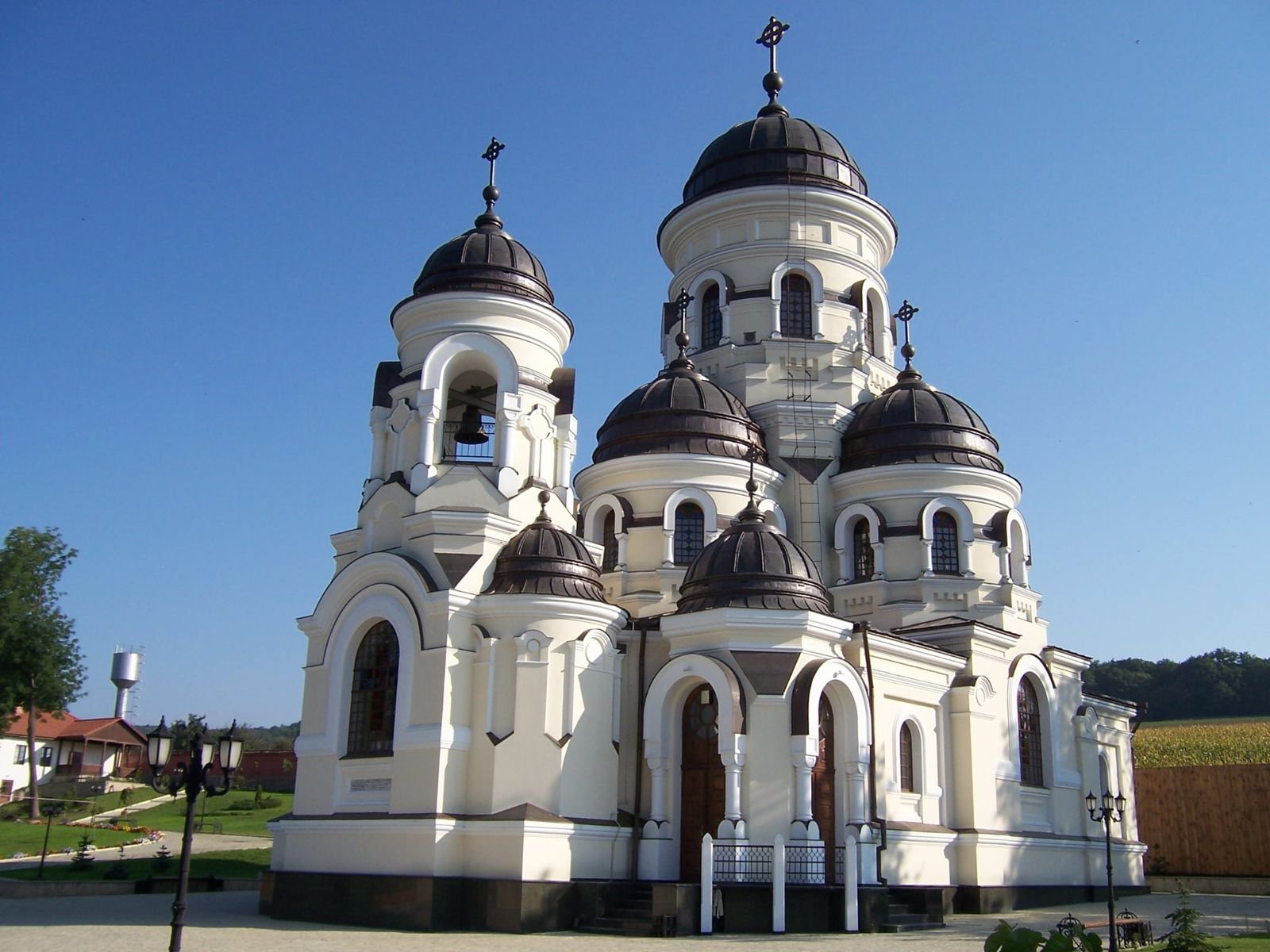
According to the investigation, the Moldovan authorities’ inclination to sponsor the Church emerged immediately after independence was gained. In 1992, then President Mircea Snegur declared that restoration work at the Căpriana Monastery complex was “of national importance” and granted tax benefits to all participants involved in the project.
Later, in 1994–1995, more than 1 million lei from the state budget was allocated for the reconstruction of nearly 20 churches. In 1996, the state budget earmarked 5 million lei for the restoration of sites of historical and cultural value, namely the cathedral in Chișinău and the Curchi Monastery.
The investigation notes that this practice flourished particularly during the 2000s under the rule of the Party of Communists led by Vladimir Voronin. At that time, the authorities launched nationwide fundraising campaigns for the reconstruction of religious buildings and were themselves generous with donations and benefits. Thus, in 2008, Metropolitan Vladimir stated that the Metropolis of Moldova had received 90,000 lei from the state budget, adding that he considered the amount modest. In the same year, the national budget allocated 100,000 lei for the repair of churches and monasteries, and a year later the state assumed the debt of the Curchi Monastery, amounting to 25 million lei spent on restoration work.
Last year, RISE notes, Speaker of Parliament and leader of the ruling PAS party Igor Grosu announced a national programme for the restoration of religious sites in the Old Orhei Reservation worth 20 million lei.
The portal cites Court of Accounts reports from 2003 to 2013 showing that religious organisations received 16 million lei from the state during that period in the form of donations, subsidies, benefits and other assistance. The journalists believe that the actual figure may be even higher.
The portal also notes that the Church enjoys a preferential tax regime, possessing the exclusive right to produce and sell so-called religious articles, while the Code of Contraventions provides for fines against those who compete with the Church in this segment.
As previously reported by LF, more than 800 churches in Moldova classified as historical monuments may return to state ownership. These are churches belonging to the Metropolis of Moldova, which forms part of the Russian Orthodox Church. This was stated by Culture Minister Cristian Jardan.
As LF previously reported, deputy and leader of Moldova’s Party of Socialists Igor Dodon, who advocates the federalisation of Moldova, commented on the confrontation in the village of Dereneu in Călărași District. He described the transfer of parishes of the Moldovan Orthodox Metropolis of the Moscow Patriarchate to the jurisdiction of the Metropolis of Bessarabia (Romanian Orthodox Church, editor’s note) as “church raiding”.
In Moldova, the Liberal Party has called on parliament to adopt a law obliging the Moldova-Chișinău Metropolis of the Moscow Patriarchate to permanently sever ties with the Russian Church. Otherwise, the party argues, this religious organisation should be declared illegal because it serves as an instrument of influence for the Russian Federation.
As reported by LF, the Russian authorities used foreign religious bloggers to interfere in Moldova’s parliamentary elections. The Russian intelligence operation known as “Matushka” was carried out through structures linked to the Russian Orthodox Church.
Earlier, we reported that the Russian Orthodox Church once again claimed that there was “pressure from the authorities of Ukraine, Moldova, Estonia, Latvia and Lithuania on canonical church structures”.
Will the Russian Orthodox Church be able to preserve its influence in Moldova by distorting the information space and altering the country’s political course? LF’s analysis of this issue is available via the link.