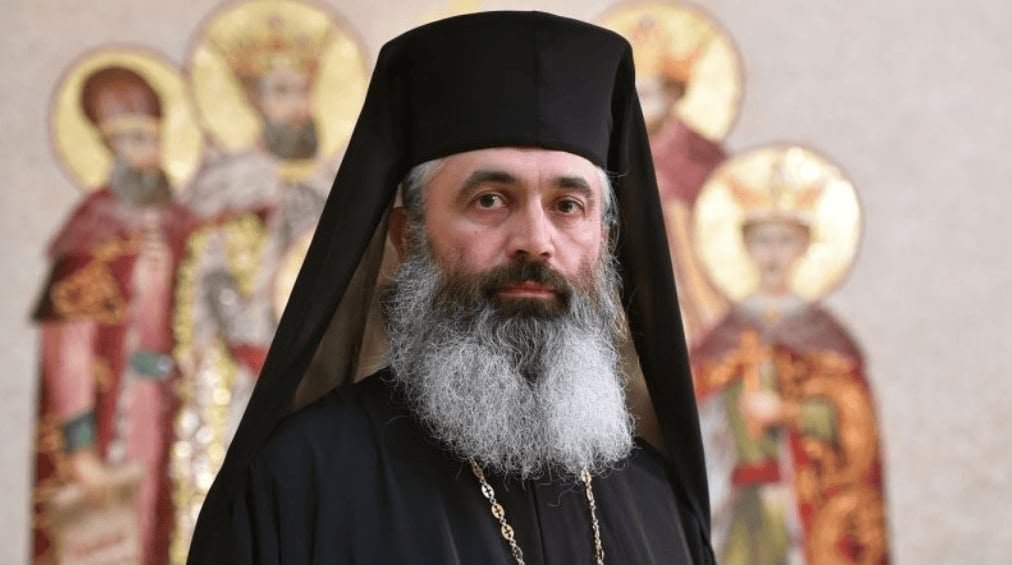
Metropolitan Antoniy of Bessarabia of the Romanian Patriarchate has reaffirmed the historical legitimacy of the Metropolis of Bessarabia, rejecting doubts about its canonical status.
He made the remarks in an interview with TVR Moldova, according to Orthodox Times.
Speaking about the restoration of the Metropolis of Bessarabia, Metropolitan Antoniy recalled that in 1992 the Holy Synod of the Romanian Orthodox Church decided to restore the historic metropolis after many years of effort and persistent work. He noted that he personally participated in the court proceedings that ultimately led to its official recognition in the Republic of Moldova.
According to the Metropolitan, the recognition of the Metropolis was an act of restoring historical justice.
Addressing the question of the canonical status of the Metropolis of Bessarabia and its relationship with the Metropolis of Moldova, which is under the jurisdiction of the Moscow Patriarchate, Metropolitan Antoniy stressed that the issue should be considered in light of historical realities.
He said that the term “canonical” is often used to create the impression that the Metropolis of Bessarabia is an external church structure, whereas, in his view, history demonstrates the opposite.
“Historically, the situation is entirely different. The structure of the Russian Patriarchate appeared here only after the annexation of Bessarabia in 1812. Our roots, however, go back to the Apostle Andrew,” he said.
Despite historical disagreements, Metropolitan Antoniy reiterated his intention to maintain an open dialogue with the Metropolis of Moldova.
As LF previously reported, the Synod of the Romanian Orthodox Church elected Bishop Antoniy of Balti as Archbishop of Chisinau, Metropolitan of Bessarabia, and Exarch of the Territories.
The Metropolis of Bessarabia is an autonomous Orthodox Church within the Romanian Patriarchate that operates primarily in the Republic of Moldova. The Orthodox Church of Moldova, which is part of the Russian Orthodox Church, also operates in the country.
As LF previously reported, more than 800 churches in Moldova that are classified as historical monuments could be returned to state ownership. The churches belong to the Metropolis of Moldova, which is part of the Russian Orthodox Church. The statement was made by Minister of Culture Cristian Zardan.
LF also previously reported that Igor Dodon, a member of parliament and leader of Moldova’s Party of Socialists who advocates the federalization of Moldova, commented on the confrontation in the village of Dereneu in Calarasi District. He described the transfer of parishes from the Moldovan Orthodox Metropolis of the Moscow Patriarchate to the jurisdiction of the Metropolis of Bessarabia of the Romanian Orthodox Church as “church raiding.”
In Moldova, the Liberal Party has called on parliament to adopt a law requiring the Moldovan Metropolis of Chisinau of the Moscow Patriarchate to permanently sever its ties with the Russian Orthodox Church. Otherwise, the party argues, the religious organization should be declared illegal because it serves as an instrument of influence for the Russian Federation.
As LF previously reported, the Russian authorities used foreign religious bloggers to interfere in Moldova’s parliamentary elections. The Russian intelligence operation, codenamed “Matushka,” was carried out through structures linked to the Russian Orthodox Church.
Earlier, we reported that the Russian Orthodox Church once again claimed there was “pressure from the authorities of Ukraine, Moldova, Estonia, Latvia, and Lithuania on canonical church structures.”
Will the Russian Orthodox Church be able to preserve its ecclesiastical influence in Moldova by distorting the information space and shaping the country’s political course?
LF’s analysis of the issue is available via the link.