Europe, which has always been highly sensitive to the protection of religious rights, has now become acutely aware of the opposite danger, the instrumentalization of religion, when a nuclear power unleashes its full might against a neighboring country under the guise of defending religious and traditional freedoms. Religion is used simply to satisfy imperial ambitions and territorial claims.
LF has previously reported on ten resolutions adopted by European institutions that, in various forms, condemn the Russian Orthodox Church’s involvement in Russia’s war against Ukraine, as well as the persecution of human rights defenders, activists, and priests who oppose the war.
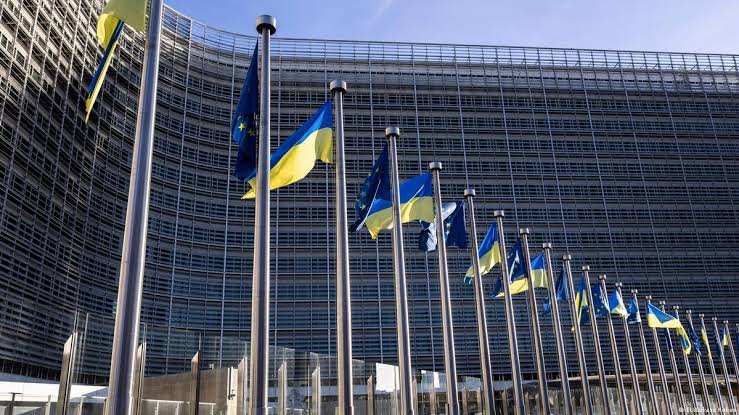
Recently, the European Parliament hosted a conference organized by MEPs Mariusz Kamiński and Rihards Kols of the European Conservatives and Reformists (ECR) Group, with the self-explanatory title “Russia as a False Defender of Traditional Values.” The organizers brought together politicians, security experts, researchers, and former intelligence officials to discuss how Moscow adapts ideological narratives to different audiences in order to exploit divisions, weaken democratic societies, and advance Russian interests.
The participants were broadly united in their assessment: Russia’s claims to be a defender of traditional and Christian values are a carefully designed instrument of political influence, rather than a reflection of the Kremlin’s own conduct.
We republish the key views expressed at the conference.
“THIS IS SIMPLY IMPERIALISM, WHICH WE SEE EVERY DAY IN UKRAINE”
MEP Mariusz Kamiński, co-organizer of the conference, said as he opened the event**:**
“Putin would like Russia to be perceived as a defender of traditional, conservative values. But what he calls patriotism is simply imperialism, which we see every day in Ukraine. And for a former officer of the communist KGB, religion and the Church are merely useful tools serving the interests of the regime.”
“RUSSIA HAS NO FIXED VALUES, ONLY TOOLS”
MEP Rihards Kols, co-organizer of the conference, stressed that it is precisely this flexibility that makes the Kremlin’s rhetoric so effective:
“Russia is not a false defender of traditional values. It does not defend any values at all. It has no fixed values, only tools. It chooses whichever rhetoric sells fastest in the particular market it is targeting.”
“THE RUSSIAN ORTHODOX CHURCH OFFICIALLY SUPPORTS RUSSIA BY FRAMING THE DEATHS OF SOLDIERS IN SACRIFICIAL TERMS”
MEP Alexandr Vondra, a former member of the anti-communist opposition and former Czech defense minister, pointed to the contradiction between Russia’s claim to defend Christianity and the conduct of the Russian state and religious hierarchy:
“One of the most fundamental Christian commandments is ‘Thou shalt not kill.’ Nevertheless, senior figures in the Russian Orthodox Church have supported Russia’s war effort and framed the deaths of Russian soldiers in religious and sacrificial terms. The problem, therefore, is not simply that the Church supports the state. The deeper problem is that Christian morality is being subordinated to state ideology.”
“THIS IS WHAT RUSSIAN COGNITIVE WARFARE LOOKS LIKE”
Tomasz Szatkowski, secretary-general of the ECR Group, former Polish ambassador to NATO, and moderator of the conference, placed these narratives within the broader context of Russian cognitive and reflexive warfare:
“Russian cognitive warfare exploits the vacuum that emerges when we fail to defend the authentic meaning of traditional values with sufficient resolve. The Kremlin uses so-called reflexive warfare, targeting both pseudo-conservative circles and parts of the liberal and left-wing spectrum, to deepen divisions and weaken our societies. We therefore need to challenge Russia not only by exposing its true objectives and the consequences of its actions, but also by defending the authentic meaning of the concepts and values it seeks to appropriate.”
“IT IS AN UNEQUAL WAR BECAUSE DEMOCRACIES ARE HONEST AND OPEN”
Maciej Materka, a retired brigadier general, former head of Poland’s Military Counterintelligence Service, and representative of the Frontline Foundation, emphasized the particular challenge this poses to open democratic societies:
“The battle being waged through such hybrid forms of attack by imperialist Russia is an unequal struggle because democracies are fighting to preserve their openness and the right to freedom of speech, all the more so when it comes to combating fake news and hostile narratives.”
“MOSCOW IS HOSTILE TO AUTHENTIC CONSERVATISM”
Lech Wojciechowski, former deputy head of Poland’s Internal Security Agency and a representative of the Frontline Foundation, recalled that Moscow’s hostility toward authentic conservatism has deep historical roots:
“The Soviets were particularly relentless in attacking those leaders of the free world who did not succumb to this: Reagan, Thatcher, and John Paul II. They had loyal allies in the European left-wing movement, which by then, in 1968, had already taken root and become hostile to conservatism.”
MOSCOW APPEALS TO VALUES, BUT USES THEM CYNICALLY
Stanisław Żaryn of the National Security Institute Foundation warned that such narratives are part of a broader attempt to weaken Western societies from within:
“Russian propaganda eagerly appeals to values, but uses them cynically to manipulate society, manage fear, and foment hostility toward the West. The Kremlin also uses the claim that Russia is a defender of traditional values for these purposes. We must not accept this image of Russia. It is a lie spread in the service of Russian imperialism.”
REFUGEES AND THE RUSSIAN-SPEAKING DIASPORA ARE AREAS OF LONG-TERM INFLUENCE FOR RUSSIA
Kateryna Nastoiashcha of the Institute for National Resilience and Security showed how this broader influence strategy can operate through religious structures in Europe, with the Russian Orthodox Church (ROC) providing Moscow with an established network through which narratives, loyalty, and influence can be maintained:
“The Russian Orthodox Church supports Russian influence in the EU under the cover of freedom of conscience, posing a threat to national security. Two audiences share the same sphere of influence: refugees and the Russian-speaking diaspora are areas of long-term influence over political views and democratic resilience.”
THERE IS NOTHING CHRISTIAN ABOUT RUSSIA’S SPIRITUAL JIHAD
Andis Kudors, a lecturer at the University of Latvia, drew attention to how the war against Ukraine has been given an explicitly religious justification:
“The World Russian People’s Council, headed by Kirill, called the invasion of Ukraine a holy war. What do they call a holy war? A situation in which Russian Orthodox soldiers kill Ukrainian Orthodox soldiers. That is their jihad. There is nothing spiritual or Christian about it. It is evidence of the moral degradation of Moscow’s leadership.”
BY PROCLAIMING ITSELF A DEFENDER OF CHRISTIANITY, RUSSIA IS CREATING ANTI-CHRISTIANITY
Sergey Chapnin, author of the report “Faith Under Pressure,” noted that this substitution of concepts lies at the heart of the contradiction between Kremlin rhetoric and Christian teaching:
“A martyr is a witness. He is holy because he chooses to die rather than kill. Kirill’s formula confers sanctity on the opposite kind of person, the one who kills. The martyr is replaced by the killer. Thus, the cult of life gives rise to a theology of death. Russia, having proclaimed itself a defender of Christianity, is in fact creating anti-Christianity. This is not a stricter form of faith. It is a different religion dressed in Christian garments.”
RUSSIA HAS STOLEN THE “DICTIONARY” AND IS REWRITING THE DEFINITIONS OF OUR VALUES
Avital Sakhar, an expert in cognitive warfare and OSINT, warned that Russia’s strategy goes beyond attacking individual Western values and seeks to change their very meaning:
“We act as though Russia is attacking our values. But it is not. They have stolen the dictionary and are rewriting the definitions of our values. When you hold the dictionary in your hands, you no longer need an army. You have already won the war. They have made everything ‘radioactive,’ especially those values that are essential to defending one’s own country.”
THE RUSSIAN EXPERIMENT IN UKRAINE MUST FAIL
Batu Kutelia, former head of foreign intelligence and former Georgian ambassador to the United States, said that the same imperial logic can operate through both the seizure of territory and the capture of institutions:
“Russian imperialism does not always need to seize land. It can capture the institutions through which a society exercises its sovereignty. Territorial conquest and state capture are different tools of the same strategic logic. As Reagan said, it is a test of wills and ideas.
Our task is to ensure that when this Russian imperial experiment in Ukraine suffers yet another historic collapse, Europe does not lose the will to defend the civilization that made freedom itself possible. Not because Europe is anti-Russian, but because free Ukraine and Georgia refute the Kremlin’s central civilizational thesis.”
WE ARE FIGHTING A STRUGGLE BETWEEN A CULTURE OF LIFE AND A CULTURE OF DEATH
Peter Doran of the Foundation for Defense of Democracies, former president of the Center for European Policy Analysis (CEPA), described the essence of this far-reaching confrontation in stark terms:
“We are fighting a struggle between a culture of life and the Russian culture of death. The Russian culture of death kills its own society and brings death to its neighbors.”
LF also approached religious studies scholar and researcher of the instrumentalization of religion Sergey Shumilo for comment.
“Moscow has long used religion as an instrument of political manipulation and warfare. In my research, I have shown how fabricated ‘prophecies’ attributed to authoritative Orthodox ascetics were deliberately incorporated into the ideology of the ‘Russian World.’ This makes it possible to portray the Kremlin’s political projects as the fulfillment of some ‘Divine plan,’ and aggression as a ‘sacred mission,’” the scholar said.
“What we are dealing with is not simply propaganda, but the deliberate sacralization of lies and the replacement of the Christian faith with political mythology. Moscow uses different guises for different audiences: ‘traditional values,’ the defense of Christianity, anti-colonialism, or the struggle against the West, but the goal is the same: to divide societies and justify Russian expansion. This is why systematic research, analysis, and educational work that helps people recognize such fabrications and distinguish authentic religious tradition from ideological manipulation is especially important. Under current conditions, this is no longer merely, or even primarily, a matter of religion. It is a matter of national security,” the religious studies scholar concluded.
Anna Jansone