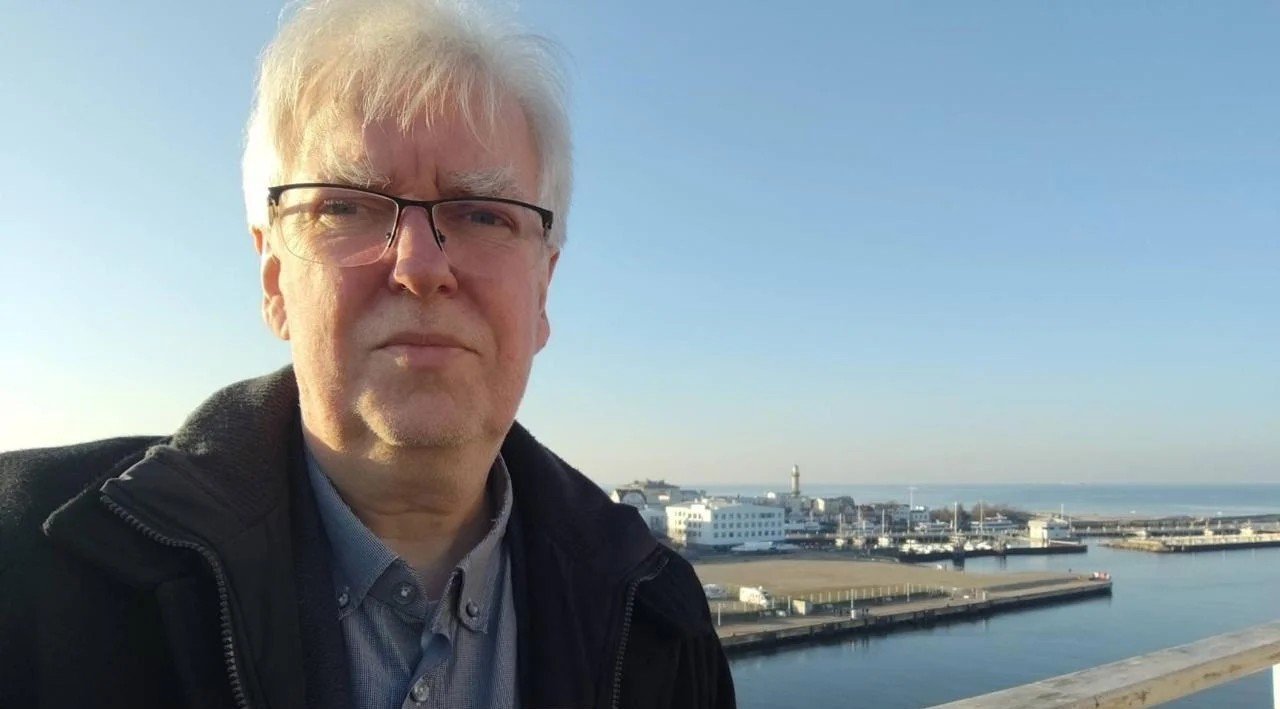
Ralf Haska is a German Evangelical Lutheran pastor, a witness to two revolutions and a steadfast defender of human dignity and democratic freedoms. Having grown up in East Germany, he experienced the peaceful revolution of 1989 in Germany. A quarter of a century later, he found himself at the heart of Ukraine’s Revolution of Dignity.
From 2009 to 2015, Haska served as pastor of St. Catherine’s Church in Kyiv. During the Maidan protests, he personally stood between demonstrators and security forces in an effort to prevent bloodshed, while his church became a refuge and a place where the wounded could receive assistance. In 2019, he was awarded the Federal Cross of Merit, one of Germany’s highest state honours, for his civic courage and support for Ukraine.
His experience offers an opportunity to examine the relationship between Church and state, religion and political power, not only from a theological perspective but also from historical and moral standpoints. We speak with Ralf Haska about how religion becomes an instrument of political influence, whether European Churches are capable of resisting authoritarianism, and where the boundary lies between fidelity to Christian principles and service to state ideology.
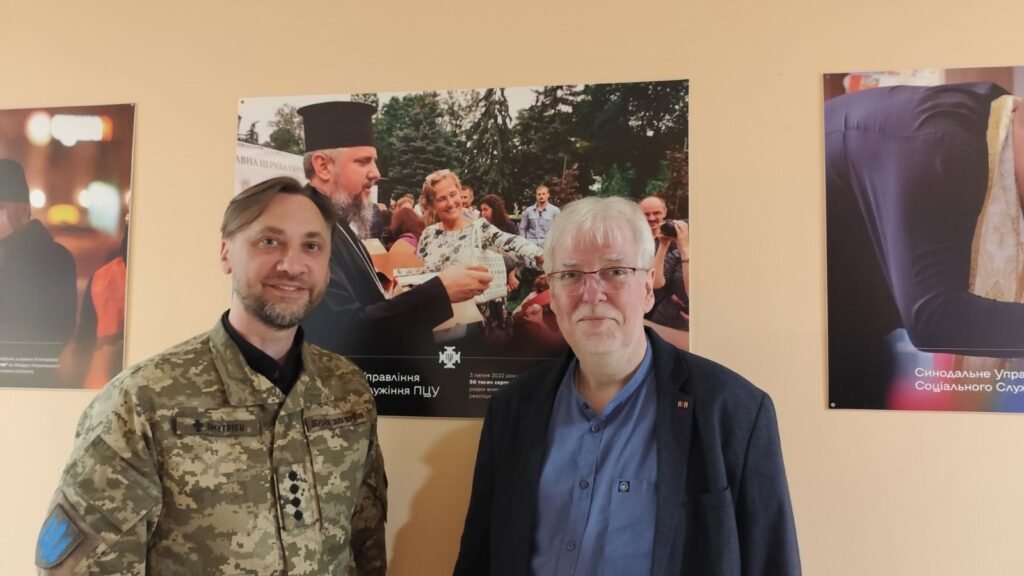
– Pastor Ralf, has Europe fully recognised the dangers of using religion for political purposes, particularly in the context of Russian aggression against Ukraine? How well do European Churches, especially Lutheran pastors, understand this threat? Are they able to recognise the point at which religion ceases to be an expression of faith and becomes an instrument of state propaganda and political influence?
– Today, Europe takes this danger far more seriously than it did just a few years ago. For a long time, the extent to which religious messages, national interests and political power are intertwined in Russia was underestimated. I am prepared to acknowledge that recognising this has required many people to reassess their views, myself included.
As a Christian, I begin with the fundamental belief that Churches seek to follow Jesus Christ. I therefore expect them to promote peace rather than justify hatred, violence or war. For many Christians, the very idea that religious language could actually be used to support a war of aggression and justify the killing of human beings was previously almost unimaginable.
The war against Ukraine has changed a great deal. It has clearly demonstrated how religion can be exploited for political purposes. As a result, many Churches, clergy and pastors have begun paying closer attention to what is happening and examining these processes more deeply.
Awareness of this threat has grown considerably. Many Churches unequivocally support Ukraine and understand that this conflict is being waged not only with weapons but also through words, interpretations and religious messages.
Nevertheless, drawing a clear line is not always easy. That is why, for me, the decisive question remains whether what the Church says and does serves the Gospel of Jesus Christ or primarily the interests of the state.
When the Church ceases to scrutinise the actions of those in power and instead begins to sanctify and support political objectives, it loses its true purpose. Faith then becomes an instrument of power.
– Are democratic societies prepared to counter the political exploitation of religion without undermining freedom of religion itself?
– I believe that democratic societies are, in principle, strong enough to meet this challenge. Freedom of religion does not mean that absolutely everything must be permitted under the guise of faith.
Someone who practises their faith, prays, preaches or publicly expresses their beliefs is exercising a fundamental right. But when religion is used to incite hostility between people, justify violence or lend an aura of religious legitimacy to political ambitions, we are dealing with something entirely different.
The difficulty lies in determining exactly where that boundary runs. Democratic societies must neither indiscriminately treat every religious voice with suspicion nor naively turn a blind eye to the political abuse of religion. Both approaches would be dangerous.
What is needed, therefore, is vigilance, sound judgement and a firm commitment to defending both freedom and democracy.
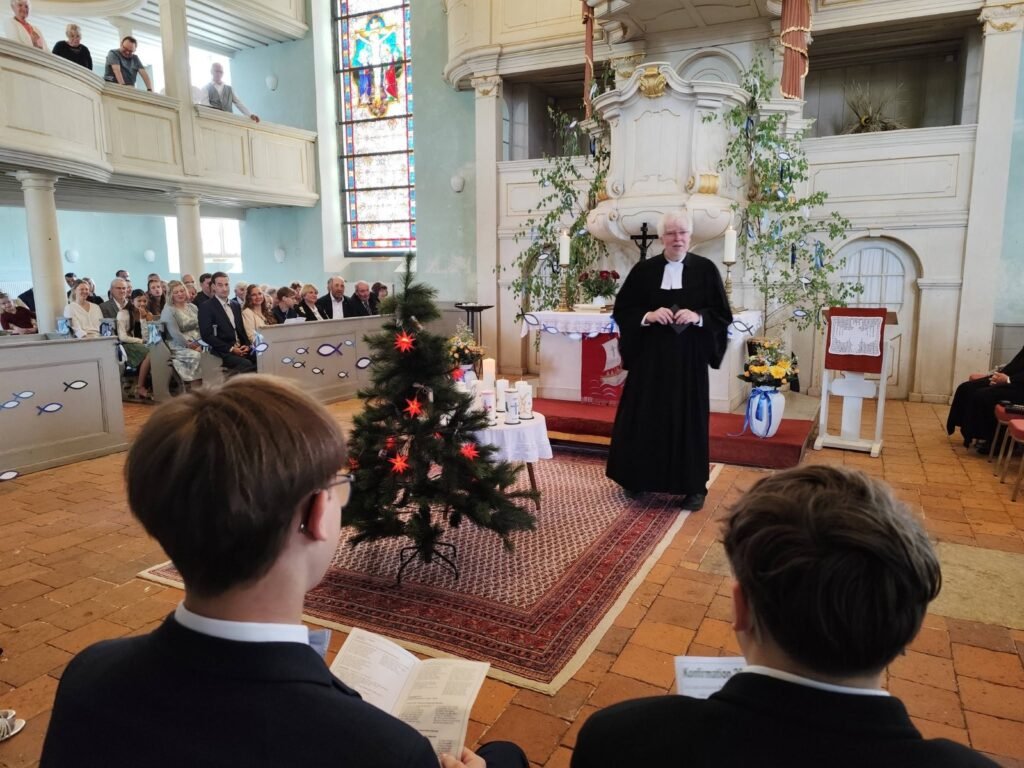
– You witnessed the Maidan protests and saw clergy from different denominations standing alongside people defending their dignity and freedom. In Russia, we see the opposite: Church leaders siding with a government waging a war of aggression. Why are some Churches capable of standing up to the state while others become part of a repressive system? And the central question is this: can the Moscow Patriarchate still be regarded as an independent religious organisation, or is it time for Europe to recognise it as an instrument of Russian state policy as well?
– My experience on the Maidan once again showed me the role Churches can and should play in society. Clergy from different denominations stood alongside people who were demonstrating for freedom, the rule of law and their own dignity. We were not there to support political power. We were there to accompany, comfort and protect people taking part in a just protest.
A Church’s ability to maintain a critical stance towards the state, or conversely its close alignment with it, often depends on how it understands its own mission. Does it see itself primarily as a defender of people or as a partner of those in power? A great deal often depends on the answer.
In the case of the Moscow Patriarchate, we have observed extraordinarily close ties with the Russian state leadership for many years. Particularly since the invasion of Ukraine, Church leaders have not merely supported the Kremlin’s policies but have, in many instances, also provided religious arguments to substantiate and justify them. The statements and sermons of Patriarch Kirill leave no doubt about this.
In my view, we must speak openly about this. A Church loses credibility when it ceases to critically examine political authority and instead begins to invest its actions with religious meaning, glorify them and legitimise them. This is precisely one of the central problems facing the Moscow Patriarchate today.
Whether this means we should speak of an independent religious organisation or an instrument of state policy is a matter on which assessments may differ. But one thing is absolutely clear to me: the relationship between Church leaders and state power in Russia is now so evident that Europe can neither ignore it nor downplay its significance.
– Despite the Russian Orthodox Church’s support for the war, the World Council of Churches continues to retain it as a member.
– Yes, and this is precisely one of the most difficult questions facing contemporary ecumenical cooperation. The World Council of Churches has unequivocally condemned Russia’s invasion of Ukraine, yet it has decided not to expel the Russian Orthodox Church from its membership.
Underlying this decision is the conviction that dialogue should not be broken off, even when disagreements become particularly profound. Those who support the decision hope that maintaining communication will make it possible to continue voicing criticism and help bring about change.
In my view, however, there is one essential condition for such an approach: we must call things by their proper names. There must be no ambiguity, and we must not minimise the fact that Patriarch Kirill has not merely lent his support to Russia’s war of aggression but has publicly justified it.
Dialogue must not mean silence or glossing over injustice. Conversation has value only when it is conducted truthfully. Anyone who wishes to keep the door open must also have the courage to speak plainly and unequivocally.
– Where is the boundary between necessary ecumenical dialogue and the legitimisation of a religious organisation that justifies violence? Is there not a danger that the European ecumenical movement could become an instrument used by Moscow to preserve its international influence?
– I am fully aware that such a danger exists. Ecumenical dialogue is important, especially in times of serious conflict. But it loses its value if truth has to be sacrificed for its sake.
For me, the boundary is crossed when dialogue ceases to serve mutual understanding and instead helps conceal or diminish manifest injustice. Those who justify violence or lend religious support to a war of aggression must not be allowed to create the impression that such a position is normal or acceptable within the Christian community.
The ecumenical movement must therefore fulfil both responsibilities: keeping dialogue possible while also setting clear boundaries. It cannot remain silent when war and violence are justified in the name of God.
There is indeed a danger that international ecumenical forums will be used to advance political interests or create an appearance of ecclesiastical and moral legitimacy. That is precisely why such forums require a clear position, open dissent and an unambiguous account of what is happening.
Ecumenism can and should build bridges. But it must not become a façade behind which military policies are concealed and justified through religious rhetoric.
– For many years, Moscow has portrayed itself as a defender of traditional Christian values, contrasting itself with a supposedly godless West. Why does this rhetoric resonate with certain conservative Christian circles in Europe, including Protestant communities? To what extent are European Churches capable of distinguishing a sincere defence of religious values from political propaganda that uses the language of Christianity?
– This rhetoric resonates because it speaks to the genuine experiences and concerns of many people. Many Christians see religious ties weakening, familiar values being questioned and society changing rapidly. For some, this creates a sense of insecurity.
When someone promises to defend Christian values and provide moral guidance in such circumstances, the message can initially seem understandable and, to many, even appealing.
For me, however, the decisive question is this: what purpose does the appeal to Christian values serve? It may be an expression of living faith. But it may also be used to advance political interests, construct an image of an enemy or provide religious justification for national claims to power.
Churches should therefore pay attention not only to which Christian concepts are invoked. What matters above all is where they lead. Does such rhetoric promote love of one’s neighbour, truth, reconciliation and respect for the dignity of every human being? Or does it serve to turn people against one another and confer religious authority on political objectives?
For me, the distinction lies less in words than in their fruits. Christian values are recognised not primarily through grand declarations of faith but through the way people treat one another.
– German Protestant Churches have a painful historical experience of relations with totalitarian regimes. It includes both resistance to National Socialism by some members of the clergy and accommodation with the regime by others. Do you see dangerous historical parallels today in the relationship between the Moscow Patriarchate and the Kremlin? And has the German Protestant Church learned the necessary lessons from its own history when it comes to Russian aggression and support for Ukraine?
– History never repeats itself exactly. But it helps us recognise certain patterns. Danger arises whenever political power cloaks itself in religion and Churches begin presenting the objectives of the state as the will of God.
That is precisely why it is worth looking at German history. The Protestant Church learned from its own experience just how devastating the consequences can be when it loses its critical distance from political power. At the same time, there is another history too, that of Christians who resisted and placed greater trust in their conscience than in the demands of the state.
Russia’s invasion of Ukraine has prompted those of us in the Church in Germany to reconsider assumptions that previously seemed unshakeable. These are questions of peace, responsibility and the protection of human dignity.
For me, the central lesson remains unchanged: the Church must never become a religious mouthpiece for state power. It has a duty to remain faithful to the truth, even when doing so is uncomfortable.
Today, this also means recognising that people or nations subjected to an unlawful attack can and must be helped.
The new memorandum on peace issued by the Evangelical Church in Germany (EKD) offers a highly compelling account of this difficult process of reassessment. It concludes that, under certain circumstances, peace and freedom must also be defended by military means.
Discussions on this subject will undoubtedly continue, and rightly so. But one thing is absolutely clear to me: many Christians in Germany feel a profound sense of solidarity with the people of Ukraine, who have been fighting for their freedom and their future for many years.
Anna Jansone