The conflict surrounding the Orthodox Convent of Saints Wenceslaus and Ludmila in Loděnice, near Prague, has spread far beyond the walls of the Church. The confrontation between the community supporting Abbess Valentina and the monastics, on the one hand, and the leadership of the Prague Orthodox Diocese of the Orthodox Church of the Czech Lands and Slovakia, on the other, has become the subject of public debate, investigative journalism and court proceedings. Yet the driving force behind this story has been the faithful themselves, who have refused to stand silently by as the fate of their monastery is decided.
BACKGROUND TO THE CONFLICT
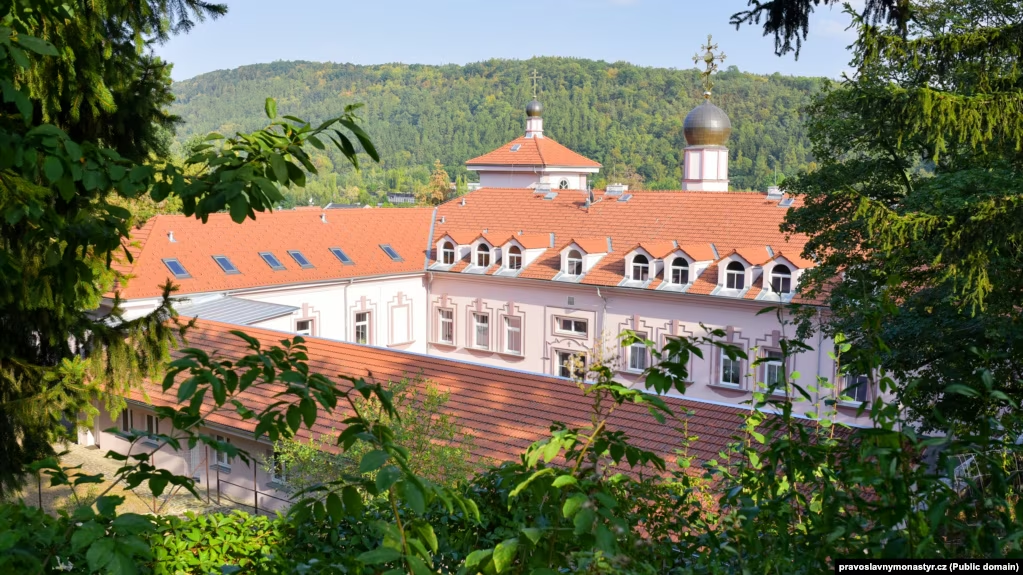
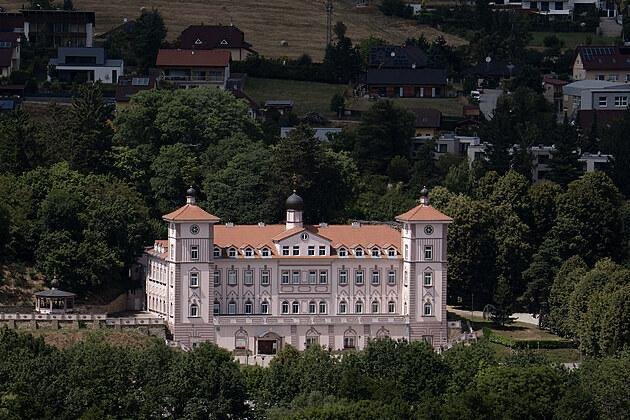
October 11, 2026, was supposed to be a special day for the faithful of the Orthodox Convent of Saints Wenceslaus and Ludmila in Loděnice. The community was celebrating the twentieth anniversary of Abbess Valentina’s leadership. The celebrations were also associated with the veneration of Saint Prince Wenceslaus, one of the patron saints of the Czech lands and the patron saint of the monastery itself. In ecclesiastical terms, it was the monastery’s patronal feast day.
Instead of a peaceful anniversary celebration, however, parishioners once again found themselves in a confrontation with the leadership of the Prague Orthodox Diocese of the Orthodox Church of the Czech Lands and Slovakia.
According to community representatives, a group of ten people, including officials from the Prague Orthodox Diocese, arrived at the monastery, began cutting through locks and gained access to its premises. To understand the origins of the conflict, it is necessary to go back more than twenty years.
Abbess Valentina is a Czech citizen of Ukrainian origin. According to parishioners, she came to Czechia at the invitation of the then ruling bishop, Christopher, who subsequently retired from diocesan administration. She had been invited to develop women’s monastic life in the country.
Community members say the convent had to be established virtually from scratch. Over more than two decades, a functioning monastic community took shape in Czechia, a congregation of regular worshippers developed, benefactors came forward, and the convent in Loděnice became known far beyond the Czech Republic and Europe.
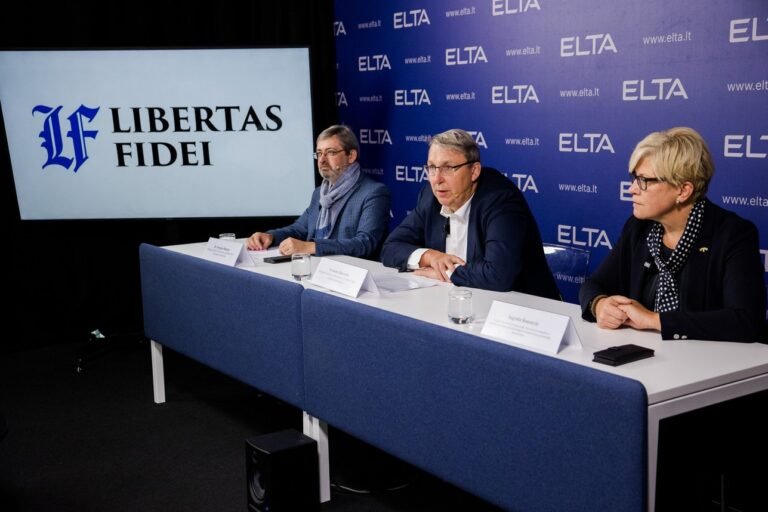
“Mother Abbess built the monastery. There were only bare walls, and homeless people were living there. With God’s help, benefactors came forward, parishioners united, and over the years a beautiful monastery emerged,” Irina Bublik, an active member of the congregation, told Libertas Fidei.
According to Bublik, the abbess enjoyed exceptionally high standing among both the faithful and the clergy.
“Her reputation throughout the diocese was impeccable. Strict observance of the monastic rule, a full cycle of divine services, complete financial transparency and, of course, love for the parishioners made our monastery very well known. I ran the church shop, and I can say that its organisation and accountability were of the highest standard,” Bublik maintains.
FROM AN ECCLESIASTICAL DISPUTE TO OPEN CONFRONTATION
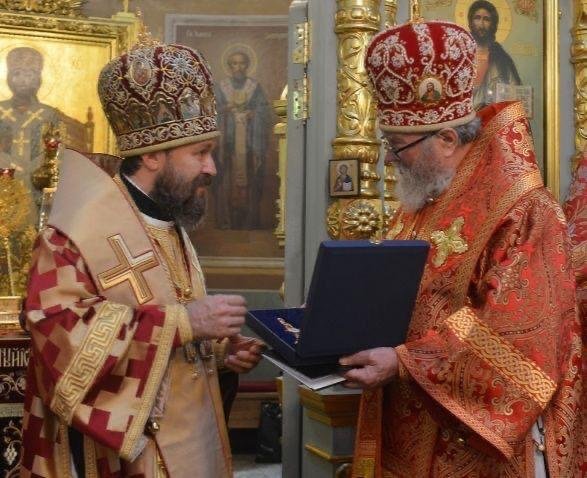
At the centre of the confrontation are Archbishop Michal Dandar of Prague and the Czech Lands, Abbess Valentina, the monastery’s spiritual father, Archimandrite Methodius, and the parishioners, many of whom come from Ukraine.
“The dispute officially began when our spiritual father, Father Methodius, was summoned to the diocesan administration. On the basis of falsified documents and a nonexistent criminal case in Ukraine, he was ordered to leave our monastery and transfer to a parish. After that, our abbess was summoned and subjected to baseless accusations of serious violations of canon law. All these accusations subsequently collapsed in a Czech court,” Bublik claims.
According to Bublik, Abbess Valentina and Archimandrite Methodius brought legal actions to protect their reputations. The court ordered the archbishop to apologise and pay compensation.
“I have been a parishioner at the monastery for seven years, and I direct the church choir here. I was married here, and my children were baptised here,” Svetlana Vasyuta told LF. “We have an extraordinary parish, where everyone loves their spiritual mentors and the services, and where we used to gather after the Divine Liturgy while Mother Abbess herself made coffee for us. Our church was rebuilt from scratch, and Mother made sure that even its iconographic style reflected our tradition. Services were held every day.
“We were shocked by the vicious attacks on our monastery that began in 2022. They tried to slander our spiritual mentors, Father Methodius and Mother Valentina, although the court later cleared them. Of course, we wanted to resolve the matter with our church authorities without going to court. We desperately wanted to avoid a scandal.
“To meet the ruling bishop and defend our spiritual mentors, we first went to the diocesan offices with a letter. We were not allowed inside, so we held an Akathist service at the gates of the Prague Orthodox Diocese’s administrative building. Eventually, a secretary came out and took our letter.
“Later, hoping to meet the bishop, we attended a service at the Church of Saints Cyril and Methodius in Prague. We stayed for the service and then waited for His Eminence. A priest came out and began urging people to throw us out of the church.
“The third time, we attended another service. Once a year, Orthodox Christians are permitted to recite an Akathist to the martyr Saint Ludmila at Prague Castle. After the service, we approached the bishop and said, ‘Give us Father Methodius back. The court has proved his innocence.’ I was pregnant and accompanied by my husband and our two small children. But all we received was a rude refusal and the insulting word ‘idiots.'”
Irina Bublik points out that the conflict arose and intensified at a time when the Czech state was actively distributing substantial payments to religious organisations under its restitution programme, which provides compensation for property previously confiscated from religious institutions.
“Archbishop Dandar took charge of the diocese just as the Czech state began distributing millions in restitution funds,” she explains. “Nobody knows where that money went, although we tried to find out. Meanwhile, our monastery is a wonderful place, a beautiful building where everything has been restored. That is why they wanted complete control over it, without the monastery’s founder, whom they regarded as an obstacle.”
Bublik links the conflict not only to questions of church governance but also to the political position of diocesan representatives.
“Archbishop Dandar studied in Leningrad. He was a fellow student of Patriarch Kirill of the Russian Orthodox Church. Journalists have written that he was a member of the communist secret police,” the parishioner says.
The archbishop’s biography and reports concerning archival records of the former security services have indeed attracted journalistic attention.
HOW THE MONASTERY BEGAN HELPING REFUGEES AFTER RUSSIA’S INVASION OF UKRAINE WHILE THE CZECH CHURCH DEMONSTRATED ITS CLOSE TIES TO THE RUSSIAN ORTHODOX CHURCH
According to Irina Bublik, pressure on the monastery emerged after Russia launched its full-scale invasion of Ukraine in February 2022.
“After the full-scale invasion, we began helping Ukrainian refugees. We arranged accommodation, helped with documents and, of course, prayed together. But we could see that the diocesan leadership had taken a pro-Russian position.
“When parishioners saw Archbishop Dandar meeting with Cossacks and the Night Wolves motorcycle club, and pursuing a pro-Russian line, I personally went to take part in an uncensored public debate organised by former Czech interior minister Vít Rakušan. I publicly asked the Czech state to help address the problem of pro-Russian influence operating through the local Orthodox Church,” Bublik recounts.
According to her, the church organisation subsequently filed a lawsuit against her over those remarks.
“The result was a lawsuit brought against me by the Church. I had stated that the Church had failed to condemn Russian aggression, that its leadership was attacking monastics and parishioners, and that it was violating secular laws and church canons. I also raised the question of whether restitution funds might be used to establish a fifth column in Europe, since the money was disappearing without any explanation of where it had gone,” she says.
Bublik stresses that parishioners tried to draw the attention of state authorities to what was happening.
“We asked the state to intervene, and a representative of the Ministry of the Interior told us they were aware of the situation and were dealing with it. Throughout the full-scale war, we have continued raising this issue,” she recalls.
The faithful also drew attention to Michal Dandar’s participation in a Cossack celebration in autumn 2022, where a Cossack military organisation presented a certificate from its ataman declaring that “once again in its centuries-long history, Russia has entered into battle with satanic forces that have declared war on God.” There are many similar examples.
Bublik says the Czech state understood the threat.
“Over these years, the Czech state expelled Russian Orthodox Church priest Nikolai Leshchenyuk on security grounds. Incidentally, he continued serving alongside our Czech clergy from the Prague Orthodox Diocese even after Russia’s full-scale invasion of Ukraine,” Bublik adds.
For an Orthodox community, in which obedience to spiritual authority traditionally carries considerable weight, taking such a stand was a matter of principle.
The faithful asserted their right to demand transparency, challenge decisions, seek redress through the courts and speak publicly about what they considered injustice. Parishioners maintain that they repeatedly approached both diocesan and wider church leadership, but their concerns went unheard and the authorities refused to engage with them.
The property dispute involving the Loděnice monastery is therefore unfolding against the backdrop of a broader debate about Russian influence over the Orthodox Church of the Czech Lands and Slovakia. It also raises questions about the rights of Ukrainian Orthodox believers to practise their faith, participate in the affairs of their community and openly discuss decisions made by church leaders.
“The situation is extremely serious for Czech Orthodoxy. Our monastery has exposed a festering wound. Our story shows that the Church in Czechia needs to be cleansed of Russian influence,” Irina tells us. “And the state recognises this threat.
“The head of the Czech Security Information Service, BIS, Michal Koudelka, has stated that the Russian Orthodox Church poses a potential threat to Czech national security because the Russian authorities could use it as an instrument of political influence. He has also publicly expressed concern about the activities of Archbishop Michal Dandar of Prague and the Czech Lands and his links with the Moscow Patriarchate. Politicians are talking about this, and so are senators.”
Irina also said that the faithful had questioned why priests from Russian-occupied territories of Ukraine were serving among clergy associated with the leadership of the Prague Orthodox Diocese of the Orthodox Church of the Czech Lands and Slovakia, including priests who were under investigation by Ukrainian law enforcement authorities and/or were wanted by them. According to Irina, the issue attracted considerable media attention, while she herself received threats and was even included on a list of people targeted for persecution in the Czech Republic.
A MONASTERY WITHOUT NUNS: WHAT REMAINS OF THE FORMER COMMUNITY?
One of the most painful aspects of this story concerns the fate of the monastics who lived in Loděnice for many years.
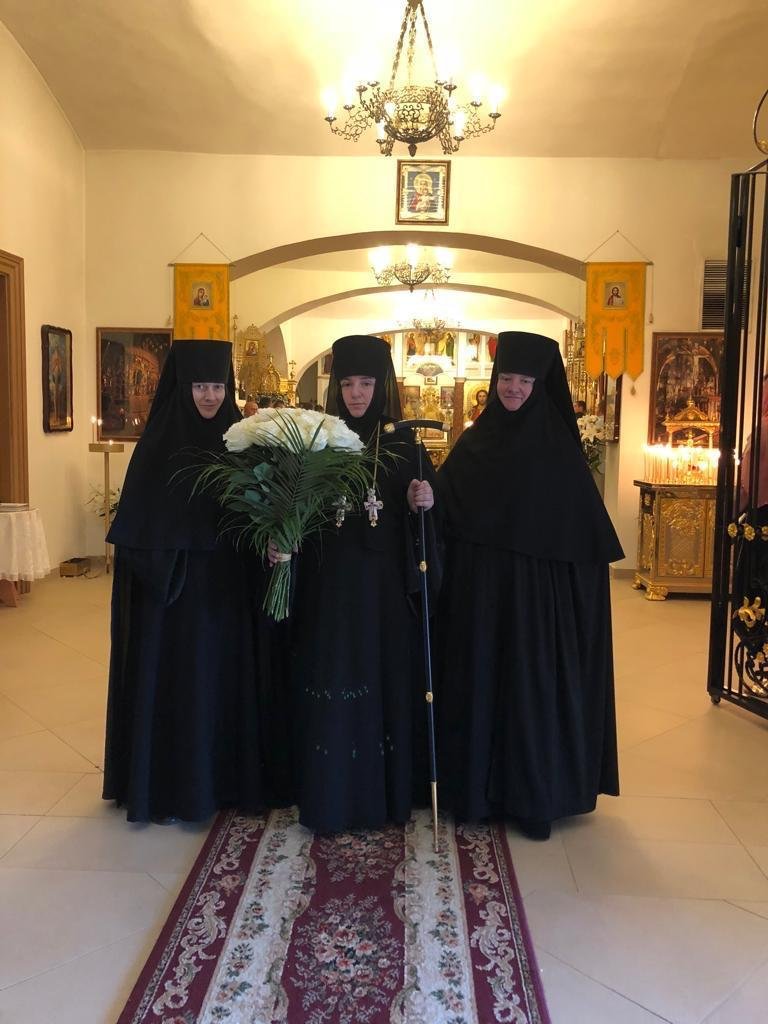
Parishioners claim that the monastics were forced to leave the monastery they had established in Loděnice, effectively depriving them of the opportunity to continue their customary monastic life. They are now temporarily staying in accommodation provided by parishioners.
The Prague Diocese, by contrast, insists that the monastics left voluntarily and that no forced eviction took place.
Svetlana Vasyuta, who has been actively involved in church life since the age of twelve, completed training as a church choir director and has visited numerous monasteries, describes the community as having a unique atmosphere rooted in the Gospel.
“Sister Marionila was responsible for decorating the church. Around every icon were masterpieces of church floral decoration, and she knew the monastic rule extremely well. There was also Sister Angelina, who helped with everything, both in the kitchen and in the narthex.
“Thousands of people used to gather at Easter,” Svetlana says. “That was a testament to the monastery’s good reputation. Now we have nowhere to gather, nowhere to bring our children to receive Holy Communion.”
An Orthodox monastery is more than land, buildings and service facilities. Above all, it is a community of people bound together by a shared way of life, prayer and spiritual commitments.
That is why even a final court ruling on property ownership cannot, by itself, resolve all the issues that have arisen between the church leadership and the faithful.
“We will never forget our final days at the monastery. The demand that we leave was made on the very day the locks were cut off, Sunday, October 11, 2026. We were given until the morning of Thursday, October 15, 2026,” Irina Bublik tells us.
Despite the legal proceedings and the loss of their former place in Loděnice, the monastery’s parishioners have no intention of abandoning their community.
Statements circulated by monastery representatives express their determination to preserve monastic life and, eventually, establish a new monastery.
THE STRENGTH OF A COMMUNITY: WHEN FAITH PROVES STRONGER THAN CHURCH CONFLICT
The story of the Loděnice monastery has gradually become more than a dispute over church property, an archbishop’s authority or the fate of a single abbess. It has become a story about what a community can achieve when people are united not by political views, administrative power or material interests, but by a desire to preserve their faith and their ability to pray together.
Over more than twenty years, a community formed around the monastery for whom it became a spiritual home. When that home came under threat, its parishioners refused to remain passive observers. They appealed to state authorities, defended their rights in court, continued speaking to journalists, supported the monastics and helped them find temporary accommodation.
In the Orthodox tradition, where obedience to the church hierarchy carries particular importance, the faithful’s position raises a difficult question. Where is the line between obedience and submission, between respect for spiritual authority and a community’s right to challenge decisions it considers unreasonable and unlawful?
For the parishioners of Loděnice, the answer appears to lie in the very meaning of church life. They want the monastery to remain a place of prayer rather than an arena of political confrontation. They want the Orthodox faith to be free from use as an instrument of influence by any state, and spiritual life to remain independent of the political sympathies of church leaders.
Today, according to community representatives, the monastics are staying in accommodation provided by parishioners. The future of the monastery remains uncertain. But the community itself continues to exist.
And perhaps that is the most important outcome of this story. Church authorities can control buildings, appoint clergy and make administrative decisions. But no administrative decree can create trust, love or unity among people, just as no single decision can destroy them.
The story of Loděnice demonstrates how much ordinary believers can achieve when they are prepared to support one another and defend their right to a spiritual life free from political pressure.
Anna Jansone