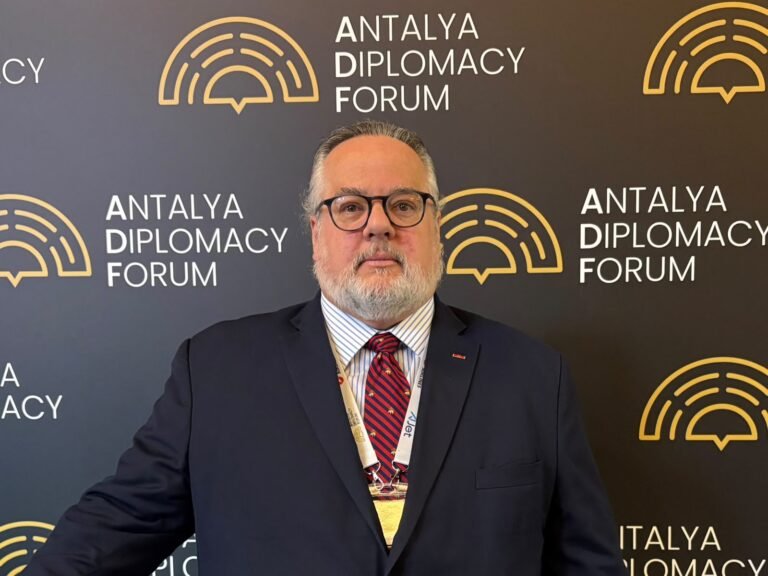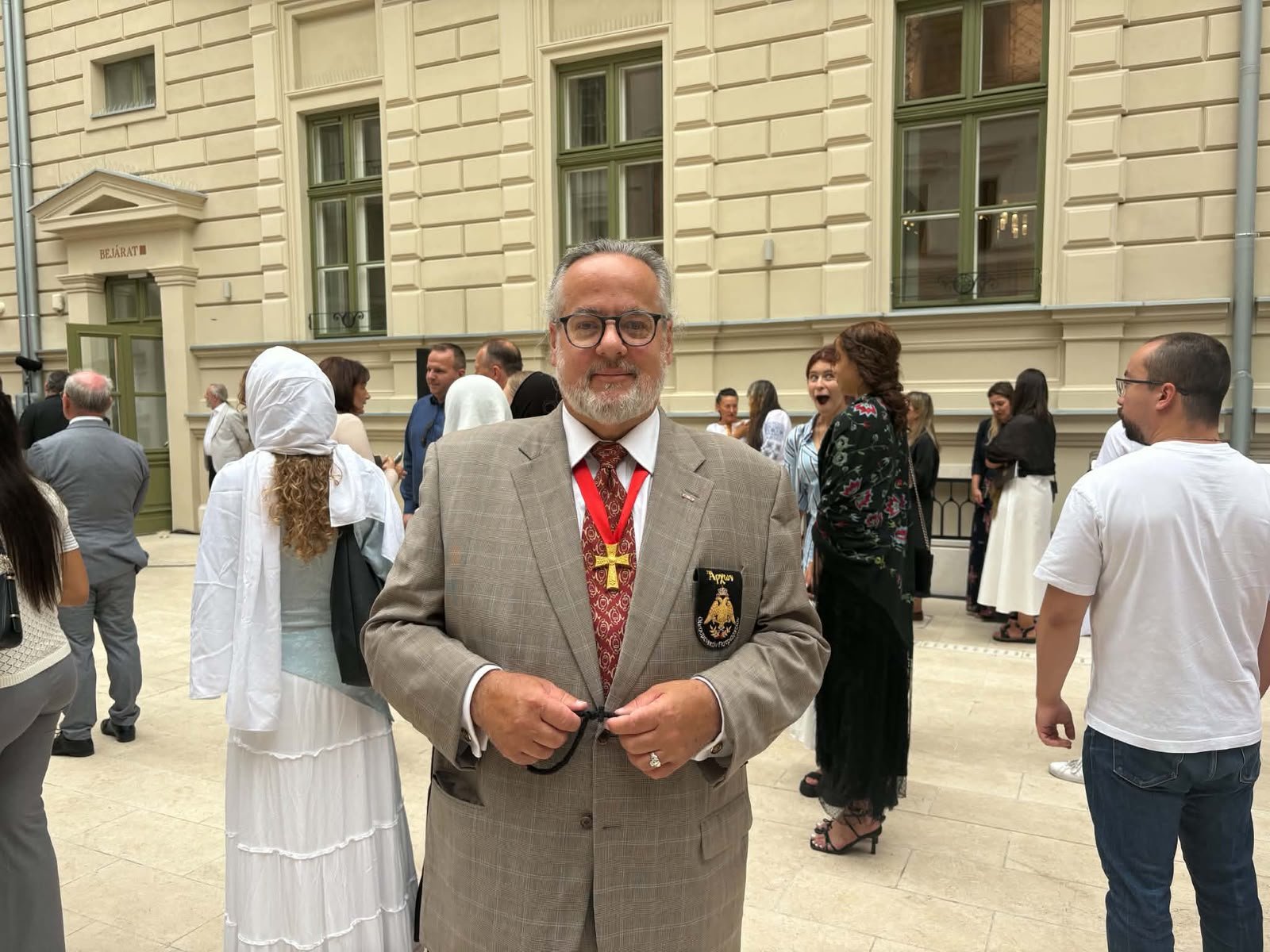
Miceál O’Hurley is one of today’s most prominent experts on the instrumentalisation of religion.
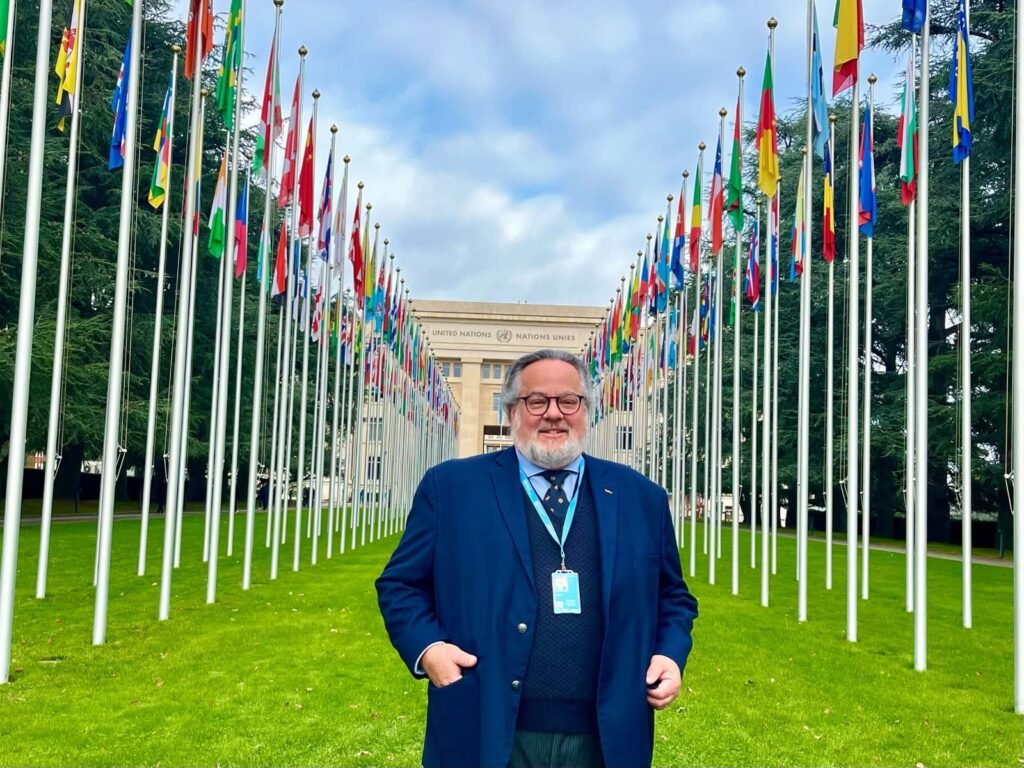
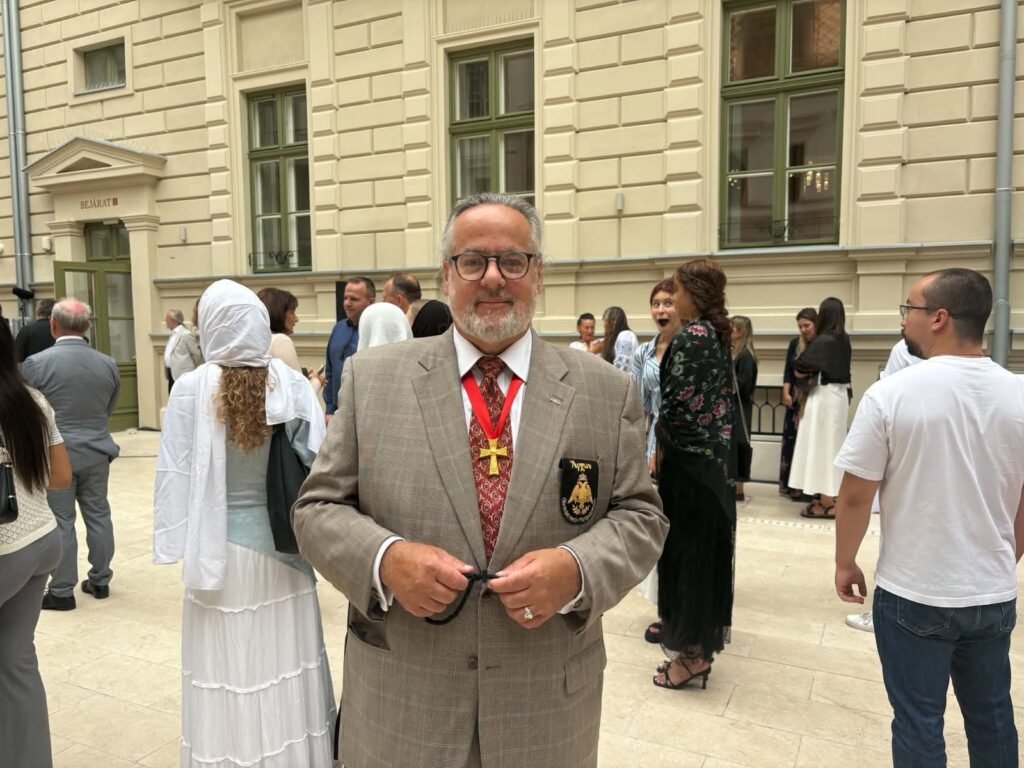
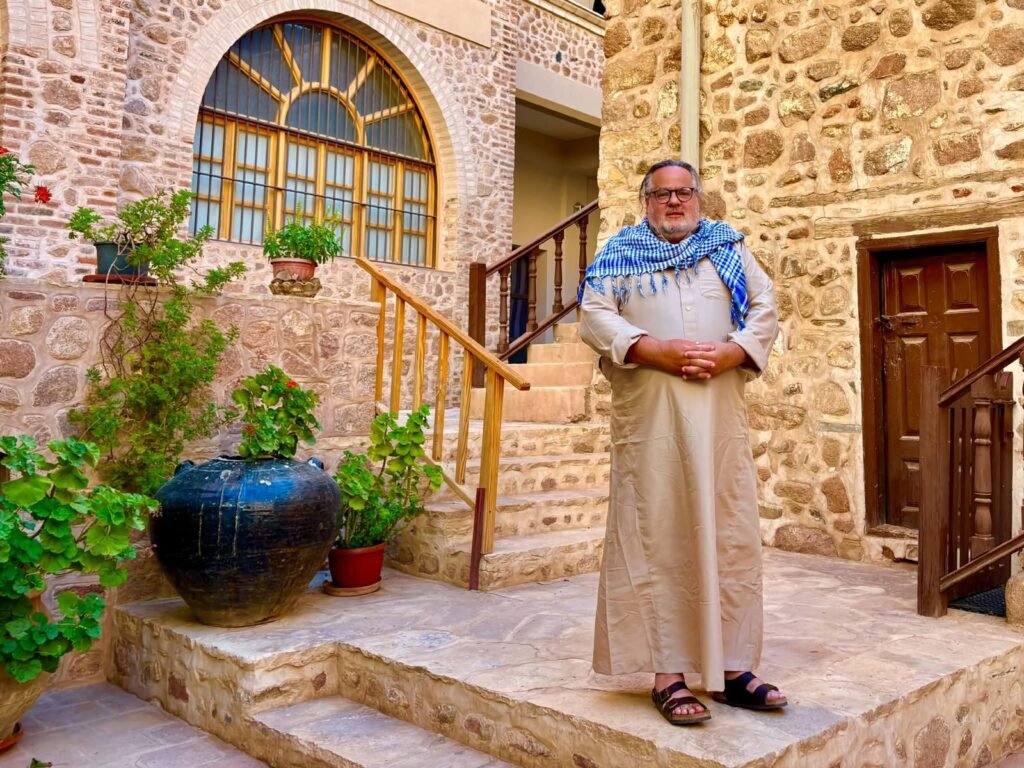
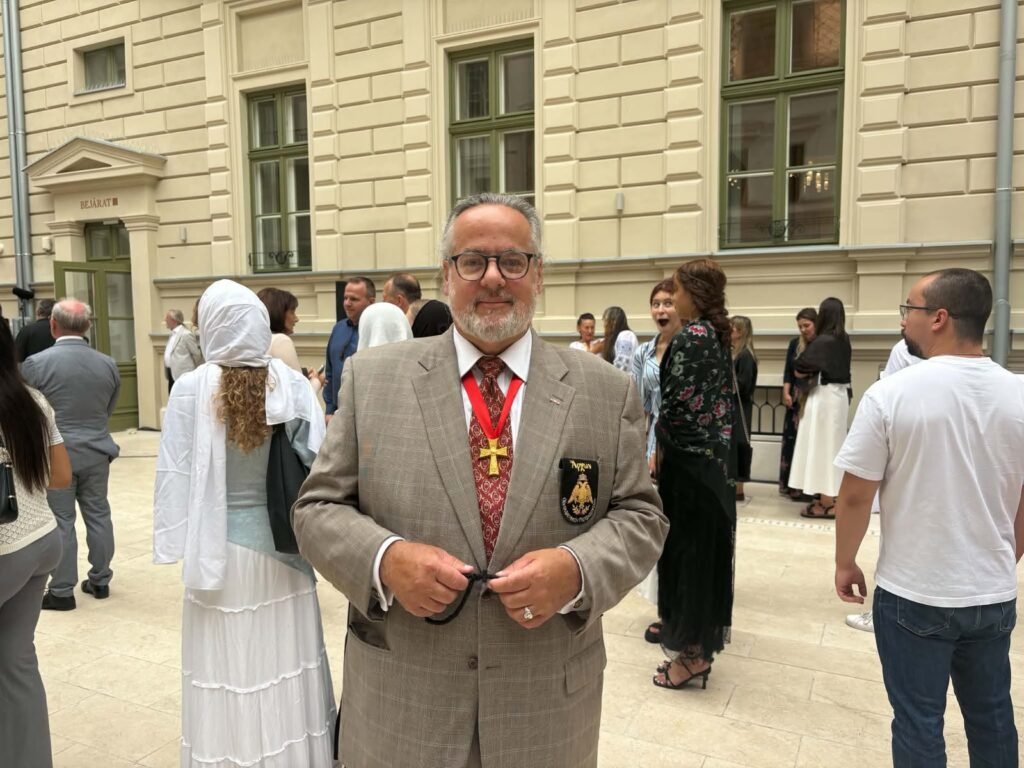
The author of Wolves in Sheep’s Clothing, O’Hurley is an Irish-American political scientist, journalist, defence and security analyst, and specialist in international conflict resolution. He proved to be a particularly engaging interviewee.
In the previous instalment of our exclusive interview with Libertas Fidei, we discussed how such blatant instrumentalisation of religion became possible, how the Moscow Patriarchate became an instrument of the Kremlin, whether the Western world recognises the threats involved, and what the future holds for our shared Christian home. Today, we publish the first part of our conversation.
In this instalment, we explore how the political exploitation of religion can be countered, Russia’s religious activities in Africa, the future of the Russian Orthodox Church after Putin and Patriarch Kirill, and whether Kirill could face an ecclesiastical trial.
Do Western countries have a coherent strategy for countering the use of religious organisations to advance the interests of the Russian state?
No. Europe is only beginning to grasp how our liberal democratic value of non-State interference in the matters of faith can be a security risk. Measured and moderated, it is a risk worth taking, however.
Freedom of religion is at the bedrock of our political tradition and social compact. Still, we cannot be fools. We must strike a reasoned balance. I think our legislatures and courts can and should do that. Limiting the use of faith for foreign political and security interference in domestic affairs by legislation in Ukraine, Latvia, Estonia, the Czech Republic, and Lithuania is well in hand. None of these States seek to regulate religion or faith―only legitimately restrict foreign interference, despite how the Moscow Patriarchate tries to spin it as religious persecution. As Europe is discovering, there a comprehensive way of addressing this threat given how the Russian Church behaves like an intelligence agency is necessary.
There is a reason so much of the pro-Russian and pro-Moscow Patriarchate distortion of truth and claims of persecution of the faith are directed solely at Ukraine. Attacking so many European Union countries for adopting similar legislative and judicial postures would only tend to expose the breadth of the problem and reveal that Ukraine is not being unreasonable. The distortion of truth and manufacturing of grievances over alleged religious persecution continues to be directed at Ukraine because it serves a Russian State purpose.
Russia remains silent on the EU countries taking the same legislative approach as Ukraine, especially while Moscow administers its latest hybrid warfare propaganda campaign, “Russia is not your enemy”. Putin’s latest claim, echoed by the Moscow Patriarchate, that Russia has never threatened anyone, is laughable. It ignores history and Globesec’s report documenting more than 110 verifiable Russian-linked sabotage attacks on Europe since 2022. Some place the number of those attacks above 452 instances.
If you were invited to advise the European Commission, NATO or the governments of the United Kingdom and the United States, what specific measures would you recommend?
Visas and immigration would be advisable.
When a staff member of the External Relations Department of the Moscow Patriarchate is caught at a US airport with evidence Russia is exploiting clergy, political leaders and activists by using illegal wiretaps to collect kompromat for Russian intelligence use, the liberality of issuing of visas for Russian and pro-Russian religious figures requires greater scrutiny. Consider Mount Athos―a holy refuge from the world. Greece discovered Russians exploit visas for pilgrimages to enter the EU and then disappear within our open borders requiring a limitation of visas.
Financing is critical. Significant funds from Russia flow externally under the guise of religious or charitable activities. For example, in October 2022, Greece’s Anti-Money Laundering Authority was investigating more than twenty suspicious transactions involving substantial sums transferred from Russia to individual monks and monasteries on Mount Athos. The reported amounts ranged from tens of thousands of euros to hundreds of thousands, with one transaction exceeding €1 million.
There are independent reports from various sources that raise significant concern. The OCCRP found Russian State funds flowed to 11 European countries despite sanctions. Money was paid to people with overlapping interests in the Russian Church, intelligence agencies and even several instances of people caught in espionage and crime. These findings were confirmed by Bellingcat investigations chronicling the intersection of meetings, financial activities, business interests, property ownership and other interrelatedness with people sharing church, diplomatic, business and intelligence involvement. The Dossier Centre came to the same conclusions.
During the corrupt reign of the Borgia Popes there was a Roman joke, “If this is poverty, I can’t wait for chastity”! The Moscow Patriarchate seems to have taken that page from history and is now using the Church to skirt sanctions for the corrupt purposes of perverting European security and democracy.
Speech is another issue of concern. In last year’s Moldovan elections clergy were invited to Russia for a pilgrimage. Upon returning home just before the election, they were plied with pre-paid credit cards from a Russian bank on the understanding the priests would scrape propaganda off Russian intelligence service sites and repost it on their parish and personal social media. They continued to be paid what were euphemistically called “parish support grants” provided they followed Moscow’s directions to continue promoting pro-Russian candidates while undermine pro-European contenders. When such activity is not religious in nature its hostile political content cannot be considered protected as a faith activity, especially when it undermines Europe for the benefit of a foreign State. It is worthy of monitoring and if necessary, prosecuting.
We must protect religious freedom. Equally so, we should not ignore the manifest ways in which it is being used against us.
Following the Patriarchate of Alexandria’s recognition of the autocephaly of the Orthodox Church of Ukraine, Moscow established its own Patriarchal Exarchate in Africa. In effect, an ecclesiastical confrontation that began over Ukraine was extended to another continent. What are your observations?
I recently wrote extensively on this very topic. I want to draw your attention to the Moscow Patriarchate’s claims about the Tomos of Autocephaly for Ukraine. Moscow complains the Ecumenical Patriarchate, who historically held jurisdictional authority over Ukraine and felt conditions necessitated re-asserting its canonical rights to free the Ukrainian people from Russian oppression, supposedly violated our Orthodox tradition by interfering in the jurisdiction of another bishop. Yet, when they establish the Exarchate of Africa to undermine Alexandria’s ancient jurisdiction over the continent, then proceed to poach Africans that are already Orthodox calling it missionary activity, we immediately recognise the hypocrisy. Orthodox missionary activity has always been about bringing people to the Church by baptism―not institution building at the expense of another Orthodox institution calling it missionary work.
Russia’s “ortho bros” constantly claim online the Moscow Patriarchate had to protect Orthodoxy from the “self ordained” clergy and bishops of the Orthodox Church of Ukraine (Ecumenical Patriarchate). No such concept of being self ordained exist. Validity claims about canonical rights and standing are being distorted because that narrative serves an ulterior purpose. The Moscow Patriarchate conveniently omits the same validity of ordination issues of which they now complain exist in Ukraine were at play when they forced Ukrainian Greek Catholics to join the Moscow Patriarchate as part of the Soviet policy to weaken ties to the Vatican and the West. Even more recently, they refused to accept the valid, canonical deposition of Bishop Konstantin (Ostrovsky) of Zaraisk who was subject to the jurisdiction of the Patriarch of Alexandria. This constant invocation of canon law in the aftermath of Russia declaring itself in schism and operating in this lawless fashion genuinely injures Orthodox unity. It reduces canon law to the machinations of Pharisees instead of being in service to the human condition and the mission of the Church.
The Moscow Patriarchate’s foray into Africa is not directed at bringing Christ to Africans but taking them away from the Patriarchate of Alexandria because it recognised Ukraine’s autocephaly. The demographics show it. The proximity of their structures next to existing Orthodox structures reveal it. The political goals of using the Russian Orthodox faith to realign Africa for Russia’s geopolitical interests are overt and on constant display. The audacity of the Moscow Patriarchate attempting to justify their actions as being missionary activities defy even the best pro-Russian apologist from being deemed credible by defending the indefensible.
Manufacturing grievances with selective claims is a side show to distract us from the truth―the Russkiy Mir demands that Moscow be recognised as the “Third Rome” and centre of the Orthodox world. The Kremlin and Moscow Patriarchate are ambitious. This is why they malign the Ecumenical Patriarchate, assail the Patriarchate of Alexandria, and put enormous pressure on the Patriarchates of Jerusalem and Antioch to follow a path of disunity without actually proclaiming schism.
You have already written about Russian religious expansion in Africa. In your view, what are the Moscow Patriarchate’s real objectives on the continent?
There are three and they are all political.
The preponderance of lateral transfers of existing Orthodox to the Russian Exarchate compared to the infinitesimal number of baptisms reveals the objective isn’t any African’s salvation or redemption but the elevation of Russian Church as an institution. The placement of Russian Exarchate “missions” is co-aligned with Russian State military and economic interests. Finally, there is the degradation of the Patriarchate of Alexandria and the Greek Orthodox tradition closely associated with Constantinople, Greece, and Cyprus being a tool to limit competing interests. All are political objective even if cloaked as benign missionary activity. There are other objectives as well, including financial interests and using the Russian Church to open doors for access to rare-earth minerals and other natural resources, ports, and currency movement to skirt sanctions.
Moscow has been actively recruiting African clergy and attracting Orthodox communities by offering support, funding, and educational opportunities. At the same time, reports have emerged about the recruitment of African nationals to fight in Russia’s war against Ukraine, although representatives of the Exarchate deny any involvement in such activities. What might be the long-term consequences of this expansion for the Patriarchate of Alexandria and local Orthodox communities?
Russian denies financial inducements in the same way the Kremlin denied it had any plans to invade Ukraine the very night before they did so. These denials aren’t credible. The Moscow Patriarchate disavows recruiting Africans to attend the best Russian seminaries only to see these young men end-up on the battlefields of Ukraine fighting a war that is not their own and where there is no ideological conflict. Their families tell another story. The truth also lies in the public statements of clergy lured away or ordained for the Russian Exarchate specifically citing financial incentives they received. New vestments and buildings are simply visual, temporal proof of Russian political policy in action financed by the Moscow Patriarchate.
Africa suffered much by European colonialism. I am pained to see mere trinkets once again being offered to souls in the developing world struggling with crippling poverty, as a means of obtaining their spiritual obedience in modernity. We had hoped this practice of simony and coerced conversion was a relic of the past. It is not Christian. It’s certainly not Orthodox. It’s absolutely undermines the organic development of the African Church and people.
The long-term consequences of Russian Exarchate activities in Africa could prove profound. The rupture that once split Orthodoxy from Roman Catholicism was the culmination of a litany of minor disputes that grew into irreconcilable differences over the years. That division has lasted almost a millennium. I genuinely fear the polarisation and competition for Orthodox souls arising from Russia’s decision to declare schism and compete with Constantinople and Alexandria could become as profound as the split between East and West. The pan-Orthodox world is alienating what was one of its most attractive traits―the elevation of the human person within the dignity of Orthodox Christianity―all over politics and power conflicts. Christ’s prayer for unity should be our guide instead of a political manifesto written by nationalists sitting in the Kremlin.
His All-Holiness, Ecumenical Patriarch Bartholomew has invited his brother Orthodox Patriarchs to Constantinople on November 30th. In the midst of war and division, and the current Russian Exarchate activities in Africa and the aftermath of Patriarch Theophilos travelling to Moscow to receive the Order of Friendship at Putin’s hand while praising the autocrat as a defender of Orthodoxy and tradition, we can only wait to see if Jerusalem and Antioch join in fraternal dialogue. Last year both Patriarchs declined the invitation to join in the commemoration of the 1,700th anniversary of the First Ecumenical Council.
I fear we might be witness to the beginning of an irreparable division in Orthodoxy―not over articles of faith―but of this bestial conquest for territory and political power by Moscow at the expense of the Church.
Following Russia’s full-scale invasion of Ukraine, many representatives and communities of the Ukrainian Orthodox Church of the Moscow Patriarchate (UOC-MP) relocated to European countries. Meanwhile, various church structures associated with the Moscow Patriarchate already operate in Europe and the United States, including the Russian Orthodox Church Outside Russia (ROCOR), the Belarusian Orthodox Church, and overseas parishes of the Russian Orthodox Church. They have now been joined by structures associated with the UOC-MP.
To what extent do Western governments and intelligence agencies understand the potential threats arising from the use of such ecclesiastical structures as proxies for the Kremlin? Are they capable of distinguishing legitimate religious activities and pastoral ministry from political influence operations and activities conducted in the interests of Russian intelligence services?
Policing services understand crime. Intelligence services are practiced in examining State behaviour and conduct. Neither are trained nor have the internal expertise to assess the hybrid Church-State organ that is the Moscow Patriarchate. One senior intelligence official in the Balkans told me they had, until recently, viewed the use of Russian clergy for intelligence purposes as an individual phenomenon. They now understand it to be a strategic alliance for mutual gain. Greater coordination between intelligence services across Europe will enhance threat detection but we remain behind the power curve. Europe is slowly getting there, even if late to the game.
The threat posed by Russia using the ambo to reach the “near abroad”, those who have historic links to Russia despite being born, raised or residing in Europe for years, remains. Europe is engulfed in growing social unrest arising from income inequality, the diminished likelihood for prosperity, personal security, and growing political disenchantment. Russia did not cause these problems. Europe must own them. However, as France revealed most recently, Russian interests, including Russian clergy fanning the flames of disaffection, are exploiting social unrest across Europe. It should be no surprise that we are seeing the rise of extremist political parties and activity with pro-Moscow views. The absence of the Moscow Patriarchate engaging in constructive dialogue, education, and outreach to build bridges of understanding by participating in charrettes, conciliation, and reconciliation activities speaks volumes. Moscow’s genuine participating in conflict resolution could yield positive results. Instead, they have opted for confrontation, accusation, and dissention, calling the West, “satanic”. This from a man who clergy bless Russia’s Satan II ballistic missile designed to kill innocent women, men, children and the elderly.
Russia has nothing to offer the West. Its appeal to traditional values is powerful but scratch the surface and look at what it has done for Russia. Workers, especially men, face early mortality. Society is gripped by rampant alcoholism, high crime rates, and abject poverty such they needed to steal toilets and household items from Ukraine and ship them back to Russia. The State’s economic policies create a class oligarchs bound to the Kremlin while that masses live in increasingly desperate poverty to fund a military budget that grew by 27% last year alone. Russian divorce rates are disproportionately high and family preservation success low. The Russian government, endorsed by the Moscow Patriarchate, prioritises the reestablishment of a Russian empire over the health, prosperity and the tranquility of its people by saddling them with crippling debt and economic mismanagement. Still, they are taught to hate the very Europe in which they live. We need to be vigilant that pulpits do not become agencies of unrest for the benefit of foreign powers.
The Russian Orthodox Church and the Russian Orthodox Church Outside Russia. Can we speak of the systematic use of the Orthodox diaspora as an instrument of Russian influence? What should prompt scrutiny by security services — the specific activities of individual clergy members, financial ties, or institutional dependence on Moscow?
The West is justly proud of the expansive rights of privacy and autonomy it has achieved in law, society, and culture. Our tradition of governance has evolved to respect the informed decision-making of the individual and empower them agency. Our experiment in democracy promotes the exercise of one’s voice. Russia places a focus on the State, not the person. Individual liberties are limited, State powers grow ever more invasive and as a result the Russian diaspora imbued with this way of life often comes into unconscious conflict with Western culture. Our democratic, social, and religious institutions were historically stable enough to accommodate this friction. Unfortunately, self-interested political populists the likes of Trump, Le Pen, Orban and others have attacked institutions as a way of marshalling the disenfranchised. We must ensure we have strong institutions capable of serving the common good, necessarily identifying trouble without inhibiting the individual liberties that undergird our society, democracies, and tradition.
The Russian diaspora, what they call the “near abroad”, is being crafted not just to love their motherland, which is admirable, but to hate the West in which they live. They are increasingly being asked to be part of Russia’s soft-power diplomacy by engaging in cultural, sporting and other activities to promote Russia, even justify its use of violence. The Russian Church seeking to normalise the illegality of Russia’s invasions and occupations in Moldova, Georgia and Ukraine and excuse, if not embrace, the use of violence to subdue temporarily occupied peoples all while enjoying the liberal democratic policies, protections and economic success of the West is a source of tension.
Today, there is a growing impression that world Orthodoxy is becoming increasingly divided into two camps: churches aligned with the Ecumenical Patriarchate and those within the Moscow Patriarchate’s sphere of influence. Some maintain close relations with Moscow, receive support from Russian church structures, and avoid openly criticising Patriarch Kirill and the Kremlin.
This is a deeply troubling situation. How do you see the future of relations among the autocephalous Orthodox Churches listed in the diptychs? Is it possible to restore a united voice for world Orthodoxy, or are we witnessing a long-term division whose consequences will be felt for decades?
Sadly, the complexity of the personalities involved, and their interrelatedness if not dependence on either Moscow or Constantinople, has rendered attempts to preserve Orthodox unity elusive. Money from Moscow has a great deal to do with it. But it would be a disservice to either Jerusalem or Antioch to say they did not have significant concerns and are mere economic reliants. There is an undeniable pull between the competing realities of resourcing current operations and striving towards establishing the Kingdom of Heaven on Earth. Shakespeare’s Merchant of Venice gave us the line, “To do a great right, do a little wrong”. I remain concerned money to fund the Church is received with the best of intention, but the pull of competing loyalties often creates a defect in conducting our diakonia leading the Church to do great wrong, albeit with an earnest desire to do a little good.
I pray for the long life of every Patriarch. Still, I believe until there is a change in the persons who occupy the Orthodox Pentarchic thrones the issues of jurisdiction, recognition of the universality of the Ecumenical Patriarchal ministry devoted to maintaining Orthodoxy unity and resolving inter-Church disputes and hearing appeals will remain in conflict.
It is not just the Patriarchs who share blame for our fragmented Christian world. Orthodoxy has long complained of the codification of canon law in the Roman Catholic tradition. By contrast to codification, the principled approach to canon law has resulted in competing understandings for an Orthodox world view. We seem to be witness to the hierarchs reading the same text and having contrasting understandings of what is meant, what is necessary and what is even Orthodox. As the world bends to a codified rule of law a Church that remains aloof of such a phronema will struggle to function with clarity and avoid strife.
Today’s Orthodoxy appears more interested in highly personalised views of canonical adherence than the challenges of being a human being in a troubled world. Accusations of flouting canons and tradition are focused on collecting grievances to manufacture a robust cassis bellothat serves disunity.Our tradition produced a compassionate understanding by adoption of oikonomia where appropriate. That spirit seems to often alien today. We would benefit by having fewer ardent canonists and more compassionate pastors.
I fear the rest of the world sees Orthodoxy acting like Pharisees whereby it argues the law but fails to live the meaning of the law as Christ taught. Until we prioritise Christ’s prayer for unity and focus on individual Theosis I fear we will continue to be engulfed by institutional bickering, accusations, claims, counterclaims, and division.
The effect this is having throughout Orthodoxy is undeniable. As hierarchs, theologians and philosophers engage in mutual accusations about fidelity to Orthodoxy the engagement of the hoi polloi in social media reflects this adversarial posture. Read blogs and social media posts devoted to Orthodoxy. Information and education are rarely present. What is revealed is a disturbing trend of identifying and accusing others as somehow being unworthy of salvation and proclaimed as un-Orthodox or simply not Orthodox enough. This trend of exclusion seems directed at placing people outside of the Church and Orthodoxy, running the danger as St. Cyprian of Carthage proclaimed, in placing people in fear of being denied Grace, “extra ecclesiam nulla salus” (there is no salvation outside of the Church). This is hardly the mentality necessary for unity, kindness, love, conciliation, and reconciliation. It hardly commends Orthodoxy.
Is an ecclesiastical trial of Patriarch Kirill possible?
We have put this question to various experts. Today, many find it difficult to believe not only in the possibility of democratic transformation in Russia but also in the prospect of genuine repentance by the Russian Orthodox Church for its role in justifying the war against Ukraine.
In your opinion, is an ecclesiastical trial of Patriarch Kirill possible for his support of the war and his promotion of the ideology of the “Russian World” (Russkiy Mir)? Who would have the necessary canonical authority to initiate such proceedings? And does contemporary Orthodoxy have effective mechanisms for holding the primate of an autocephalous Church accountable?
This is the wrong question.
I would ask, is it likely necessarily in criminal or civil law? Yes. Is accountability demanded? Without question! Is an ecclesiastical trial of Patriarch Kirill advisable or desirable? No!
After Nuremberg we decided we must punish aggressive warfare, the attempt to exterminate peoples and deter future war. Ecclesiastical Courts have a different purpose. Even the extreme sanction of excommunication was never meant to be rendered for the imposition of punishment, shame, and banishment. It is imposed for correction. Whatever happens, it is the duty of the Church to employ canon law as it was intended―to assist in the salvation of humanity.
Despite the great evil done by Patriarch Kirill and the Moscow Patriarchate, I do not think such proceedings would serve to bring Patriarch Kirill or the Russian Church to Christ. Nor will it promote the reconciliation of the Russian Church with the rest of Orthodoxy. It would, I fear, undermine attempts at unity and create a long-lasting enmity. Caesar can deal with punishment. The Church should remained focused on redemption of the person and the unity of the Church.
In the final analysis, the Russian Church must either resolve to follow Christ, His Church and our Orthodox tradition or remain mere agents of a tyrannical government that believes violence, the oppression of others and the assimilation of the world under the Russkiy Mir is God’s will. An ontological view of the human person reveals us to be created in God’s image, questing towards that unity that can only be realised by being partakers of the divine nature by Grace. I do not think a canonical trial of Patriarch Kirill serves that goal or purpose.
How do you envisage the future of the Russian Orthodox Church after Putin and Patriarch Kirill? Is internal renewal possible, including a rejection of the ideology of the Russian World and a return to an independent spiritual mission? Or are we dealing with institutional and theological transformations whose consequences will persist for generations?
Over the past few decades, the Moscow Patriarchate has become so deeply integrated into the Russian state system that the question arises as to whether it could function independently outside of current political model to which it has embraced and become accustomed. Our research and the record is clear, from its inception the Russian Church has been a creature of the State. Attempt to theologise this symbiosis can never succeed. It is about politics and power. The Russian defeat in Ukraine is coming. Putin’s autocratic reign will end as swiftly as did the Soviet Empire. What arises from the rubble that is left remains to be seen. Possibly, in that defeat and utter despair, deprived of all hubris and false, nationalistic pride, the Russian Church may encounter its own road to Damascus conversion experience. We can only hope and pray.
Finally, how do you see the future of world Orthodoxy?Could the current crisis mark the beginning of a profound renewal of Orthodoxy? What role might the Ecumenical Patriarchate, the Orthodox Church of Ukraine and Orthodox communities in the diaspora play in this process? And what, in your view, should twenty-first-century Orthodoxy become if it is to remain faithful to the Gospel without becoming hostage to the political interests of states?
Crisis and failure always present opportunities for renewal. Christianity, and Orthodoxy in particular, has suffered, arose and fell repeated times over the past two millennia. The imperfections in the Church today are defects of humans grappling with the divine plan. To break that cycle I believe we must embrace the ethic of Tikkun Olam from the Judaism that Christ knew. It means to repair a broken world. How do we do that?
I am unworthy to give the Ecumenical Patriarch advice or say what he or any other Patriarch should or should not do. I expect them, however, to strive towards unity. The Ecumenical Patriarch Bartholomew has exercised his ministry with deft hands. His reign has been marked by difficult choices and wise decisions rendered with a humility befitting the office. If Russia is offended by the liberation of Ukrainians from worshipping under the threat of the gun and having to commemorate a Patriarch who endorses their death, so be it.
The martyrs teach us that slings and arrows are the price we pay for fidelity to the faith. If individuals cannot understand the pastoral wisdom of such a choice in freeing the oppressed, reasoning will not change them. The Tomos of Autocephaly for Ukraine wasn’t a political decision or challenge to the jurisdiction of another Orthodox bishop. It was, at its core, an issue of justice, care, and concern for the individual struggling to encounter the resurrected Christ in their daily life without fear or the weight of oppression. If liberating Ukrainians to worship without fearing the belt of crozier causes disunity, then we need to look at the value of maintaining such false unity. The Moscow Patriarchate’s failure to engage in introspection and understand why Ukrainians wanted to escape their grasp shows a profound disregard for the human experience of Church and a desire to preserve the institution at all costs.
Orthodoxy across the world remains too tied to nationalism. What good is spreading the Gospel in a newer Orthodox local Church such as Ireland, for example, only to remind Irish people they are of a lesser ethnicity, weren’t “born Orthodox” and aren’t real Orthodox Christians? It is the very definition of the heresy of ethnophyletism. Left unaddressed, Orthodoxy is doomed to remain a chaplaincy to national interests and cultures if this continues.
I mention this because it goes to your question about what the diaspora can do. Russia’s diaspora largely fans the flame of war and remains decidedly nationalistic and pro-war if that is what Putin desires. The Russian diaspora will not break with their families and friends in the homeland who endorse the war in Ukraine and believe the elevation of the Russian Orthodoxy to serve as the “Third Rome” is necessary to preserve genuine Orthodoxy as they believe in it.
Unlike Roman Catholicism where nationalism plays a far inferior role than it does in Orthodoxy, the Holy See can speak with one voice on issues of moral, theological, and ethical issues. When Orthodoxy weighs in on any issue, especially the war in Ukraine, it invariable raises the question, who says that? Was it a Russian, Greek, Romania, or other Orthodox speaking? If Orthodoxy cannot agree that warfare is evil and condemn it unequivocally, and Patriarchs are willing to praise Putin and receive the Order of Friendship from Russia who is waging an illegal ware, then our voice becomes meaningless and our credibility worthless.
Orthodoxy must decide what it believes. For all of our talk of tradition, we can’t seem to unequivocally condemn war, murder, rape, torture, executions, unjust imprisonment, war profiteering or any and all of the hallmarks that remain excused by the Moscow Patriarchate in service to the Russian State. What were once grave sins in Orthodoxy are now either excused or simply ignored. The moral voice of Orthodoxy has been forfeited and in rendering it superfluous it assists Russia. In essence, maintaining unity with warmongers is anathema to our faith. Disunity serves Russia’s expansionist agenda.
Russia must be defeated for this to end. Whether Orthodoxy has any credibility in the aftermath is a question that needs to be confronted now. Political regimes rose and declined so many times in the history of the Church we have forgotten their names. The Church cannot ignore politics, but it is judgment in the hereafter that should be our guidon not the changeable battle flags of armies that will disappear from the Earth and be mere footnotes in history. Following evil, remaining silent and the sin of omission in failing to act should be our watchwords, both personal and institutional, to guard against becoming irrelevant in a world in need of salvation.
Anna Yansone