A few days ago, the assembly of Georgian bishops elected a new patriarch.
The position went to the locum tenens, church figure Shio Mujiri, a man considered convenient for both Russia and the authorities.
For this Transcaucasian republic, situated at the crossroads of Europe and Asia, the choice of patriarch carries particular importance. The authority of the Church in society is unquestioned. At the same time, the state itself is living through an extremely difficult period of choice, deciding which civilizational space it belongs to, the Eurasian one, with its Russian doctrine aimed at spiritual separation from the West and unity with Russia, or the European one.
This geopolitical choice, in which the authorities support an alliance with Russia, is accompanied by protests from the active part of society and a rollback of freedoms.
We spoke about the church situation, the role of the Church, and the newly elected patriarch’s significance for the present and future with one of Georgia’s most respected experts, theologian Gocha Barnovi, who defended his doctoral dissertation in Greece.
THE GEORGIAN CHURCH HAS BEEN AND REMAINS PRO RUSSIAN
– Gocha, to observers outside Georgia, the Georgian Orthodox Church appears loyal to the authorities, unwilling to support protests, and mildly pro Russian. That was the case under the previous patriarch. Should we understand that this course will continue and that this remains the ‘identity’ of the Georgian Church?
– You are correct in noting that the Church in Georgia was pro Russian and remains pro Russian. Unfortunately, our Church never supported either the pro Western course of the previous government, meaning the Saakashvili presidency, or the protests of recent years against Russian style laws. In Georgia, ‘Russian laws’ refers to initiatives by the ruling party that copy the repressive legislation of the Russian Federation and are aimed at restricting democratic freedoms, suppressing civil society, and abandoning the European course. Nor did it support the protesters themselves. No simple statements were heard from the Church, apart from remarks by a few bishops who noted that such treatment of Georgian citizens was unlawful. But overall the Church remained silent and made no statements against the authorities.
I believe this course will continue. Ilia II’s successor studied in Russia and defended his doctorate there. His attitude toward the protests and Georgia’s pro Western course has always been the same. He never supported the idea that Georgia is a country pursuing a pro Western course and striving to become part of Europe founded on evangelical values. For almost nine years he served as locum tenens and during all that time he never defended the Georgian people’s pro Western course.
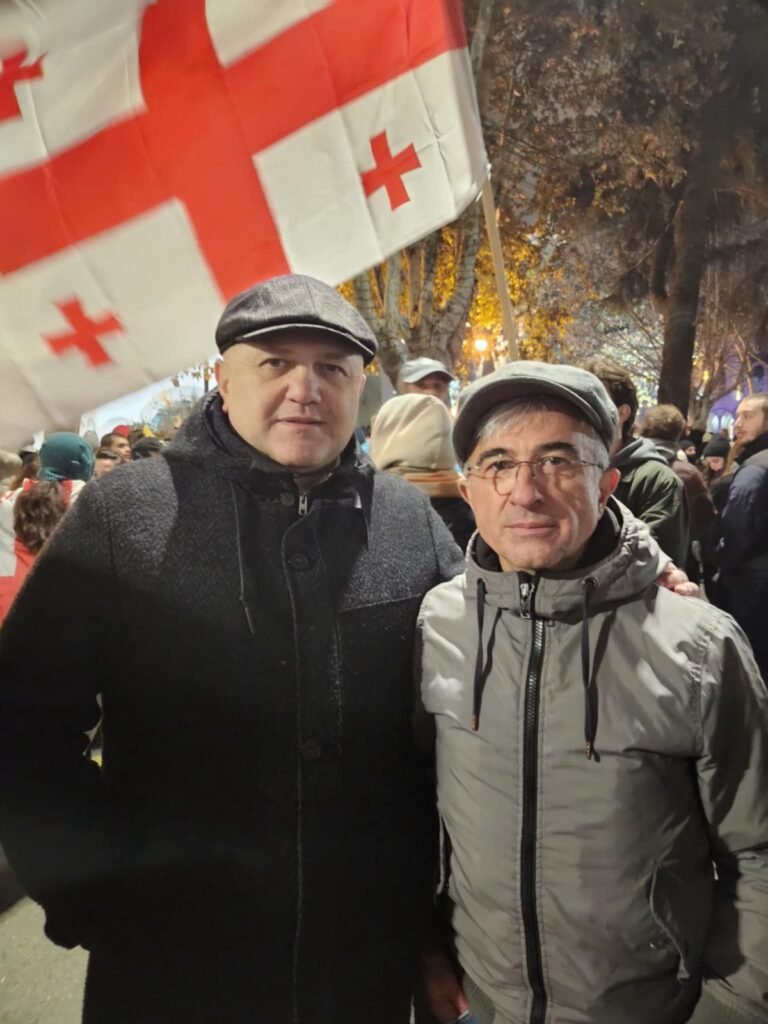
– Even though the active minority is out on the streets and protesting?
“Some bishops made very mild statements that could be interpreted as support for the protesters. These were not harsh speeches against the authorities and not open support for the protesters, but rather cautious hints. However, if we are speaking about the Synod of the Georgian Church as a whole, it always remains silent and expresses no anti Russian positions. This is especially noticeable during election campaigns.”
One of the markers of the Church’s course is the issue of recognizing the autocephaly of the Ukrainian Church. Should we assume this issue will once again be postponed?
Before the enthronement, Bishop Nikolay Pachuashvili, who often travels to Russia and has close ties there, allowed himself to criticize the procedure and principles for electing a patriarch in Georgia. But recently he declared that if the Georgian Church does not recognize the autocephaly of the Ukrainian Church, it is because Ukrainian metropolitans and bishops are supposedly ‘not worthy enough’. This statement shocked many people.
THE CURRENT PATRIARCH WAS APPOINTED LOCUM TENENS AFTER ALFEYEV’S VISIT TO TBILISI
Before our interview I watched the enthronement. Enthronement means the installation of a new patriarch, something like an inauguration for church leaders. During the prayer commemoration of the heads of churches, an obligatory part of the liturgy in which other church leaders are remembered in prayer, the list of patriarchs and metropolitans ended with the head of the Church in America. I think this will continue because Bishop Shio, the current Patriarch of Georgia, is Russia’s choice.
Nine years ago Ilia II personally wrote the decree appointing Shio as locum tenens. This was done deliberately so that nobody could claim the document had merely been typed up and stamped with a facsimile signature. Even then people were saying that the patriarch was not free in making this choice. Before that, Shio had not been especially well known among the bishops, and suddenly he became locum tenens.
Over these nine years nobody can recall a single statement from him in support of Georgia’s European course. On the contrary, I remember our meeting in 2019. At that time I wrote extensively about the Ukrainian Church and criticized the Georgian Patriarchate for refusing to support Ukraine’s autocephaly. I was invited to meet with Shio. He came to the meeting carrying a stack of papers that were essentially talking points containing the Russian Church’s arguments against Ukraine’s autocephaly. I tried to explain that the Ecumenical Patriarch was acting according to canon law, but they did not agree with a single one of my arguments.
That was when I finally became convinced that Shio held an anti Ukrainian position and that, once patriarch, he would continue precisely this line.
Later I wrote articles stating that appointing a locum tenens during the patriarch’s lifetime violates the canons of the Orthodox Church. According to church rules, the successor should be elected by bishops only after the patriarch’s death. But nobody paid attention to this.
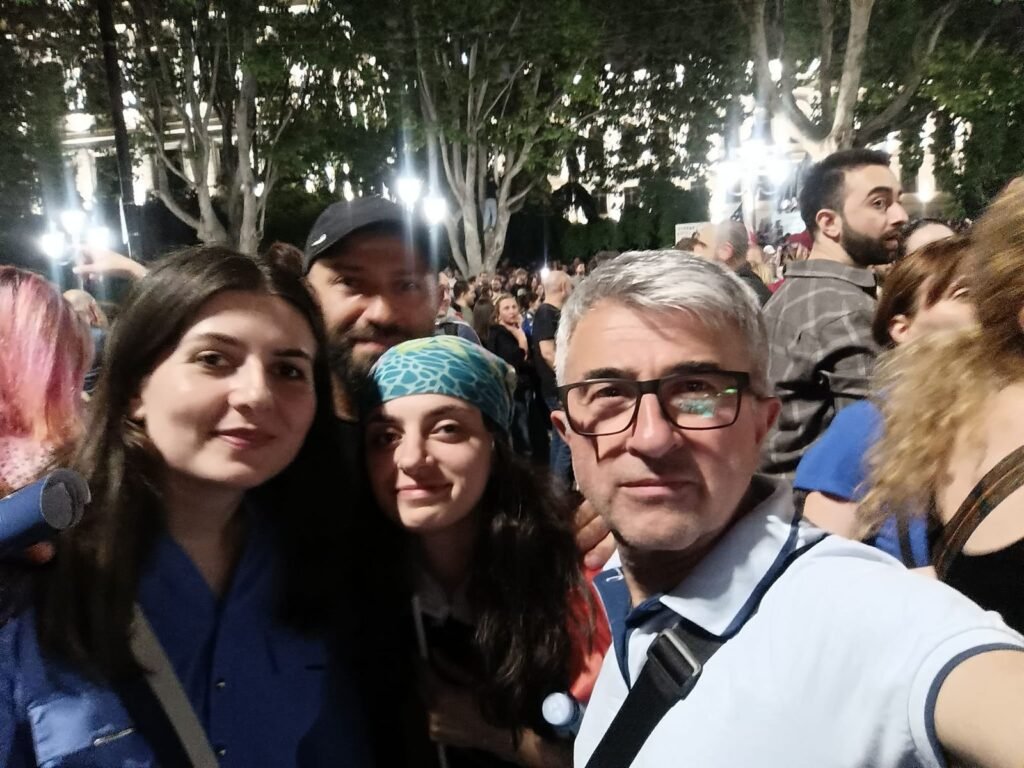
“Before Shio’s appointment, Hilarion Alfeyev, then head of the Russian Orthodox Church’s external church relations department, came to Georgia. He met privately with the patriarch. A week later the decree appointing Shio as locum tenens appeared. At that point many people understood everything.
– What year was that?
– The patriarch signed the decree on November 23, 2017. From that day Bishop Shio became locum tenens, effectively the successor. After that we began writing about it.
“Just imagine, the locum tenens already governs the Church himself, conducts the election himself, and participates in it himself. Even if we take ordinary political life rather than church life, it is impossible to imagine a person organizing elections in a state while simultaneously being a candidate in those same elections. But that is exactly what happened in our Church. As locum tenens, Shio conducted the election and at the same time participated in it. It is all so obvious that it needs no comment.”
I THINK THAT AFTER THE WAR RUSSIA’S INFLUENCE WILL WEAKEN AND THE GEORGIAN CHURCH WILL NO LONGER BE ABLE TO OPENLY PURSUE A PRO RUSSIAN POLICY
– How do you assess the patriarchal election results? What do the voting results tell us?”
– An interesting fact is that Bishop Shio received twenty two votes. One of them was his own, so effectively twenty one. The rest voted against him, sixteen votes plus one abstention. This shows that despite his victory, his position in the Church is not especially strong. When almost half oppose you, it means there are people in the Synod capable of resisting his decisions.
Long term forecasts are hardly possible today, but if we think about it, much in the church sphere depends on the outcome of the war between Russia and Ukraine. We see that Ukraine is moving confidently forward in this war. We see the world becoming unipolar, with the West as the dominant force. And this naturally affects the condition of the Georgian Church.
I think that after the war Russia’s influence will weaken so much that the Georgian Church will no longer be able to openly pursue a pro Russian policy or actively help the state implement a pro Russian course. Right now the Georgian Church is completely aligned with the government and fully understands what kind of government it is. The same applies to the Church itself. For now they move together and coincide in their pro Russian policies. What will happen in a year or two is difficult to say. But I believe that once it becomes fully clear what kind of world has emerged, both Georgia’s politics and the Church’s politics will change.
But in the near future the Georgian Church will not recognize the autocephalous Church of Ukraine. And this is very bad for Georgia, for the Georgian people, and for the Georgian Church itself. Especially because we know our own history well and went through the process of obtaining autocephaly ourselves. That is why I have always believed and written that Georgia should have become the first Church after Constantinople to recognize Ukraine’s autocephaly. But unfortunately the Georgian Church is now in this position.”
– As far as I have read, after the patriarch’s death there was supposed to be a published testament in which Shio was also mentioned. Or not?
– No. The patriarch’s right hand, Aleksandr Jagmaidze, declared after Ilia’s death, ‘Do not look for any testament because there is none.’ This decree appointing the locum tenens is in fact the patriarch’s testament.
But I want to emphasize as a theologian that both appointing a locum tenens during the patriarch’s lifetime and such a ‘testament’ are non canonical documents. Nothing like this exists in any Orthodox Church. The canons forbid it.
After the death or resignation of a patriarch, the Synod elects a temporary locum tenens, usually the senior bishop by ordination. He only governs the Church temporarily and oversees fair elections.
But if the organizer of the election also participates in it, that is simply illogical.
And there is another important point. Immediately after the patriarch’s death, a statement appeared from Sergey Naryshkin, head of Russia’s Foreign Intelligence Service. He spoke about Patriarch Bartholomew allegedly trying to interfere in the internal life of the Georgian Church. This demonstrates how enormous Russia’s interest in the Georgian Church is.
And before the election itself, Patriarch Kirill, Vladimir Gundyayev, openly stated that he hoped Georgia would choose a patriarch who would not be pro Ukrainian. What further proof is needed that Russia was seeking exactly this outcome in the Georgian Church?
Russia has enormous influence in Georgia, both in politics and in church circles. Although there was an alternative. If the bishops who did not support Shio had united around Bishop Isaya Chanturiya, the candidate most feared by them, everything might have turned out differently.
-Is this the bishop whose diocese is in Tskhinvali and under occupation?
– Yes. But Isaya was not even allowed to participate in the election. The formal reason was the lack of a theological diploma. This is paradoxical because most Georgian bishops themselves do not possess полноценное theological education. If a person has already been ordained bishop, then he has already been recognized as a full hierarch and has the right to participate in the election of a patriarch.
Isaya was a very authoritative figure. Many theologians and journalists considered him the main candidate from the church opposition. But Russia used every mechanism of influence to prevent this. And the Georgian government helped it.
Unfortunately, despite the formal secular nature of the state, the Church and the authorities in Georgia are practically fused together. Under Shevardnadze the Church received around two million lari a year. After 2008, under Saakashvili, the amount grew to twenty eight million. Now people speak of fifty, eighty, and according to some reports even one hundred sixty million.
Officially this money supposedly goes to education, but church educational institutions often do not even possess state accreditation. Nobody understands where the money goes.
In addition, Georgian bishops constantly travel to Russia. And I am convinced they receive various ‘forms of support’ there. That is why they maintain a pro Russian position.
But the issue is not only money. Far more important is mentality. Among many representatives of the church hierarchy it is deeply pro Russian and anti European. Although when it comes to treatment and living conditions, they prefer Europe rather than Russia.”
Russia has largely appropriated the right wing agenda, traditional values, defense of Christianity, and so on. But how does this coexist with the occupation of Georgian lands and the separation of dioceses from the Georgian Church in favor of Russia? How does Georgian society perceive this?
The contradiction certainly exists. We ourselves often wonder what else Russia must do before the Georgian nation opens its eyes and begins to resist.
In 2023 and 2024, and at the beginning of 2025, there were major protests in Tbilisi and other cities. But the government took harsh measures against the protesters. They were beaten, maimed, and insulted.
After Prime Minister Kobakhidze announced the suspension of talks on joining the European Union, the protests intensified. But the state’s response was extremely harsh and the wave of protests gradually subsided.
At the same time the Church remained silent and did nothing to defend its citizens.
People are now fined five thousand lari simply for participating in protests, blocking roads, or holding the flags of the European Union, the United States, or Britain.
That is how the protest movement is gradually being suppressed.
At the same time, before the election representatives of the authorities openly declared that Georgians should apologize to Abkhazians, Ossetians, and Russians. In a normal country, after such statements a person would not receive a single vote. Yet the authorities still won. I believe all this was dictated by Russia because for Russia it is critically important to preserve the current government and maintain control over the Georgian Church.
– What attracted your attention during the enthronement of the new patriarch?
– Everything happened very quickly. Usually an enthronement is prepared over a week or ten days so that guests from other churches can arrive. This time everything was done at great speed.
– There were almost no foreign guests. I think this was done deliberately in order to officially confirm the new patriarch as quickly as possible.
– It seems to me that the main events and invitations to foreign guests will be tied to May 17, the Day of Family Sanctity in Georgia. There will almost certainly be speeches against Europe in the spirit of ‘traditional values’.
I do not think Kirill will yet dare to come to Georgia. Although if everything continues as it is now, this will no longer seem impossible.
– And what will happen to the priests from the conditional opposition who supported the protests?
– So far nothing is happening. But if the pro Russian policy intensifies, I think the pressure on them will intensify as well.
In our country the Church and the state are so fused together that sometimes it is impossible to understand where the Church ends and the authorities begin.
During elections, government candidates always traveled through dioceses together with local bishops. For most people, the presence of a bishop meant that the Church supported this particular candidate, and therefore believers should vote for him.
But when opposition candidates arrived, the Church took no part in it.
That is why I say that church and political structures in Georgia have effectively merged.
Although the Constitution says that Georgia is a secular state. But that exists only on paper.
– Will dialogue with the Ecumenical Patriarchate continue?
– The role of the Synod in the Georgian Church is now minimal. In essence, bishops are highly dependent on the patriarch. According to canon law, all bishops are equal and the patriarch is merely the chairman of the Synod. But this is not felt in Georgia.
“Today a bishop can do almost nothing without the patriarch’s approval. Therefore I do not think anyone will dare actively support dialogue with the Ukrainian Church or recognize its autocephaly.
“Relations with the Ecumenical Patriarchate will most likely continue, but even now they are minimal. After the Ecumenical Patriarch’s visit in 2012, there were practically no serious contacts.
The Georgian Church’s external relations are now almost at zero.
– Will the Church lose influence among the active part of society?”
Possibly. There are still many people attending services, but not as many as before. We shall see what happens next.
I hope that changes in world politics will eventually force the Georgian Church to recognize the autocephaly of the Ukrainian Church.
We are speaking at a difficult moment for Georgia and its Church. But I believe the time will come when Georgia returns to the path of democratization and the European course. When the authorities will listen to their people, and the Church will become free and properly guide its flock.
Anna Jansone