A Polish expert commented on the results of the Moscow Patriarchate conference in Vilnius, noting that it appears to be a response to the actions of the security services.
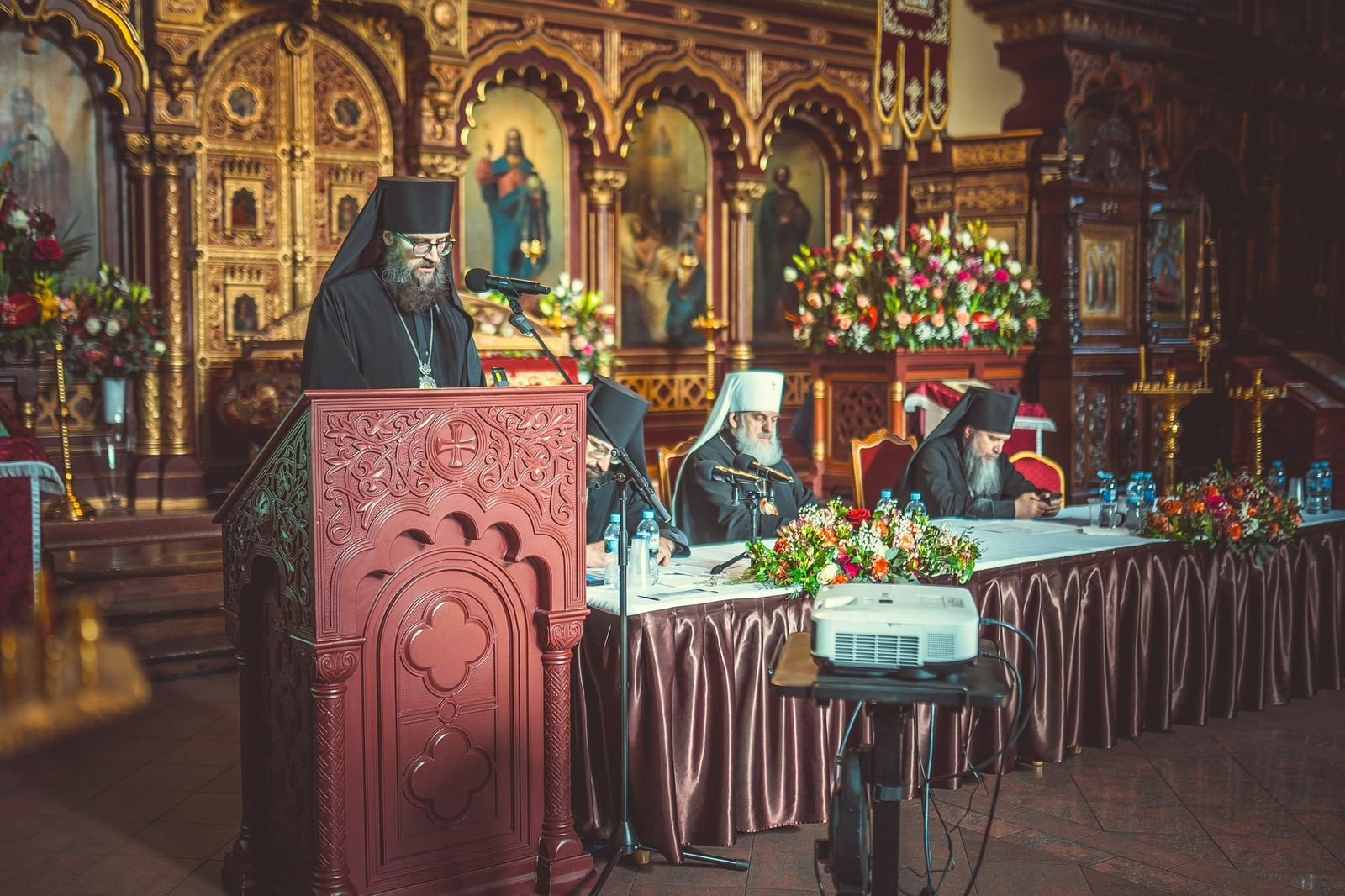
The Moscow Patriarchate conference, which took place on April 26 in Vilnius, appears to be a clear and multi-layered response by the Russian Orthodox Church to the March report of Lithuania’s State Security Department (VSD).
This was stated by Polish scholar Paweł Wróblewski, head of the Laboratory for Prognostic Studies of Religious Change at the University of Wrocław, as he commented on the purpose of the conference organized by the Russian Orthodox Church in Lithuania.
He recalled that in the State Security Department report, the Lithuanian Orthodox Church, which formally declares a desire for greater independence from Moscow, was identified as a structure still under significant influence from the Moscow Patriarchate and as a potential channel for the activities of Russian intelligence services.
According to the expert, the conference represents an evident preventive step in light of the possible consequences of the VSD report.
He emphasized that among the many openly pro-Russian speakers was Archimandrite Filipp Vasil’tsev, a representative of Patriarch Kirill in Damascus. The Department for External Church Relations of the Moscow Patriarchate, to which Vasil’tsev belongs, is a structure that closely cooperates with the Russian state apparatus.
Wróblewski also noted that the presentations focused on issues of canonical continuity, Moscow versus Constantinople, and the “protection of minority rights” under conditions of pressure from the state.
“Due to the participation of speakers from several countries, Russia, Belarus, Estonia, the Czech Republic, Montenegro, and Poland, the conference was intended to become a kind of ‘international mirror’ in which the Lithuanian situation would appear as yet another example of a pan-European problem of excessive state interference in the religious sphere,” the scholar believes.
At the same time, he criticized the participation of representatives of the Polish Orthodox Church in the conference.
“At a moment when the Lithuanian state is seeking to limit the influence of structures linked to the Kremlin, the Polish Autocephalous Orthodox Church is siding with the Moscow Patriarchate in order to legitimize its position, strengthen the narrative of allegedly ‘persecuted Orthodoxy,’ and contribute to the formation of a defensive front of the so-called ‘Russian world,’” Wróblewski stressed.
As previously reported by LF, the controversial archimandrite of the Russian Orthodox Church, Filipp Vasil’tsev, is set to speak in Lithuania at the conference “680 Years of the Assumption Cathedral. Orthodoxy in Lithuania: Continuity of Canonical Order” with criticism of the Ecumenical Patriarchate.
Earlier, Paweł Wróblewski expressed the view that some EU countries insufficiently inform their own populations about the threats associated with the instrumentalization of religion by foreign policy, and that Russian intelligence services readily exploit this situation. He notes that in instrumentalizing religion, Moscow resorts to its classic methods.