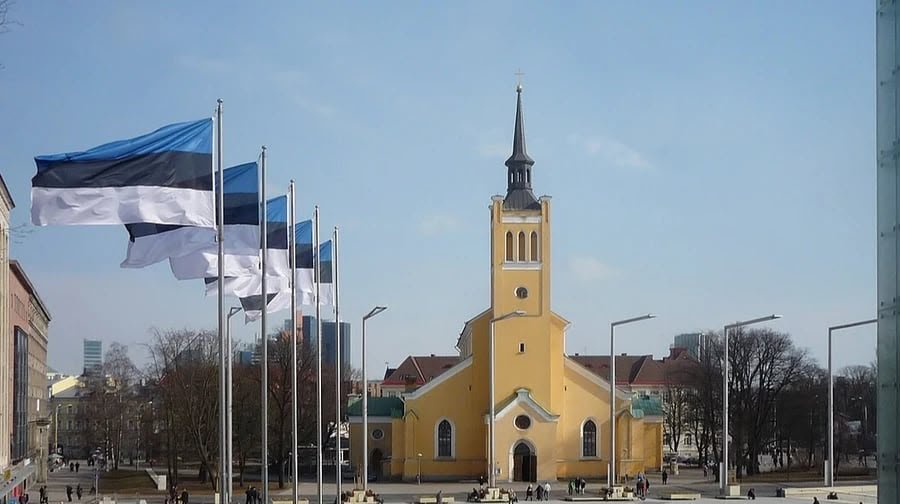
Traditional church religiosity is declining in Estonia, and the majority of the country’s residents do not identify themselves as followers of any religion.
This is stated in the findings of a study on religious issues commissioned by the Ministry of the Interior, according to the publication Postimees.
The study participants identified family, leisure time, and work as the most important areas of life. The importance of the Church and faith remains more modest for most residents, with 25 percent and 33 percent of respondents respectively describing them as important. The number of people holding these views has declined over time.
“The study shows that attitudes toward religion differ between ethnic Estonians and residents of other nationalities. Estonians are, on average, less religious. However, for them, identifying as Lutheran often also means belonging to a congregation. Among residents of other nationalities, religious self-identification and congregation membership do not coincide as frequently. Therefore, according to the study, the Lutheran Church remains the Church with the largest number of parishioners in Estonia,” said Ministry of the Interior adviser on religious affairs Ringo Ringvee.
“It must also be acknowledged that religious practice has declined compared with previous years,” Ringvee added.
Attendance at worship services has decreased, and the number of people who do not participate in any religious activities has increased. Interest in reading the Bible and Christian literature has declined, as has interest in listening to Christian radio programmes.
One positive finding is that although Estonian society is diverse in both religious and ideological terms, there are no conflicts between different religious worldviews.
In addition, based on the findings of the study, Ringvee stressed that people primarily expect the Church to make a social and cultural contribution. At the same time, the Church’s role in domestic politics and in resolving international conflicts is regarded as less significant.
The purpose of the study was to examine the religious identity, worldview attitudes, and religious practices of Estonia’s residents in the context of the social changes of recent years.
The study Religious Identity of the Population of Estonia 2026 continues the series of studies On Life, Faith, and Religious Life, conducted every five years by the Council of Churches of Estonia since 1995.
Earlier, we reported that according to a new study conducted by the Danish Bible Society, an increasing number of young Danes are becoming interested in matters of faith, reading the Bible, and attending church services. The findings are presented in the report God and the Danes: Faith Analysis 2026, published in the spring of 2026. The study is based on a survey of 3,000 residents of Denmark and shows that religiosity among young people is significantly higher than among older generations.
As LF previously reported, the number of believers is declining in traditionally Christian regions. These conclusions are contained in the report Status of Global Christianity 2026, prepared by the Center for the Study of Global Christianity at Gordon-Conwell Theological Seminary in the United States.
A study of more than 24,000 Christian churchgoers in the United States found that attendance at places of worship has increased five years after the pandemic. The report was prepared by Faith Communities Today as part of a project examining the impact of the pandemic on church communities.