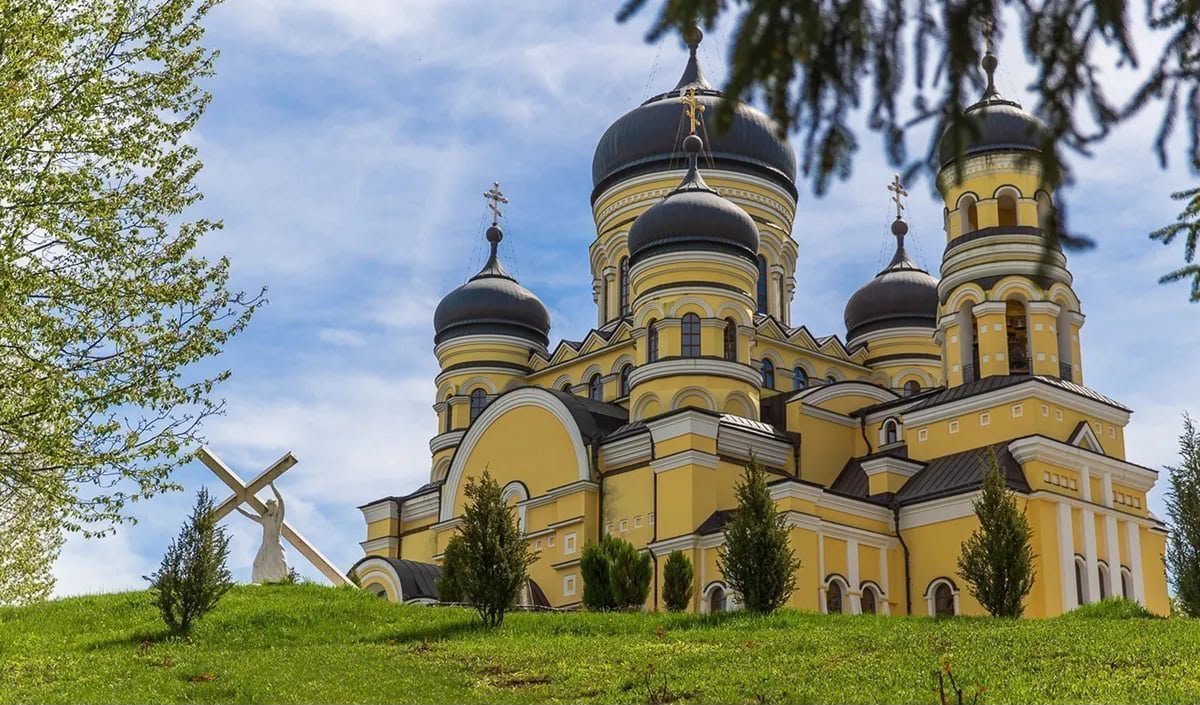
Romania allocated around €4.5 million from 2024 through the summer of this year for the construction and modernization of churches in the Republic of Moldova.
This was reported by Logos Press.
According to data from Romania’s State Secretariat for Religious Affairs, funding has increased significantly over the past two and a half years, with a substantial share of the investments directed to the north and south of the Republic of Moldova.
Support is provided mainly through the Romanian Patriarchate and is focused on projects of the Bessarabian Metropolis. Among the projects supported by Romania is the Ștefan cel Mare și Sfânt Church in the village of Aluatu, Taraclia District. Romania allocated around 500,000 Romanian lei (€95,500) for its construction last year, and another 250,000 lei (€47,700) was allocated for furniture in July 2026. In Sîngerei, construction is underway on the Sfânta Cuvioasă Teodora de la Sihla Church, for which the Romanian state allocated more than one million lei (€191,000) in March 2025. In Bălți, construction is underway on the Sfântul Antonie cel Mare și Binecredinciosul Voievod Ștefan cel Mare și Sfânt Church and the “Sunday of the Romanian Saints” Episcopal Chapel. Similar funding is also being allocated to projects in the Cahul and Ungheni districts.
In 2023, Romania adopted a law providing for the annual allocation of around €2 million for the construction and modernization of religious buildings in the Republic of Moldova. According to the data cited, around €4.5 million was transferred from the start of the funding program in 2024 through the summer of 2026. With this money, 16 churches have been built or are at various stages of construction.
Another nine grants were allocated for the creation of monastic cells and social settlements at churches and monasteries. Financial support for the clergy in the Republic of Moldova has also increased. The monthly fund for paying priests’ salaries has exceeded €100,000, approximately ten times more than in 2018.
The investments are being made in a context in which the Bessarabian Metropolis, affiliated with the Romanian Patriarchate, is seeking to strengthen its presence in a country where the Metropolis of Moldova, canonically subordinate to the Russian Patriarchate, continues to wield significant influence.
Bessarabian Metropolitan Antony describes the support as “investments in the spiritual and cultural future” of the Republic of Moldova.
As LF reported, the Synod of the Romanian Orthodox Church elected Bishop Antony of Bălți as Archbishop of Chișinău, Metropolitan of Bessarabia and Exarch of the Territories.
Bessarabian Metropolitan Antony of the Romanian Patriarchate confirmed the historical legitimacy of the Bessarabian Metropolis, rejecting doubts about its canonical status.
As is known, the Bessarabian Metropolis is an autonomous Orthodox Church within the Romanian Patriarchate, operating primarily in the Republic of Moldova. The country is also home to the Orthodox Church of Moldova, which is part of the Russian Orthodox Church.
As LF reported, more than 800 churches in Moldova classified as historical monuments could be returned to state ownership. These are churches belonging to the Metropolis of Moldova, which is part of the Russian Orthodox Church. Culture Minister Cristian Jardan made the statement.
In Moldova, the Liberal Party called on parliament to adopt a law obliging the Metropolis of Moldova and Chișinău, which belongs to the Moscow Patriarchate, to permanently sever its ties with the Russian Church. Otherwise, the party argues, the religious organization should be outlawed because it is an instrument of influence of the Russian Federation.
Earlier, we reported that the Russian Orthodox Church once again accused the authorities of Ukraine, Moldova, Estonia, Latvia and Lithuania of “pressure on canonical church structures”.
Will the Russian Orthodox Church manage to preserve its ecclesiastical influence in Moldova by distorting the information space and changing the country’s political course? LF analysis of the issue is available via the link.