The war between Russia and Ukraine does not have religious origins. However, religion plays a notable role in a number of its domestic and international dimensions.
This is stated in a study prepared by Denys Brylov, Tetiana Kalenychenko, and Peter Mandaville as part of the Geopolitics of Religious Soft Power project of the Berkeley Center for Religion, Peace, and World Affairs research initiative at Georgetown University.
The authors argue that understanding these dynamics is crucial for anticipating how religious issues may emerge in future diplomatic and negotiation processes.
According to the researchers, religious dynamics shape not only military narratives and mobilization processes, but also relations among the state, the church, and society within Ukraine, as well as the external positioning of both Ukraine and Russia.
The study’s authors note that on the Russian side, political and religious leaders are increasingly presenting the war in sacralized terms.
“President Vladimir Putin has repeatedly used religious language to delegitimize the Ukrainian leadership, while Patriarch Kirill of the Russian Orthodox Church promotes narratives portraying the war as a ‘holy struggle’. These narratives draw upon the concept of the ‘Russian World’ and are reinforced through institutional mechanisms, including the expansion of military chaplaincy, the appointment of ‘heavenly patrons’ for military units, and theological justification of the Russian military campaign. Moreover, this concept is used as a basis for recognizing the territory of Ukraine as the canonical territory of the Russian Orthodox Church, which threatens Ukrainian Orthodoxy and hinders its movement toward full independence,” the study states.
The authors emphasize that religious language is also present in Ukraine’s public discourse, but serves a different function. “References by political leaders and popular culture to divine protection or religious symbolism are generally used in the context of national survival, moral resistance, and appeals for a just peace, rather than within a framework of civilizational or confessional exclusivity,” the report stresses.
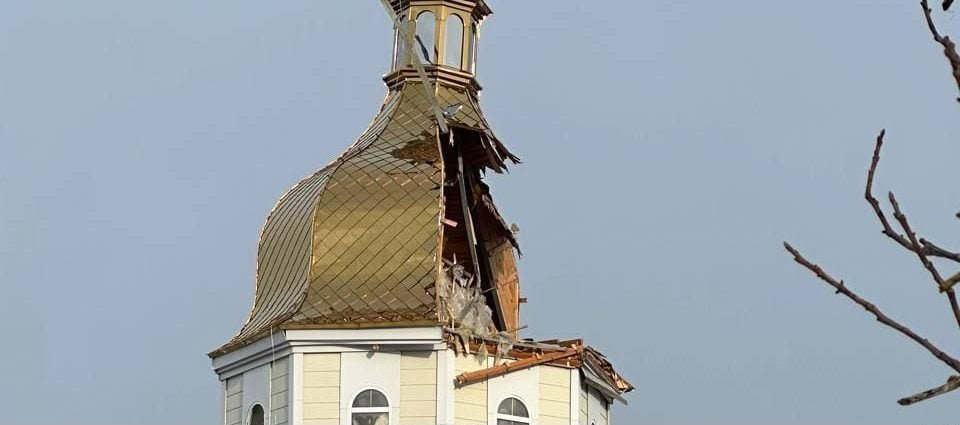
The document also analyzes how freedom of religion has become a subject of dispute not only within Ukraine, but also in the international dimension of the war. It discusses extensive documentation of cases of persecution of religious communities in territories occupied by Russian forces when those communities are perceived as disloyal to the Russian authorities. Ukraine actively draws the attention of the international community to these violations, including through appeals to bodies such as the United States Commission on International Religious Freedom.
At the same time, alongside territorial and security demands, the Kremlin is increasingly incorporating issues of freedom of religion into its public vision of a possible settlement of the war.
According to the study’s authors, although the war does not have religious origins, religious institutions and narratives continue to shape both Ukraine’s internal dynamics and Russia’s external strategies. Understanding these processes will therefore be useful for political decision-makers.